
STORY HIGHLIGHTS
- NEW: Coroner confirms that Ariel Castro committed suicide
- Castro’s attorney says more protection should have been provided
- Castro lured the women into his car with the promise of a ride
- During his sentencing, Castro played the victim
(CNN) — Ariel Castro, who was sentenced to life plus 1,000 years for kidnapping and raping three women, as well as murder, committed suicide in his prison cell Tuesday night, the Frankin County, Ohio, coroner’s office said.
Castro hanged himself with a bedsheet, Dr. Jan Gorniak of the Franklin County Coroner’s Office told CNN Wednesday.
Authorities found Castro, 52, hanged in his cell at the Correctional Reception Center in Orient, Ohio, about 9:20 p.m., the state’s Department of Corrections said.
Prison medical staff tried to revive him but failed.
Castro was taken to The Ohio State University Wexner Medical Center, where he was pronounced dead at 10:52 p.m.

 Why did Ariel Castro kill himself?
 Cousin: ‘Maybe this is for the best’
 Reporter: Castro wasn’t on suicide watch
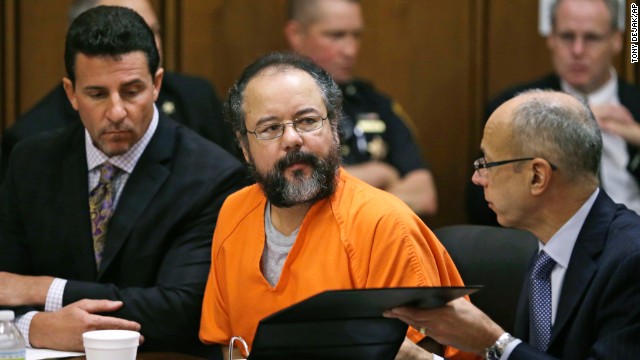 Ariel Castro listens during the sentencing phase of his trial Thursday, August 1, in Cleveland alongside defense attorneys Craig Weintraub, left, and Jaye Schlachet. Castro held three women captive for years inside his Ohio home until their escape in May. He pleaded guilty to 937 counts, including murder and kidnapping. On September 4, Castro was found dead inside his prison cell in Orient, Ohio.
 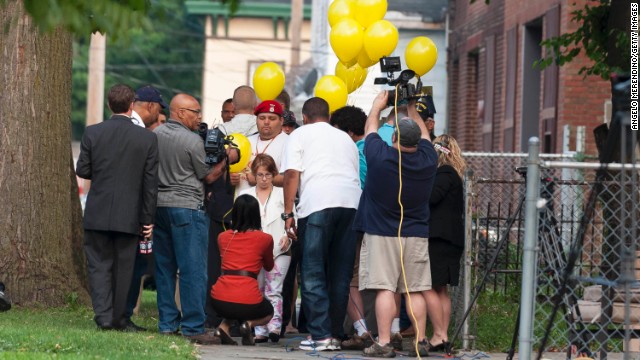 Former captive Michelle Knight, center, talks with reporters Wednesday, August 7 outside convicted kidnapper Ariel Castro’s house. Knight was on hand as workers began tearing down the structure.
  A crane demolishes the Cleveland house of Castro on August 7. Plans call for the house to be torn down and the lot cleared in a single day.
  Here is a view of the house where Castro held the three women captive. He forfeited the house as part of a plea deal with prosecutors that took the death penalty off the table in exchange for a life sentence, plus 1,000 years in prison.
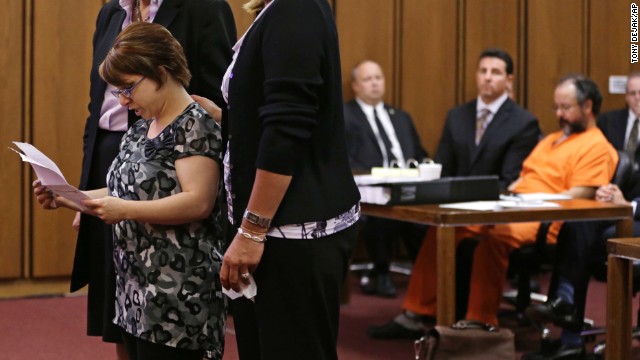 Michelle Knight speaks during the sentencing phase for Ariel Castro Thursday, August 1, in Cleveland. “I will live on,” Knight said in her statement to Castro. “You will die a little every day.”
 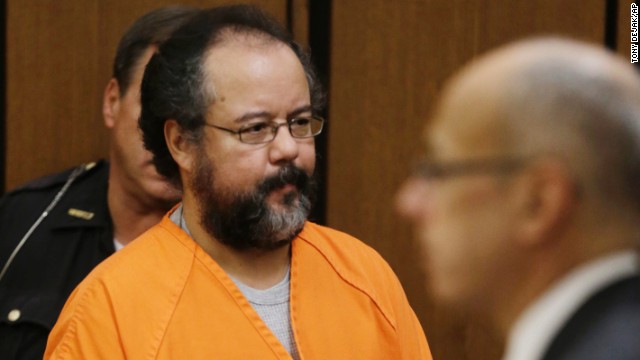 Castro enters the courtroom Friday, July 26. He was arrested in May and accused of holding three young women captive for nearly a decade.
  Amanda Berry vanished a few blocks from her Cleveland home on April 21, 2003. She was 16. She spoke in a video released on YouTube on Monday, July 8, thanking people for support and privacy. Berry, Gina DeJesus and Michelle Knight escaped from a Cleveland home on May 6 after being held captive for nearly a decade.
  Georgina “Gina” DeJesus was last seen in Cleveland on April 2, 2004, on her way home from school. She was 14 when she went missing.
 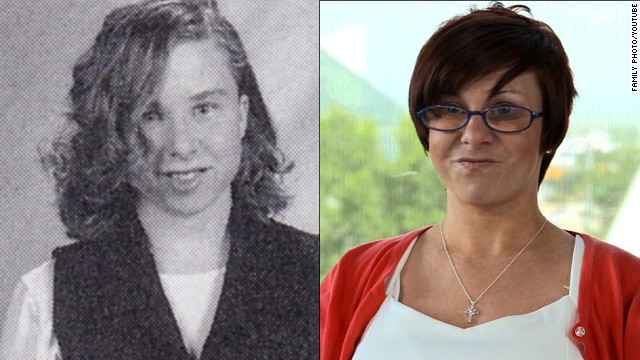 Knight was last seen on August 22, 2002, when she was 21.
 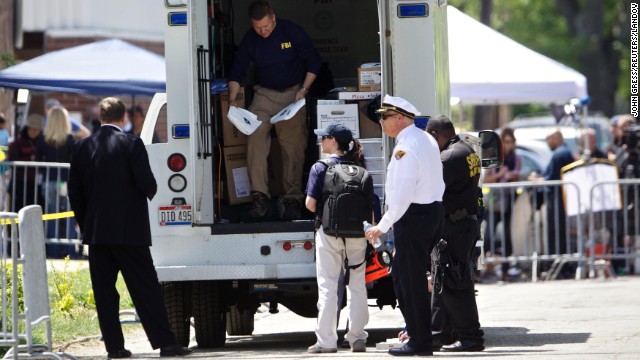 FBI agents and other law enforcement officers stand outside Castro’s home in Cleveland on May 9.
 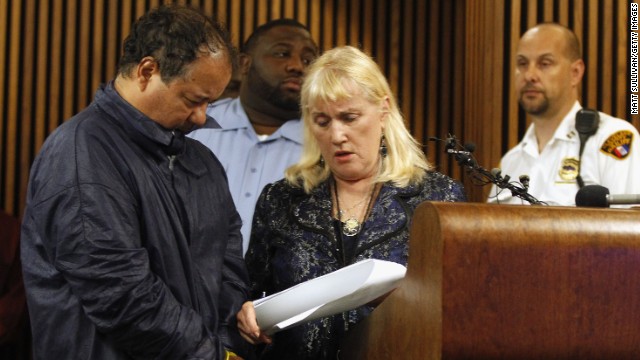 Castro hangs his head while talking with his public defender, Kathleen DeMetz, during his arraignment on May 9.
 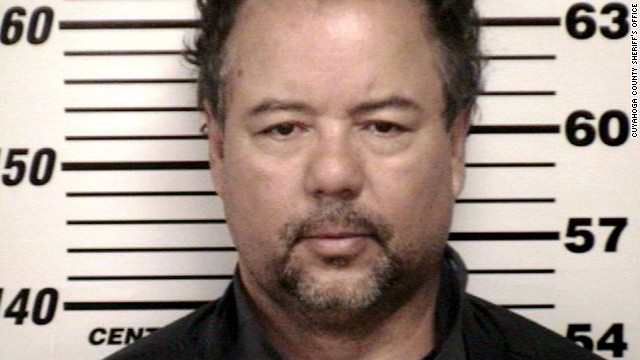 Ariel Castro was charged on May 8 with kidnapping the three women.
 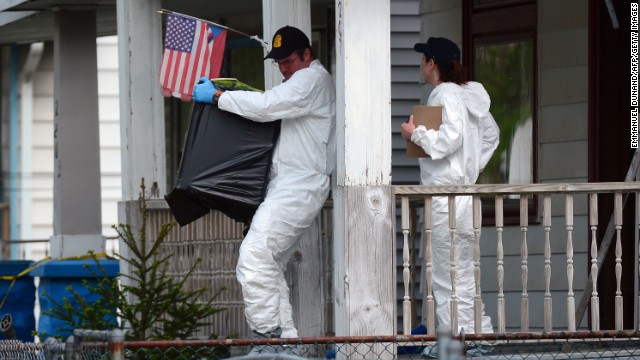 Investigators remove evidence from the house on Seymour Avenue in Cleveland where the three women were held.
 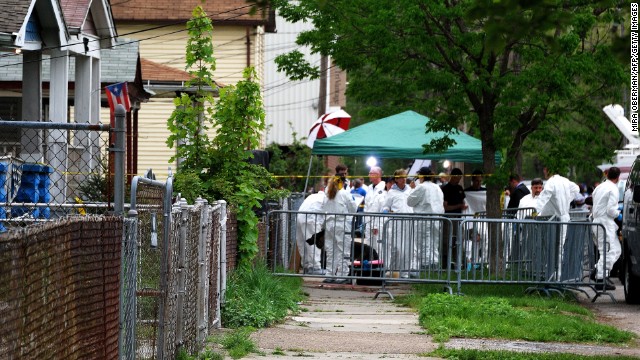 An FBI forensics team meets outside the house where three women were held as they investigate the property.
 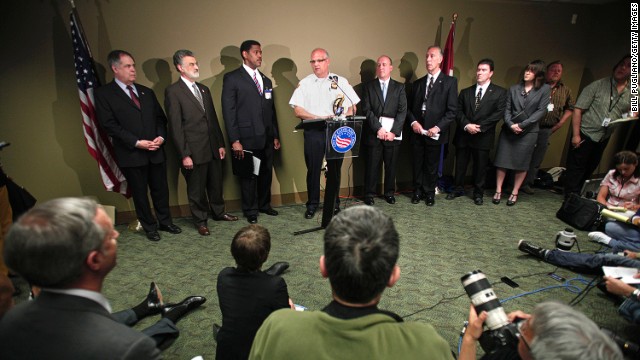 Cleveland Deputy Chief of Police Ed Tomba, center, speaks at a news conference to address details of the developments.
 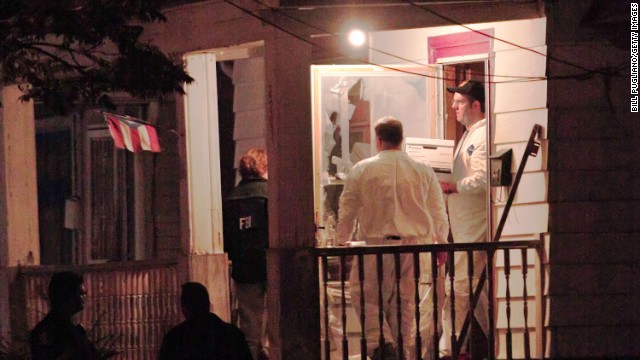 FBI agents remove evidence from the house May 7.
 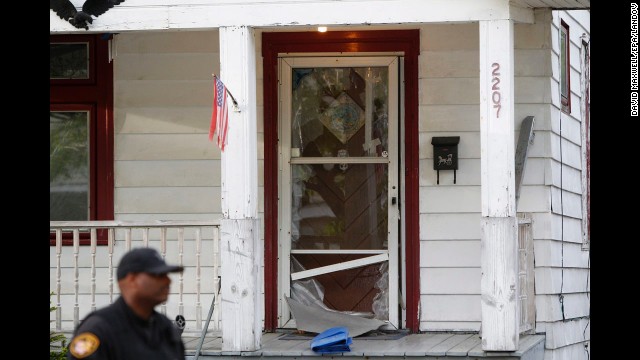 A police officer stands in front of the broken front door of the house on May 7, where the kidnapped women escaped.
 Kidnapped teens found decade later
Kidnapped teens found decade later
Kidnapped teens found decade later
Kidnapped teens found decade later
Photos: Kidnapped teens found decade later
Kidnapped teens found decade later
Photos: Kidnapped teens found decade later
Photos: Kidnapped teens found decade later
Photos: Kidnapped teens found decade later
Kidnapped teens found decade later
Kidnapped teens found decade later
Kidnapped teens found decade later
Kidnapped teens found decade later
Kidnapped teens found decade later
Kidnapped teens found decade later
Kidnapped teens found decade later
Kidnapped teens found decade later
HIDE CAPTION
<<
<</span>

1

2

3

4

5

6

7

8

9

10

11

12

13

14

15

16

17
>
>>
Photos: Kidnapped teens rescued Castro’s brother-in-law, Juan Alicea, told CNN that the family was notified by the warden about 1 a.m. The family is angry, Alicea said, that it learned about the death from media reports first.
Another family member, Maria Castro-Montes, said she cried when she heard the news.
Her first thoughts were with the three victims — Michelle Knight, Georgina DeJesus and Amanda Berry — and what they must be feeling. Would they be glad or angry about Castro’s death?
The three women held captive by Castro are aware of his suicide, Knight’s attorney, Kathryn Joseph, told CNN. She said the women will not be making a statement.
Castro-Montes said nearly everyone in the family had cut ties with Castro, and relatives hope that with his death, the tragic story can come to an end.
“It was just shock and part of it was even relief in hopes that now this will just end all of it and that his name will not be out in the spotlight for years and years to come,” she told CNN. “I just hope the victims can move past this now.”
Castro was not a part of the general prison population, officials said.
“He was housed in protective custody which means he was in a cell by himself and rounds are required every 30 minutes at staggered intervals,” JoEllen Smith of the corrections department told CNN in a written statement.
“A thorough review of this incident is under way,” she added.
‘Hope for everyone,’ ex-captive says before Castro house demolished
But Castro attorney Craig Weintraub said more precautions against a possible suicide should have been taken.
Castro’s attorneys had requested permission for an independent forensic psychologist to evaluate their client, but were denied by officials, he said.
“I was stunned,” Weintraub told CNN affiliate WKYC. “I think it’s so unusual for a prisoner who is in the system for only 30 days to be found dead in a cell.”
If Castro was believed to be suicidal, he should have been under stricter protection, he said.
Some will see his death as “a happy ending to this story, and a quick ending and justifiable,” Weintraub said. “But we’re in a civilized society and no one should really be celebrating this.”
No place in the world
In handing down a sentence last month, Judge Michael Russo told the kidnapper there was no place in the world for his brand of criminal.
Castro pleaded guilty to 937 counts, including murder and kidnapping, in exchange for the death penalty being taken off the table.
The charges stem from his kidnapping, rape and assault of Knight, abducted in 2002; DeJesus, abducted in 2004; and Berry; abducted in 2003.
Castro is the father of Berry’s 6-year-old daughter, DNA tests confirmed.
Castro’s victims resilient after years of abuse
‘You will die a little every day’
All three women kept diaries with Castro’s permission, providing many of the details of their abuse.
“I cried every night. I was so alone. I worried what would happen to me and the other girls every day,” Knight, 32, said, as she addressed her abductor head-on during his sentencing. “I will live on. You will die a little every day.”
In each case, Castro lured the women into his car with the promise of a ride, according to court documents. The women and girl were freed in May after Berry shouted for help while Castro was away.
 Knight: ‘Your hell is just beginning’
 Judge paints lonely future for Castro
 Cleveland kidnap victims: Thank you
 3 missing women found alive in Ohio
 Amanda Berry speaks in a video released on YouTube on Monday, July 8, thanking people for support and privacy. Berry, Gina DeJesus and Michelle Knight escaped from a Cleveland home on May 6 after being held captive for nearly a decade.
  Amanda Berry vanished a few blocks from her Cleveland home on April 21, 2003. She was 16.
  Gina DeJesus speaks in the YouTube video.
  Georgina “Gina” DeJesus was last seen in Cleveland on April 2, 2004, on her way home from school. She was 14 when she went missing.
  Michelle Knight speaks in the YouTube video.
  Knight was last seen on August 22, 2002, when she was 21.
 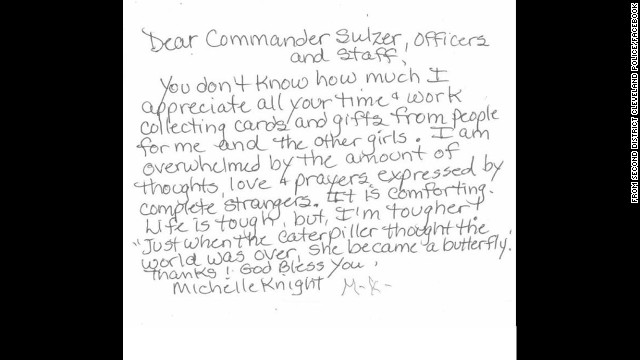 In a handwritten note, Knight thanked Cleveland police for their efforts, saying she was overwhelmed with the support she had received from “complete strangers.” The note was posted Wednesday, July 31, on the police’s Second District Community Relations Committee Facebook page.
  Residents gather outside a community meeting at Immanuel Lutheran Church on Thursday, May 9, to talk about the kidnapping case in Cleveland. Balloons were released as part of the ceremony.
 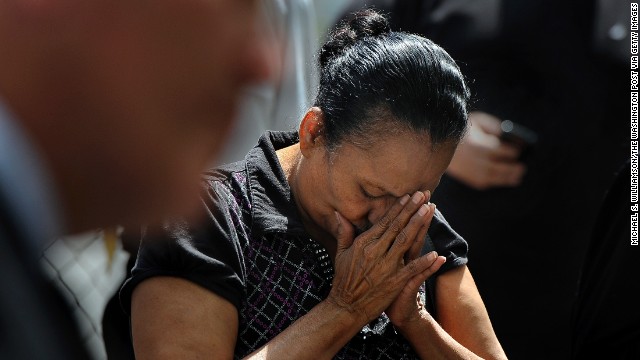 Ada Colon prays during a vigil held in honor of the kidnapping victims in Cleveland on Wednesday, May 8.
  Relatives of kidnapping victim Georgina “Gina” DeJesus hug after she returned to her parents’ home in Cleveland on May 8.
 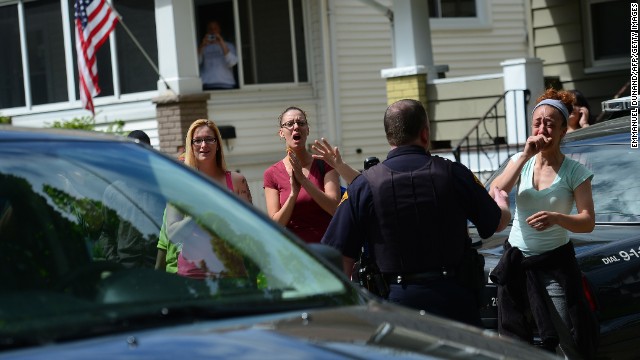 Friends and neighbors cheer as a car carrying Amanda Berry arrives at her sister’s house in Cleveland on May 8.
  Gina DeJesus gives a thumbs up as she arrives at her family’s house in Cleveland on May 8.
 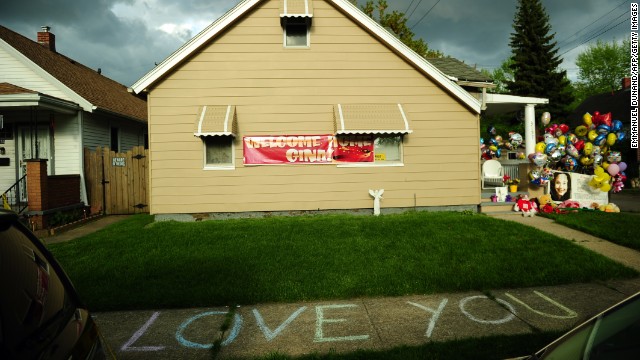 The family house of Gina DeJesus has been decorated by well-wishers on Tuesday, May 7.
  Friends and relatives gather in front of the family house of DeJesus on May 7.
 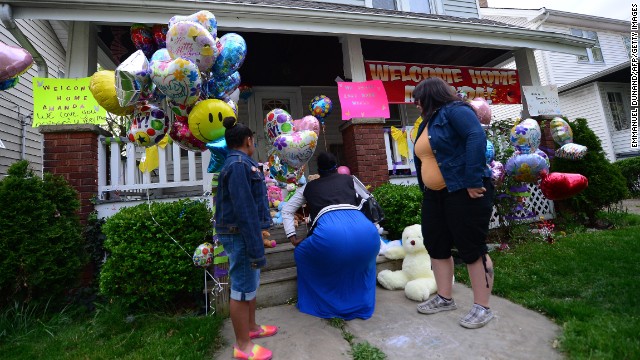 Well-wishers visit the home of the sister of Amanda Berry on Monday, May 6.
 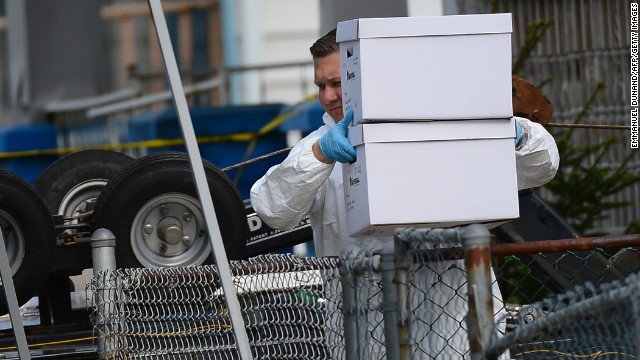 An FBI forensics team member removes evidence from the house.
 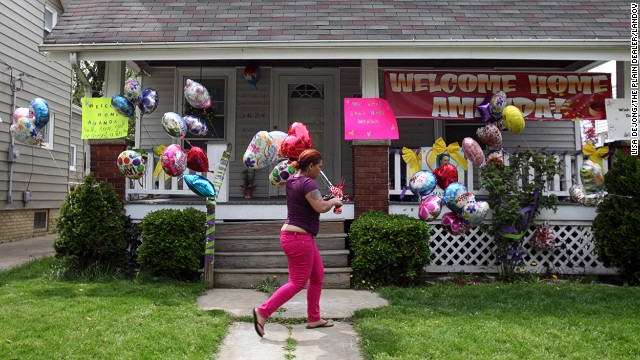 A relative of DeJesus brings balloons to the home of Amanda Berry’s sister in Cleveland on May 7.
 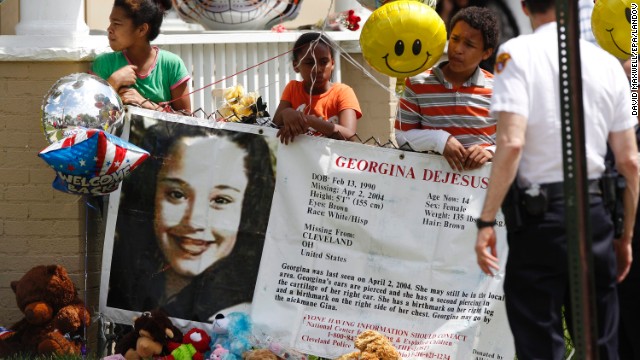 Children hold a sign and balloons in the yard of Gina DeJesus’ family home in Cleveland on May 7.
  Bystanders and media gather on May 7 along Seymour Avenue in Cleveland near the house where the three women were held captive.
 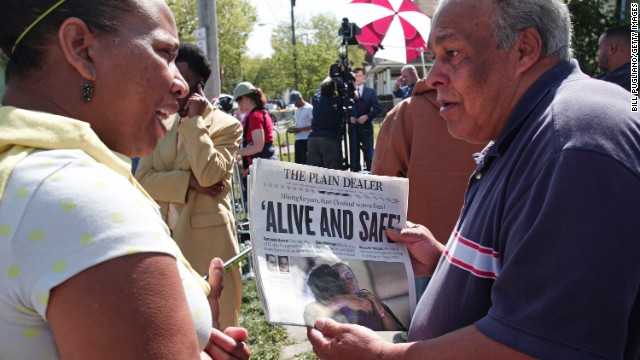 A bystander shows the front page of The Plain Dealer newspaper to a friend outside of the house on Seymour Avenue on May 7.
  Neighbor Charles Ramsey talks to media as people congratulate him on helping the kidnapped women escape on Monday, May 6. He helped knock down the door after he heard screaming inside.
 Kidnapped teens found decade later
Kidnapped teens found decade later
Kidnapped teens found decade later
Kidnapped teens found decade later
Kidnapped teens found decade later
Kidnapped teens found decade later
Photos: Kidnapped teens found decade later
Kidnapped teens found decade later
Kidnapped teens found decade later
Kidnapped teens found decade later
Kidnapped teens found decade later
Kidnapped teens found decade later
Kidnapped teens found decade later
Kidnapped teens found decade later
Kidnapped teens found decade later
Kidnapped teens found decade later
Kidnapped teens found decade later
Kidnapped teens found decade later
Kidnapped teens found decade later
Kidnapped teens found decade later
Kidnapped teens found decade later
Kidnapped teens found decade later
Kidnapped teens found decade later
Kidnapped teens found decade later
Kidnapped teens found decade later
Kidnapped teens found decade later
Kidnapped teens found decade later
Kidnapped teens found decade later
Kidnapped teens found decade later
Kidnapped teens found decade later
HIDE CAPTION
<<
<</span>

1

2

3

4

5

6

7

8
9
10

11

12

13

14
15

16

17

18
19
20


>
>>
Photos: Kidnapped teens rescued Neighbors heard her cries and came to her aid as she tried to break through a door. One neighbor gave her a cell phone to call authorities.
“Help me, I am Amanda Berry,” she frantically told a 911 operator. “I’ve been kidnapped, and I’ve been missing for 10 years. And I’m here, I’m free now.”
Captives’ hellish life inside Castro’s home
Plays the victim, blames the victims
During his sentencing, Castro played the victim, saying he was addicted to porn and masturbation. In his oft-disjointed statement, he referred to himself as “very emotional” and “a happy person inside.”
Castro appeared to blame the victims and accused them of lying about their treatment. He went on to say that none of the women was a virgin when he abducted them, that they wanted sex and there was “harmony” in the “happy household.”
Castro’s 1,400-square-foot home was reconfigured to keep their whereabouts a secret, FBI agent Andrew Burke testified. The back door was outfitted with an alarm, bedspreads and curtains obscured parts of the home and a porch swing was placed in front of the stairs leading to the rooms where Castro held the women and girl hostage.
Police also testified Castro would chain the women to objects, including a support pole in his basement.
In the room where Berry and her daughter were held, the doorknob was removed, a lock was affixed to the outside and a hole was cut through the door for ventilation because the windows had been boarded up from the inside, Burke said.
Burke also described a handwritten letter in which Castro claimed he had been sexually abused as a child and wrote, “I am a sexual predator.”
Most dramatic moments from his sentencing
‘You saved us’
The first police officer on the scene, Barbara Johnson, recalled for the court how she and another officer heard the pitter-patter of footsteps in a dark room where Knight and DeJesus were held.
When the captive women realized they were police, Knight “literally launched herself” onto an officer, “legs, arms, just choking him. She just kept repeating, ‘You saved us! You saved us!’ ” Johnson said.
The women were described as scared, pale, malnourished and dehydrated when they were rescued. Dr. Gerald Maloney, who was in the emergency room when the victims arrived, said Knight requested that no male physicians attend to her.
Castro’s son said he wouldn’t visit dad in prison
CNN’s Mariano Castillo, Martin Savidge, Allison Malloy, Marina Carver and Kait Richmond contributed to this report.
‘;
document.write(OB_MarkUP);
if (typeof(OB_Script)!=’undefined’)
OutbrainStart();
else{
var OB_Script=true;
var str=”
This article:
The post Castro death appeared first on Arne Ruhnau News.
via Arne Ruhnau News http://arneruhnau.com/castro-death/

No comments:
Post a Comment