
STORY HIGHLIGHTS
- President Obama to GOP: Get to work and take a vote on the budget
- Obama calls Boehner, but neither side appears to budge
- Republicans frustrated with Obama’s “no negotiate” strategy, GOP source says
- Senate bill to raise debt limit could come as early as today, aide says
Washington (CNN) — President Barack Obama sounded a stern warning Tuesday about the consequences to the nation if Congress fails to raise the debt ceiling. He also urged members of Congress to end the partial government shutdown.
“We’re not going to pay ransom for” America paying its bills, he told reporters, placing the blame on the crisis squarely on House Republicans. “Let’s lift these threats from our families and our businesses and let’s get down to work.”
Obama said is happy to talk with Republicans about issues they care about, but that “shouldn’t require threats of a government shutdown” or economic chaos over the heads of the American people.
if Congress doesn’t raise the debt ceiling, “every American could see their 401Ks and home values fall,” and the country would see a “very significant risk” of a deep recession.
Failing to raise the debt ceiling “would be dramatically worse” than a government shutdown, he said.
Earlier, there was high-level phone call between Obama and House Speaker John Boehner, but no immediate sign of progress on reopening the government a week into a partial shutdown or reaching a deal to avoid the first-ever U.S. default next week.
Boehner demanded that Obama and Democrats negotiate with Republicans on steps needed to end the shutdown that began on October 1 and raise the nation’s debt ceiling before the deadline for default on October 17.
“Americans expect us to work out our differences, but refusing to negotiate is an untenable position,” Boehner said, adding that Obama and Senate Majority Leader Harry Reid are “putting our country on a pretty dangerous path” by rejecting GOP calls for talks.
Obama has refused to negotiate on the shutdown or debt ceiling, calling the need to fund the government and increase its borrowing power constitutional responsibilities that must be free of partisan politics.
The White House and Boehner’s office agreed that little changed in the phone call Obama made to the speaker at 10:45 a.m.

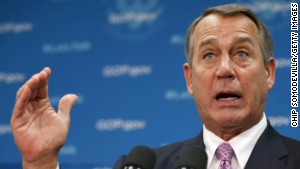 Boehner: Country is on ‘dangerous path’
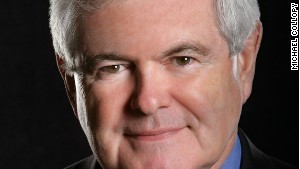 Newt Gingrich: Obama should negotiate
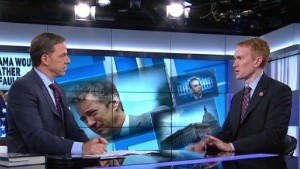 GOP congressman: We don’t want default
 Coping with shutdown stress
Boehner spokesman Brendan Buck said Obama reiterated his refusal to include the debt ceiling and a short-term spending plan to end the shutdown in negotiations on broader policy issues.
A White House statement said Obama “is willing to negotiate with Republicans — after the threat of government shutdown and default have been removed — over policies that Republicans think would strengthen the country.”
Obama also urged Boehner to allow a vote in the House on the Senate-passed measure to reopen the federal government, and called for quick action on raising the debt limit, the White House statement said.
Shutdown day 8: What you need to know
In both cases, Obama said the House should pass “clean” proposals that don’t have partisan amendments pushing GOP priorities, according to the statement.
Economists warn that failure to increase the amount the government can borrow to pay its bills would mean a spike in interest rates that would ripple through the U.S. economy, as well as other ramifications.
“If there was a problem lifting the debt ceiling, it could well be what is now a recovery would turn into a recession or even worse,” Olivier Blanchard, an International Monetary Fund economist, said Tuesday.
The shutdown that began when Congress failed to authorize government spending for the new fiscal year that started October 1 entered its second week, while the October 17 deadline to raise the debt ceiling looms ahead for political leaders locked in partisan stalemate.
Boehner and conservative Republicans want to leverage the situation to wring concessions on deficit reduction and Obama’s signature health care reforms from the White House and Democrats.
So far, the president and Senate Democrats have rejected the GOP efforts, causing the impasse that is escalating public anger against all the parties involved, especially Republicans, according to recent polls.
To keep up pressure on Obama and Democrats, House Republicans will propose a measure to set up negotiations on the debt limit and other fiscal issues, as well as one to guarantee paychecks for essential government workers are issued on time during the shutdown, GOP sources said Tuesday.
Rep. Tom Cole of Oklahoma, a GOP leader in the House, said a negotiating committee with Democrats and Republicans from both parties could pass a short-term extension of the debt ceiling while doing its work.
“I suspect we can work out some mechanism to raise the debt ceiling while negotiations are under way but we’re not going to simply raise it without talking about the deficit,” Cole said. It was unclear if his description would satisfy Obama’s insistence that the debt ceiling increase must be separate from political negotiations.
Democratic Sen. Chuck Schumer of New York called the GOP proposals the latest in a series of “new gimmicks” that avoid the need to reopen the government and raise the debt ceiling before broader negotiations.
“We have a simple plea with them: Let’s open up the government, pay our debts, and then we’ll discuss anything they want in a forum in which they want to discuss it,” Schumer said. “It’s more of the same right now.”
Boehner didn’t mention the GOP proposals at a morning news conference, but he told reporters he wanted “conversation” with Obama and Democrats “to resolve our differences.” Asked about any preconditions for such talks, Boehner said he wasn’t “drawing any lines in the sand.”
In the Senate, Reid could file a proposal as soon as Tuesday to raise the debt ceiling without addressing any deficit reduction issues demanded by Republicans, a Senate Democratic leadership aide told CNN.
Sources told CNN that the Democratic plan would resolve the debt ceiling issue for at least a year, and perhaps through the 2014 congressional elections.
The move would be the first volley in what will be a torturous political struggle in coming days over the federal borrowing limit leading up to next week’s deadline to raise it.
Most Republicans would shy away from a bill that doesn’t specify spending cuts or other policy changes in return for the increased borrowing authority.
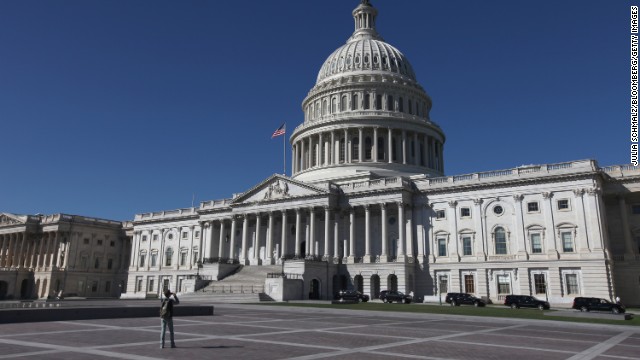 The game is the same, but many of the players have changed. Congress and the president are facing off in another supreme spending showdown. If they don’t agree on a funding bill by the end of September 30, much of government will shutdown. This last happened in 2011, when Congress avoided a shutdown by passing a spending measure shortly after the midnight deadline hit. Who controls what happens this time? Take a look at the key players who will determine how this fight ends:
– From CNN Capitol Hill Reporter Lisa Desjardins. CNN’s Deirdre Walsh and Ted Barrett contributed to this report.
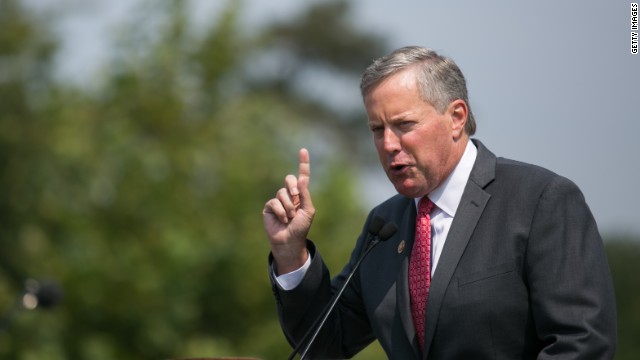 Rep. Mark Meadows, R-North Carolina — The architect. During Congress’ August recess, the tea party-backed freshman wrote to Republican leaders suggesting that they tie dismantling Obamacare to the funding bill. Though initially rejected by GOP leadership, 79 of Meadows’ House colleagues signed on to the letter, which quoted James Madison writing in the Federalist Papers, “the power over the purse may, in fact, be regarded as the most complete and effectual weapon … for obtaining a redress of every grievance.”
 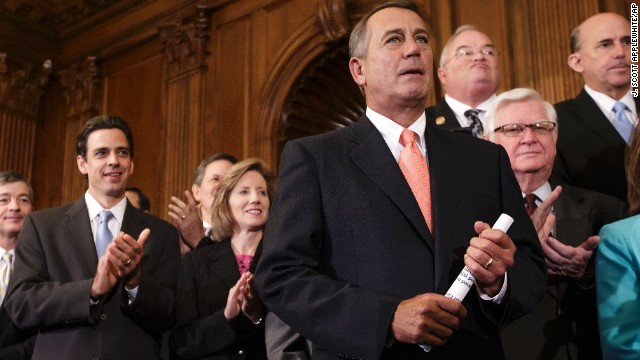 Speaker John Boehner, R-Ohio — The coach. He’ll make the key play call. The top Republican leader in the land may be the most important player in the days immediately before a possible shutdown. Boehner could decide whether to push through the Senate’s version of a spending bill and keep government running, or he could float a third version with some other Republican wish list items in it. If he takes the second option, Boehner could risk a shutdown but could also force the Senate into a tough position: give House Republicans something or send federal workers home. Timing on all this will be critical.
 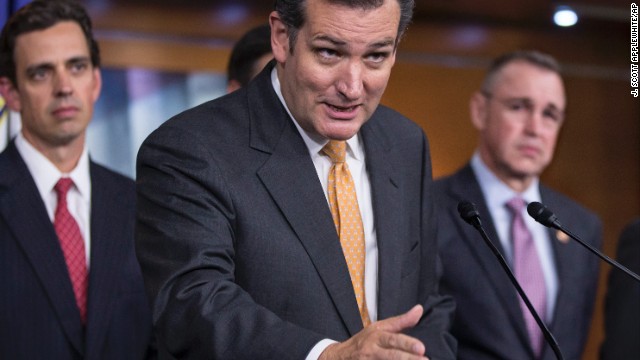 Sen. Ted Cruz, R-Texas — The revolutionary or rabble rouser, depending on your viewpoint. The tea party firebrand could lead a long filibuster on the Senate floor, delaying passage of a spending bill until just one day before the deadline on Monday, September 30. Cruz has stoked the anti-Obamacare flames all summer, but recently angered fellow Republicans by openly saying that the Senate does not have the votes to repeal the health care law.
 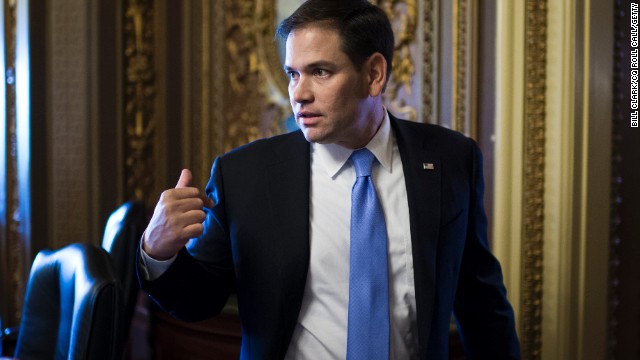 Sen. Marco Rubio, R-Florida — Senator to watch. The potential presidential candidate has been one of three senators (Cruz and Mike Lee, R-Utah, being the others) pushing to use the government shutdown debate as a way to repeal or defund Obamacare. But watch his actions and language as a shutdown nears to see if he digs in or if downshifts at all.
 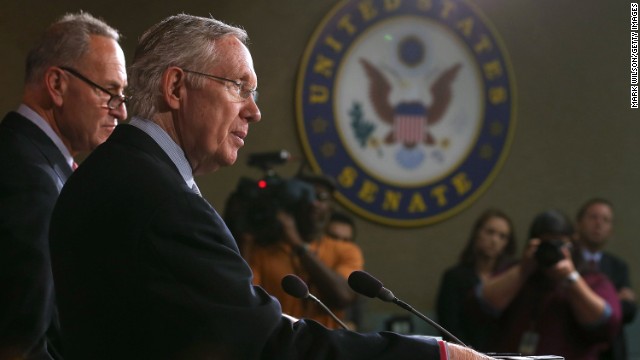 Sen. Harry Reid, D-Nevada — The man steering the ship in the Senate. Master at using Senate procedure to his advantage, Reid is the main force in controlling the voting process in the chamber and ensuring that an attempted filibuster by tea party-types fails. The majority leader will be a primary negotiator if we reach phase three, if the House does not accept the Senate spending bill.
 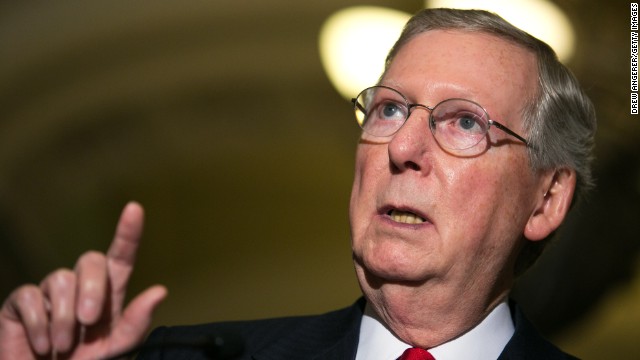 Sen. Mitch McConnell, R-Kentucky — If Reid steers the ship, McConnell controls the headwinds. Which is good news for Reid, at least initially. The Republican leader and several of his members say they will vote against Cruz’s filibuster and in favor of a spending bill with no limits on Obamacare. Meaning, in favor of a bill that just funds government. McConnell generally has been leery of running into a shutdown or default. In fact, one legislative method for avoiding default is named after him.
 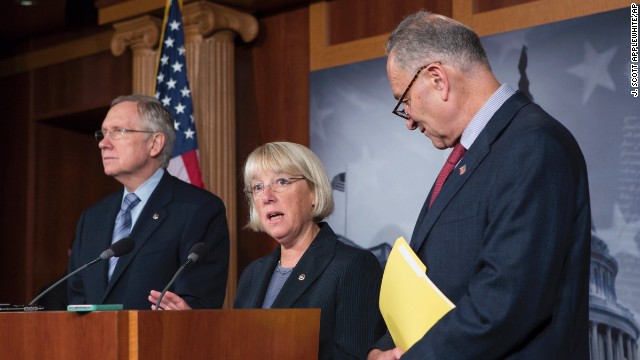 Sen. Patty Murray, D-Washington — The consigliore. Murray, center, does not seek the outside limelight, but the Senate Budget Committee chairwoman is a major fiscal force behind the scenes on Capitol Hill. Known by fellow Democrats as a straight shooter, she is also an experienced negotiator, having co-chaired the laborious, somewhat torturous and unsuccessful Super Committee.
 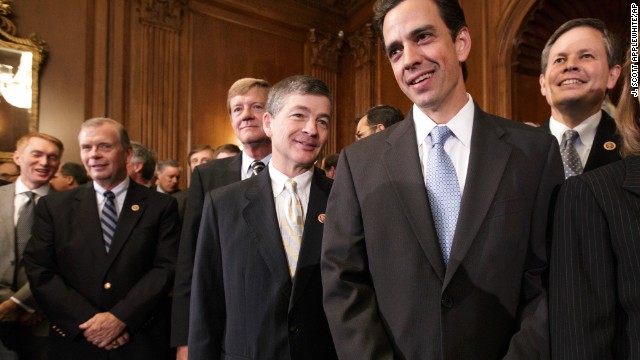 Rep. Tom Graves, R-Georgia — The new militia leader. The freshman congressman from Georgia, second from right, is one reason the debate has reached this point. Graves led the charge that blocked the original proposal by House Republican leaders. That would have kept government funded and had a detachable portion on Obamacare. Instead Graves and other conservatives forced their leaders to pass a spending bill with a mandatory defunding of Obamacare.
 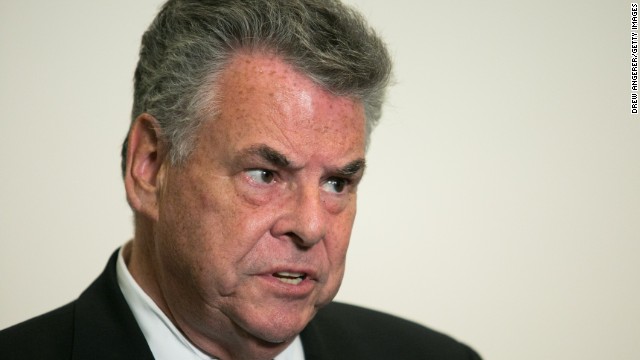 Rep. Peter King, R-New York — The blunt statesman. King is outspoken against many tea party tactics, calling the move to tie Obamacare to the must-pass spending bill essentially a suicide mission and Cruz “a fraud.” He is pushing for Republicans to accept a more “clean” spending bill that can pass the Senate and avoid a shutdown.
 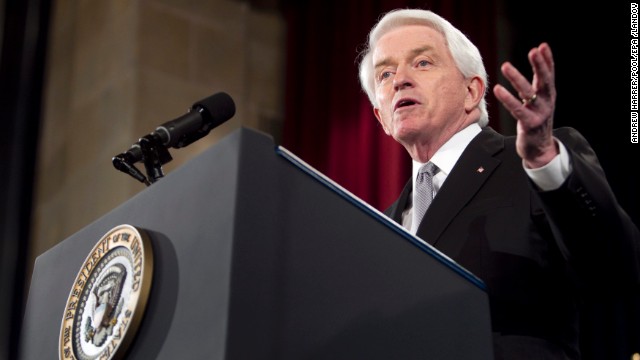 Thomas Donohue, president and CEO of the U.S. Chamber of Commerce — The heavy. Donohue is known for his deep connections and his aggressive lobbying on behalf of business. He and the Chamber are urging Republican lawmakers to avoid a shutdown. The Chamber is an important political backer for conservatives, but has had mixed success with the current Congress, locking in firm anti-tax positions but unable to push through immigration reform so far.
 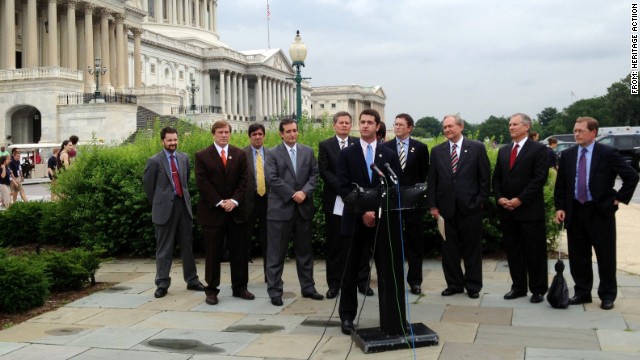 Michael Needham, president of Heritage Action — The driving force. Needham runs the political offshoot of the conservative Heritage Foundation and has been unrelenting in urging lawmakers to repeal Obamacare. He has told Republicans not to fear a potential shutdown, saying they would suffer more politically from allowing Obamacare to continue.
 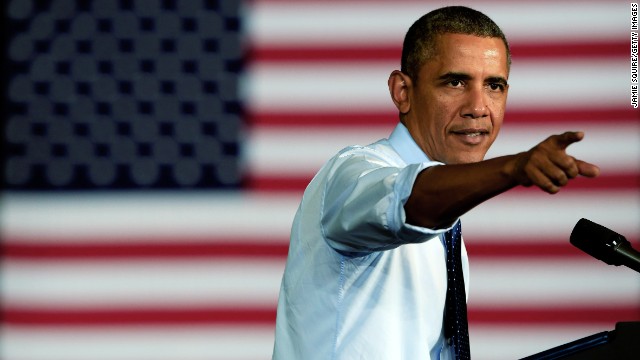 President Barack Obama — The campaigner and CEO. Expect the president to use his podium more as a shutdown nears, aiming at public opinion as Democrats in Congress position themselves. If House Republicans send back a new proposal close to the September 30 deadline, the president and Democrats will have to decide what move to make next.
 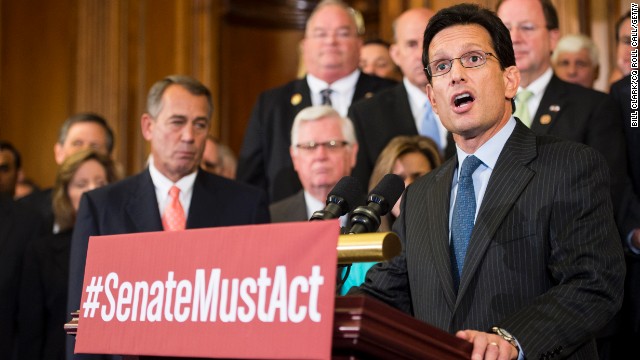 Rep. Eric Cantor, R-Virginia — The powerful lieutenant. Cantor, the House Republican No. 2, is much more closely allied with conservatives and tea party members in the House than is Speaker Boehner. The two have not always agreed on every strategy during potential shutdown debates, but have been in public lockstep during the current go-around.
 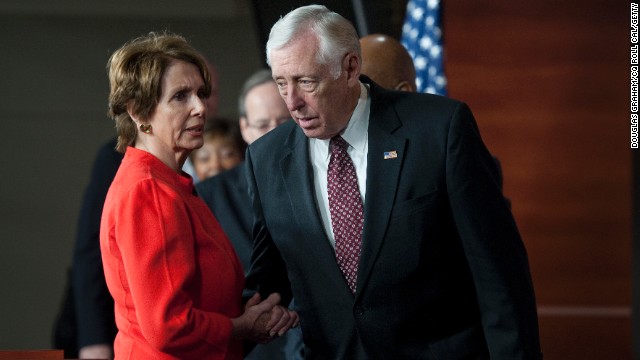 Rep. Nancy Pelosi, D-California, and Steny Hoyer, D-Maryland — Players on deck. The top two House Democrats are mostly watching and waiting. But they will play a critical role once Boehner decides his next move. They could either bring Democratic votes on board a deal or be the loudest voices against a new Republican alternative. Hoyer will be interesting to watch; he has strongly opposed both the House and Senate plans as cutting too much in spending.
 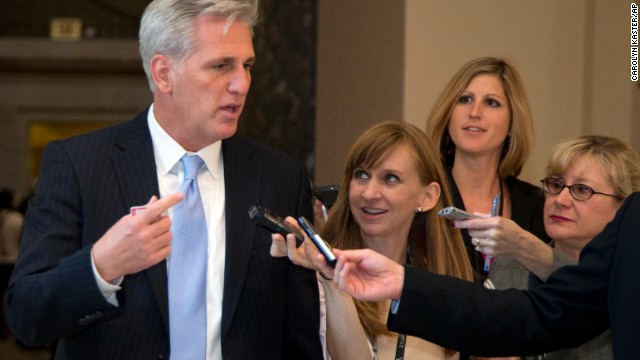 Rep. Kevin McCarthy, R-California — The numbers guy. McCarthy, the House whip, has the tricky job of assessing exactly where Republican members stand and getting the 217 votes it takes to pass a bill in the chamber. He is known for his outreach to and connection with many of the freshmen House members who align with the tea party.
 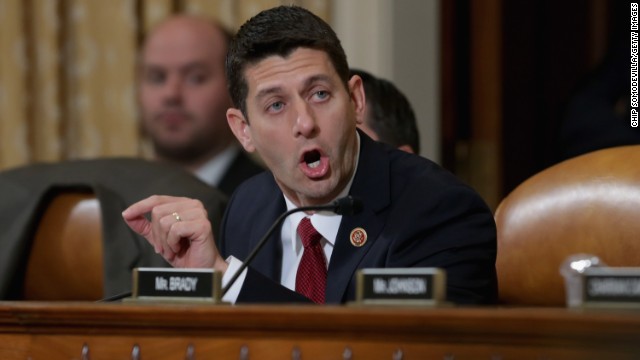 Rep. Paul Ryan, R-Wisconsin — Member to watch. The vote of the House budget chairman and former vice presidential nominee is an important signal both within Republican ranks and to the public at large. Ryan has voted against some funding measures in the past, including the emergency aid for Superstorm Sandy recovery. But he was a “yes” on the last extension of the debt ceiling.
 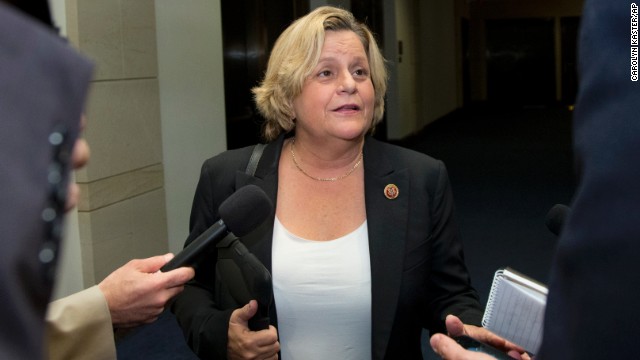 Rep. Ileana Ros-Lehtinen, R-Florida — Another member to watch. A former committee chairwoman (Republican rules have term limits for committee chairs), Ros-Lehtinen knows House politics and procedure inside out. Depending on the issue, she has been described as a conservative or moderate, and occasionally as a libertarian.
 Key players in the shutdown debate
Key players in the shutdown debate
Key players in the shutdown debate
Key players in the shutdown debate
Key players in the shutdown debate
Key players in the shutdown debate
Key players in the shutdown debate
Key players in the shutdown debate
Key players in the shutdown debate
Key players in the shutdown debate
Key players in the shutdown debate
Key players in the shutdown debate
Key players in the shutdown debate
Key players in the shutdown debate
Key players in the shutdown debate
Key players in the shutdown debate
Key players in the shutdown debate
Key players in the shutdown debate
HIDE CAPTION
<<
<</span>

1

2

3

4

5

6

7

8

9

10

11

12

13

14

15

16

17

18
>
>>
Photos: Key players in the shutdown debate Democrats are hopeful some Republicans would vote across the aisle to prevent the potentially catastrophic economic repercussions of a default.
If Senate Republicans require all the time-consuming steps available to them to delay action on the debt ceiling measure, a final vote might not take place until two days before the deadline for raising the borrowing limit, the Democratic aide said.
Such a Senate measure would increase pressure on the GOP-controlled House to do the same. But Republican House leaders have made clear they will insist on concessions from Democrats before agreeing to raise the debt ceiling.
Debt ceiling debate: Preaching to the choir
Obama reiterated Monday that he will not negotiate with Congress while the country was under threat of a possible debt default.
“We’re not going to establish that pattern,” Obama said, adding that “we’re not going to negotiate under the threat of a prolonged shutdown until Republicans get 100% of what they want” or under the threat of “economic catastrophe.”
Shutdown furloughs about to hit nuclear safety agency
At the same time, the White House signaled a willingness to accept a short debt limit increase that would allow time for broader negotiations.
White House spokesman Jay Carney told reporters that “I’m not ruling out” a debt ceiling increase of any particular length of time, adding he believed a longer one was better because it would provide certainty after what Obama characterized as “manufactured crises” over similar brinkmanship in recent years.
“Our position is only that it ought not to be a political football, because it’s a dangerous political football,” Carney said. “And you know, fumbling that football can cost you a lot more than seven points. It can tank the economy.”
Economists warn of dire fiscal impacts from failing to raise what is called the debt ceiling, such as a reduced U.S. credit rating that would spike borrowing costs. The economic blow and questions about America’s fiscal fidelity could bring a global slowdown, Obama has warned.
GOP to hold up back pay for furloughed workers
Boehner and Republicans kept up the pressure on Obama to negotiate with them over the debt ceiling, characterizing it as an unprecedented unwillingness by a U.S. president do so.
“There’s never been a president in our history that did not negotiate over the debt limit. Never. Not once,” Boehner said Tuesday, adding that Obama negotiated with him over the debt ceiling in 2011.
On Monday, Senate Minority Leader Mitch McConnell later said divided government means the two parties have to negotiate solutions.
“Until Senate Democrats accept that reality, these crises will only be harder to resolve,” McConnell, R-Kentucky, said.
However, one of Obama’s top economic advisers, Gene Sperling, told a Politico breakfast on Monday that “the era of threatening default has to be over.”
“If you sanction through negotiation the legitimacy of somebody threatening default, then that is going to happen over and over again,” Sperling said. “So sanctioning negotiations with someone threatening default is not going to end the risk of default. It is likely to increase the chances that we as a country eventually default or even perpetually threaten our full faith and credit.”
At issue is how to reach an agreement to fund the government in the newly started fiscal year and raise the $16.7 trillion debt limit.
Conservative Republicans intent on shrinking the government while trying to weaken Obamacare demand that any agreement on funding and raising the debt limit include their priorities.
“The debt ceiling is there for a purpose. It’s like the smoke alarm,” said House Financial Services Committee Chairman Jeb Hensarling, R-Texas. “Democrats want to unplug the smoke alarm, and Republicans want to go out and fight the fire.”
Boehner has insisted that a deal to raise the debt ceiling must include deficit reduction steps that would lower costs of entitlement programs such as Medicare, Medicaid and Social Security.
However, he appeared to move away from the demand of the tea party conservative wing of his GOP caucus to dismantle or defund the health care reforms passed by Democrats in 2010 and upheld by the Supreme Court last year.
Cruz: Use debt ceiling as leverage
Obama and Democratic leaders want what are known as “clean” measures to fund the government for a short period and increase the debt limit, with no accompanying provisions involving contentious deficit reduction measures or GOP efforts to weaken Obamacare.
Once such measures are passed, they say, negotiations can take place on a full budget for fiscal year 2014 that began on October 1 and other issues such as reducing spending on entitlement programs.
Hagel: Most civilian Defense workers can return this week
Last week, a House Republican said on condition of not being identified that Boehner told GOP colleagues in private meetings he would not allow a government default to occur. But Boehner has remained adamant that an increased debt limit requires accompanying spending cuts.
On the shutdown, Obama and Democrats say the House would pass a Senate spending plan to end it if Boehner allowed a vote.
A CNN survey shows that 18 Republicans would join all 200 House Democrats in supporting the plan, exceeding the 217 majority needed for it to pass. At the same time, the CNN survey showed that fewer Republicans were willing to join Democrats in a procedural move called a discharge petition that would force Boehner to hold a vote.
Cole said Tuesday that Boehner told his caucus at a morning meeting that no such vote would take place.
“He basically said we’re going to have a negotiation” instead of caving to Democratic calls to vote on the Senate version, Cole said.
Tea party conservatives forced Boehner to add anti-Obamacare amendments to the Senate spending plan that would end the shutdown, and the Senate and Obama rejected them.
According to Cole, the effort to dismantle Obamacare through the budget negotiations appeared dead.
“I think it’s been overtaken by the debt ceiling,” he said, adding that one specific proposal to repeal a tax on medical devices under Obamacare could be part of the broader negotiations by the special committee being proposed by House Republicans.
Shutdown forecast: Week two and clouds ahead
Reid suggested Monday that the Senate measure would pass the House if put to a vote, and Americans would realize the government was shut down “for no apparent reason.”
Both Obama and Reid said Democrats were open to negotiate “anything” — with the president specifically mentioning health care — once the government shutdown ends and the debt ceiling gets increased.
House Republicans, however, fear losing their leverage in any talks by giving up those two points without any concessions.
In a new national poll released Monday, most respondents said the government shutdown was causing a crisis or major problems for the country.
While the CNN/ORC International survey also indicated that slightly more people were angry at Republicans than Democrats or Obama for the shutdown, both sides were taking a hit.
According to the poll conducted over the weekend, 63% of respondents said they were angry at the Republicans for the way they have handled the shutdown, while 57% expressed anger at Democrats and 53% at Obama.
“It looks like there is more than enough blame to go around, and both parties are being hurt by the shutdown,” said CNN Polling Director Keating Holland.
Will 2014 election solve anything?
If Congress fails to raise the debt ceiling, borrowing money to meet the nation’s obligations won’t be possible, CNNMoney’s Jeanne Sahadi reported Monday.
Instead, Sahadi reported, lawmakers would have a few options to choose from that would have to be implemented right away — cut government spending for the military and other discretionary programs by up to 33% every month; cut mandatory spending such as entitlement programs by 16% every month, and raise taxes by up to 12% every month.
Boehner demands cuts for debt limit increase
CNN’s Jim Acosta, David Simpson, Dana Bash and Brianna Keilar contributed to this report.
Read the article:
Obama: Lift shutdown then we can talk
The post Obama: Lift shutdown then we can talk appeared first on Arne Ruhnau News.
via Arne Ruhnau News http://arneruhnau.com/obama-lift-shutdown-then-we-can-talk/

No comments:
Post a Comment