Chemical weapons: The desperate commander’s escape from stalemate
By Nic Robertson, CNN
September 8, 2013 — Updated 1611 GMT (0011 HKT)
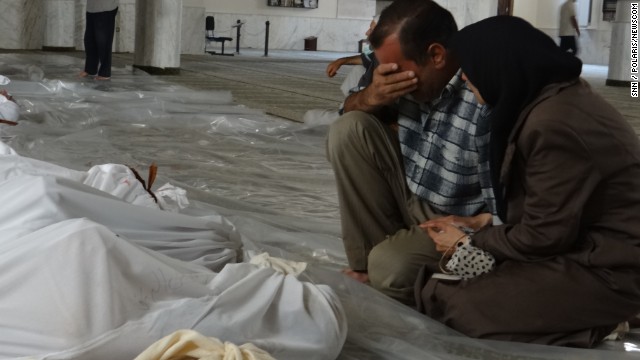 A man mourns over the bodies of those killed in a suspected chemical weapon attack in a suburb of Damascus, Syria, on Wednesday, August 21. Syrian rebels said that poisonous gas rained down from rockets overnight, but authorities have denied the allegations that they used chemical weapons and accused the opposition of staging the attacks. U.S. officials, however, said there were “strong indications” that there was a chemical weapons attack by the government.
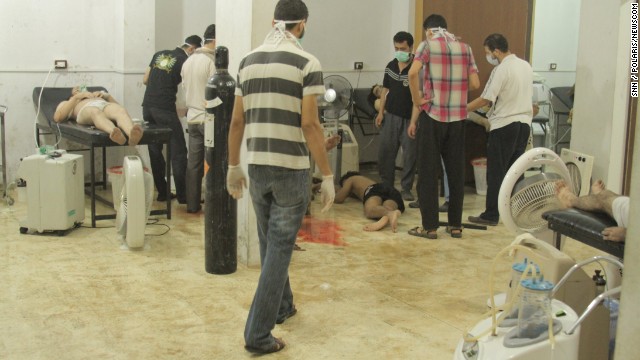 People attend to the victims of the attack on August 21 in Damascus. British intelligence said at least 350 people died, while rebel leaders have put the death toll at more than 1,300.
 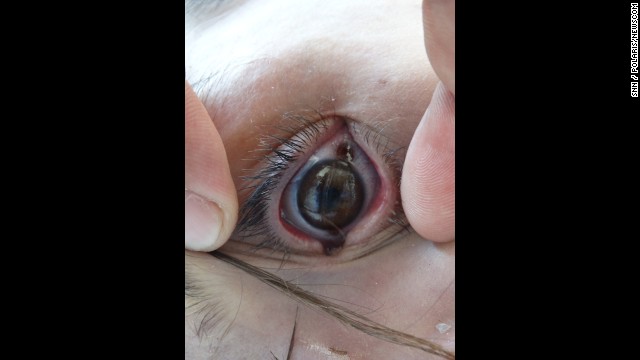 Constricted pupils was listed as a symptom in victims of the alleged attack on August 21.
 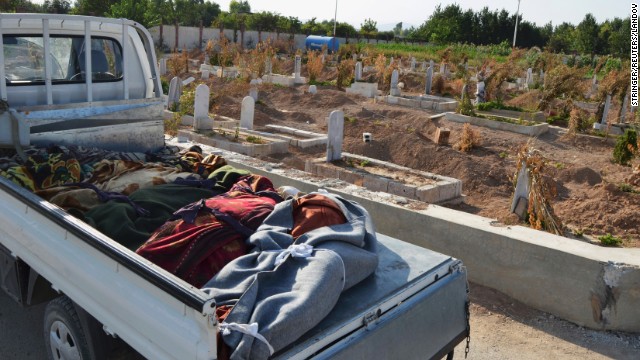 Victims of the attack are laid in the back of a truck in the Hamoria area of Damascus on August 21.
 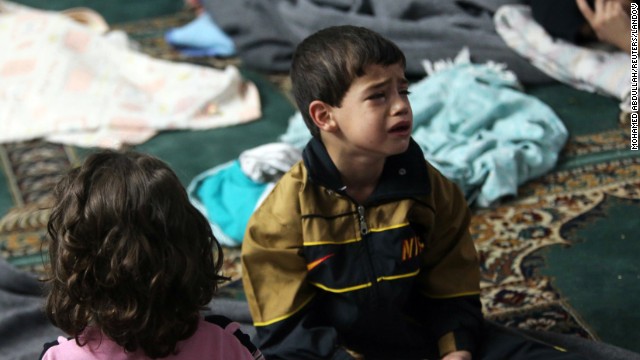 A young survivor takes shelter in a mosque in the Duma neighborhood of Damascus on August 21.
 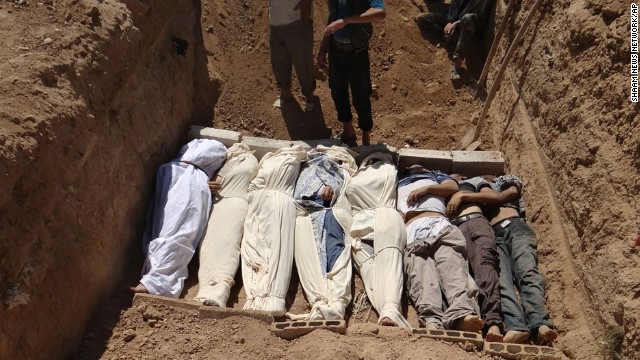 Victims are buried in a suburb of Damascus on August 21.
 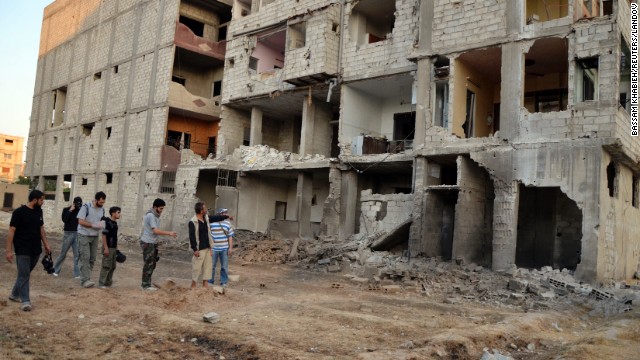 People search for the dead to collect samples to check for chemical weapon use in the Zamalka area of Syria on Thursday, August 22.
 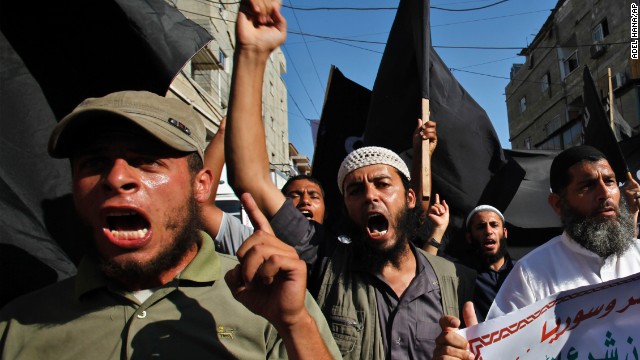 A group of young Salafists chants and waves black flags during a protest against the Egyptian and Syria regimes in the southern Gaza Strip on August 22.
  A young woman holds a Syrian revolution flag and a candle during a protest of President Bashar al-Assad in front of the U.N. headquarters in Gaza City on Friday, August 23. U.N. Secretary-General Ban Ki-moon intends to conduct a “thorough, impartial and prompt investigation” into the alleged chemical weapons attack in Syria.
 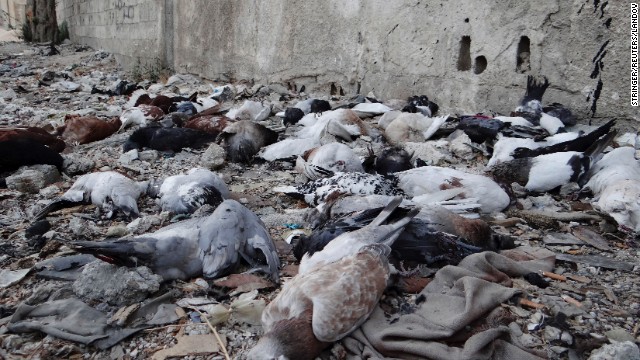 Pigeons’ bodies litter the ground in the Damascus suburbs of Arbeen on Saturday, August 24.
 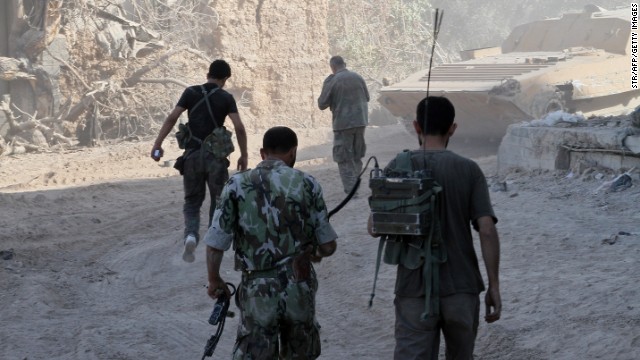 Syrian soldiers are deployed in the Jobar neighborhood of Damascus on August 24.
 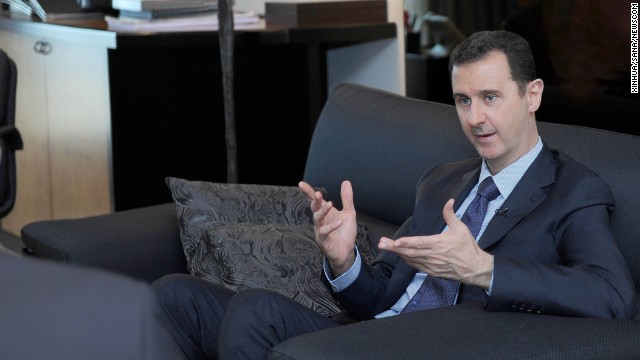 Syrian President Bashar al-Assad speaks with the Russian newspaper Izvestia in Damascus, Syria, on Monday, August 26. He told the newspaper that Western accusations that the Syrian government used chemical weapons are an insult to common sense.
 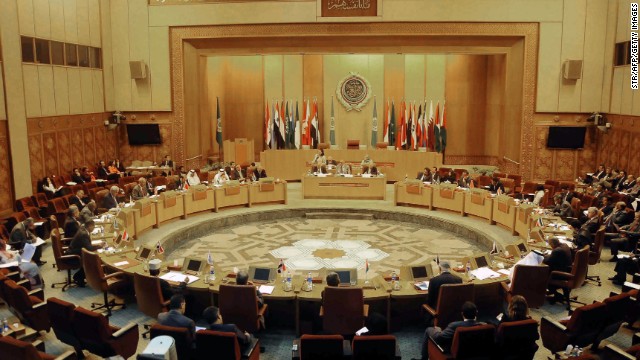 Representatives of Arab countries discuss Syria at the Arab League headquarters in Cairo, Egypt, on Tuesday, August 27. President al-Assad vowed to defend his country against any outside attack. “The threats of launching an aggression against Syria will increase its commitments,” and “Syria will defend itself against any aggression,” he said, according to Syrian state TV.
 HIDE CAPTION
Suspected chemical attack in Syria
Suspected chemical attack in Syria
Suspected chemical attack in Syria
Suspected chemical attack in Syria
Suspected chemical attack in Syria
Suspected chemical attack in Syria
Suspected chemical attack in Syria
Suspected chemical attack in Syria
Suspected chemical attack in Syria
Suspected chemical attack in Syria
Suspected chemical attack in Syria
Suspected chemical attack in Syria
Suspected chemical attack in Syria
Suspected chemical attack in Syria
<<
<</span>

1

2

3

4

5

6

7

8

9

10

11

12

13

14
>
>>
STORY HIGHLIGHTS
- Sources close to Assad say he planned to take Aleppo in “swift battle of high causalities”
- Chemical weapons are often used when armies are strained, leaders are frustrated
- Adolf Hitler used chemical agents in gas chambers
Beirut, Lebanon (CNN) — Question: Why use chemical weapons?
Answer: Because you want to get the job done fast.
Nerve agents and other battlefield chemicals are an area weapon. Be it town or trench where your enemy is hiding, your deadly gas will find them.
From the waterlogged northern European plains of World War I to the arid mountains and marshes of the Iran-Iraq conflict, chemical weapons have been used when armies get bogged down and commanders get frustrated.
When the urge to win outweighs warfare’s cold calculus of routine slaughter and indignity, the danger is a slide into the depravity of craven criminality.
Adolf Hitler used them in his extermination camps, diabolical in his annihilation of his enemies. So when I heard from two separate sources close to Syrian President Bashar al-Assad’s thinking that he planned to retake the country’s largest city Aleppo in a “swift battle of high causalities” so he could go to peace talks in Geneva with “facts on the ground” in his favor, the use of chemicals in Damascus’ suburbs against resurgent rebels made sense.
As told to me, the Syrian army hoped by mid-August to have control of Homs, and by early-September to be wrapping up victory in war-ravaged Aleppo.
In late-July, following June’s strategic victory in Qusayr of cutting rebel supply lines, Assad’s ambitions to get the country back in his control were on the rise. But two things happened, rebels attacked Alawite stronghold Latakia on the coast, temporarily distracting regime forces.
The Latakia thrust was soon repulsed but not without shaking Assad’s new found confidence. Second and more worryingly for him, rebels in the capital, loosely termed the “Damascus Brigade” by one regional source involved in supplying them with weapons and honing their fighting skills, were becoming a serious irritant.
For over a year loose-knit bands of rebel fighters have nipped at the regime’s Achilles heel, Damascus, with little strategic effect. Always a pressure point on the regime’s military resources, the capital has the potential to distract the leadership.
By mid-August, better-trained and better-equipped rebels were threatening to throw the regime off its agenda and stall strikes on Aleppo. A quandary for Assad, what should he do? The heat was no doubt turned up on his Damascus commanders: get results to free assets for the north.
Into that walked the U.N. chemical weapons inspectors. The rest seems to be history.
‘;
document.write(OB_MarkUP);
if (typeof(OB_Script)!=’undefined’)
OutbrainStart();
else{
var OB_Script=true;
var str=”
‘;
document.write(OB_MarkUP);
if ( typeof(OB_Script)!=’undefined’ )
OutbrainStart();
else {
var OB_Script = true;
var str = “
This article is from:
Chemicals: Desperate way to win
The post Chemicals: Desperate way to win appeared first on Arne Ruhnau News.
via Arne Ruhnau News http://arneruhnau.com/chemicals-desperate-way-to-win/

No comments:
Post a Comment