
(CNN) — A day after President Barack Obama made his case for both military intervention and diplomacy in Syria, world powers worked Wednesday to defuse the crisis.
Syria has agreed to a Russian plan to give up its chemical weapons, a move that could forestall international military strikes and possibly give diplomacy some positive traction.
But the bloody conflict in Syria continues to rage, and roadblocks and questions remain as to what’s next for the war-ravaged Middle Eastern nation.
Latest developments Wednesday:

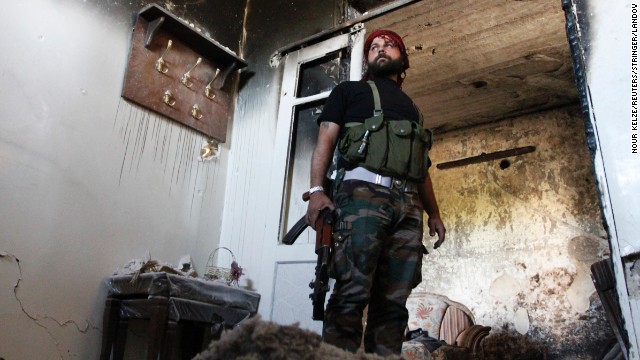 A Free Syrian Army fighter stands guard inside a damaged house in Aleppo’s Qastal al-Harami neighborhood on Wednesday, September 11. More than 100,000 people have been killed in Syria since a popular uprising spiraled into a civil war in 2011, according to the United Nations. The Syrian government’s suspected use of chemical weapons in a deadly August 21 attack has prompted the United States to urge military action against the regime. Click through to view the most compelling images taken since the start of the conflict.
 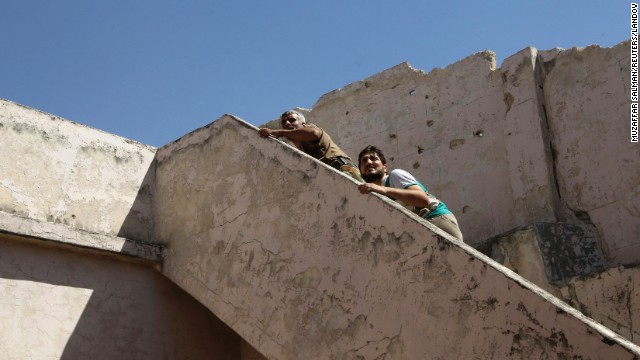 Free Syrian Army fighters climb a flight of stairs to take positions near the Hanano barracks on September 11.
 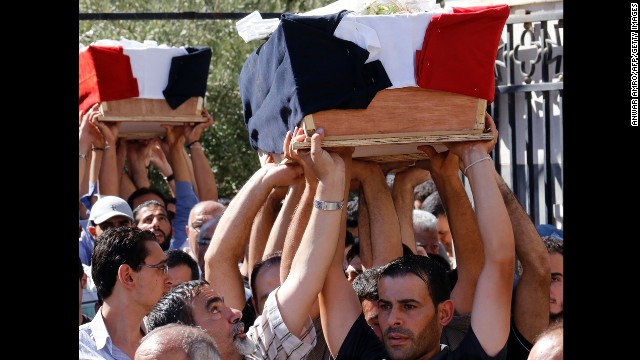 A funeral is held on September 11 for three Christian Syrians killed during battles with an al Qaeda-linked rebel group that took control of the historic Christian town of Maaloula from regime forces during the weekend.
 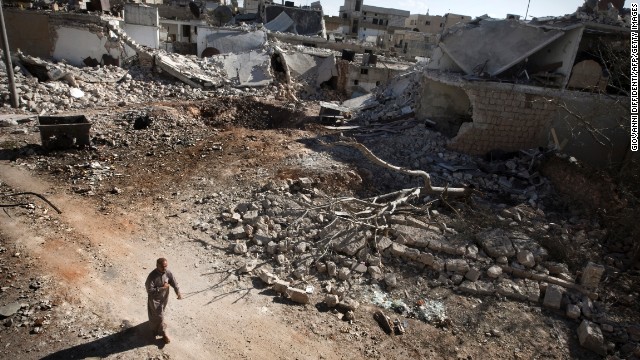 A man walks through a destroyed residential area of Saraqib, Syria, on Monday, September 9, following repeated airstrikes by government forces.
 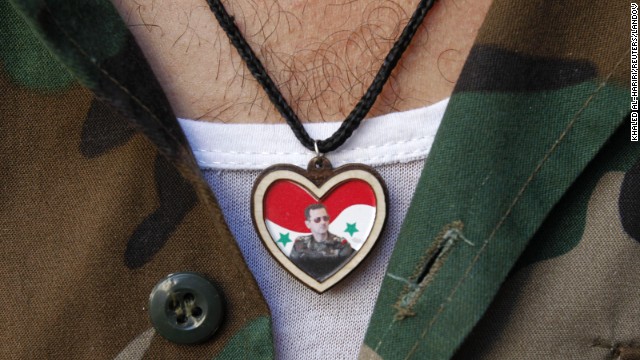 A soldier wears a picture of Syrian President Bashar al-Assad on his chest while at a market in old Damascus on September 8.
 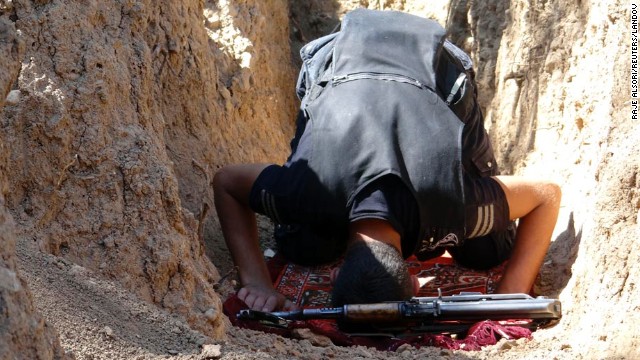 A Free Syrian Army fighter prays in a trench in the Damascus suburbs on September 8.
 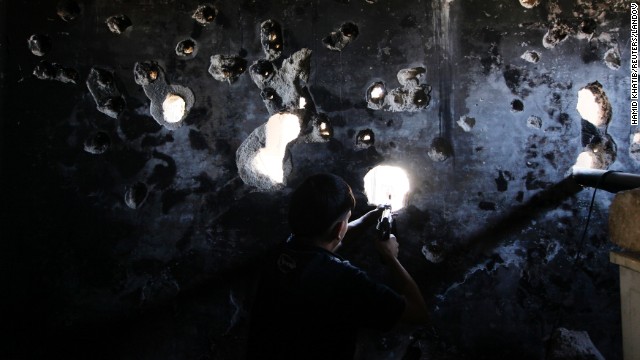 A Free Syrian Army fighter takes up a shooting position in Aleppo on September 8.
 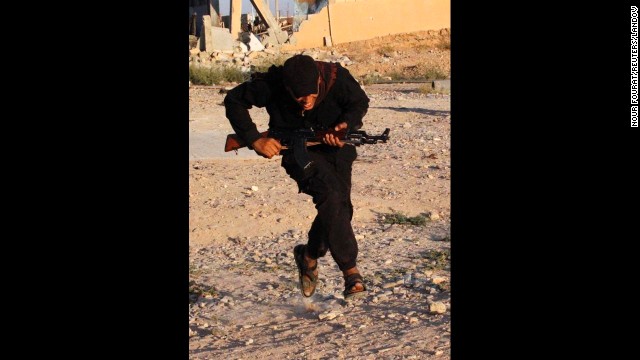 A Free Syrian Army fighter runs for cover in Raqqa province on September 8.
 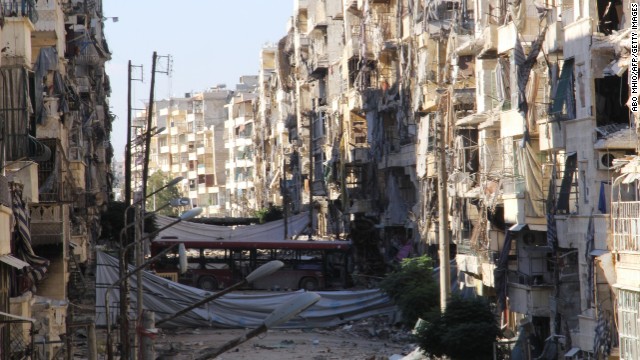 Buildings are heavily damaged in the Salah al-Din area of Aleppo on September 8.
 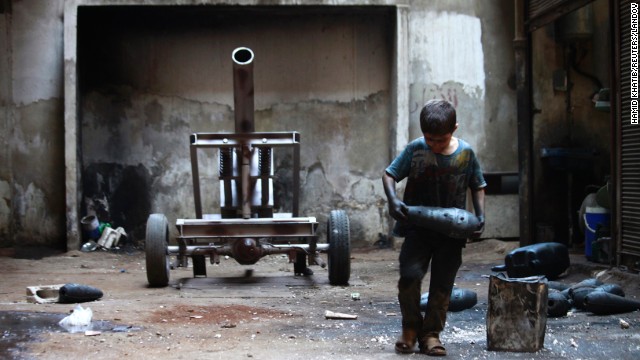 A boy named Issa, 10, carries a mortar shell in a weapons factory of the Free Syrian Army in Aleppo on Saturday, September 7. The boy works with his father in the factory.
 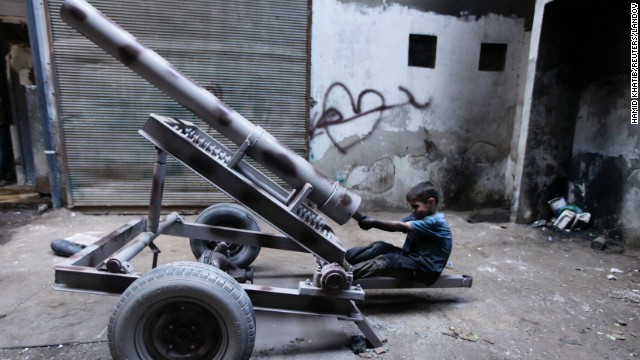 Issa fixes a mortar launcher in the Aleppo weapons factory on September 7.
 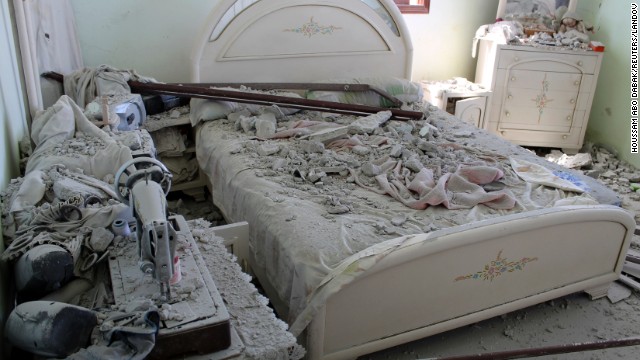 A bedroom lies in ruins after clashes between government forces and rebels around Ariha on September 7.
 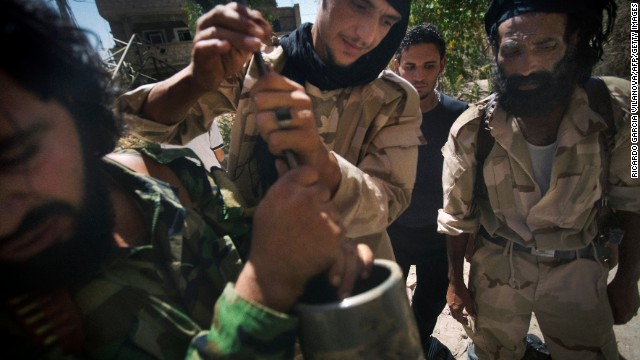 Rebels prepare explosive devices for fighting with government forces on September 7 in Deir Ezzor.
 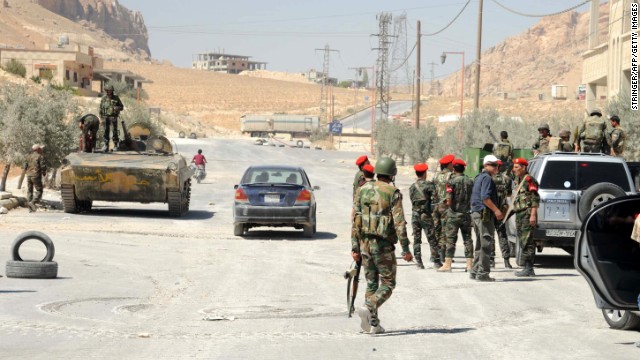 Syrian forces are seen in the Syrian Christian town of Maaloula on September 7.
 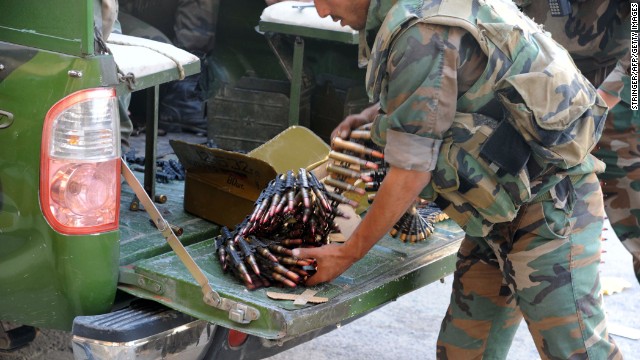 A Syrian soldier prepares large-caliber bullets for a machine gun in Maaloula on September 7.
 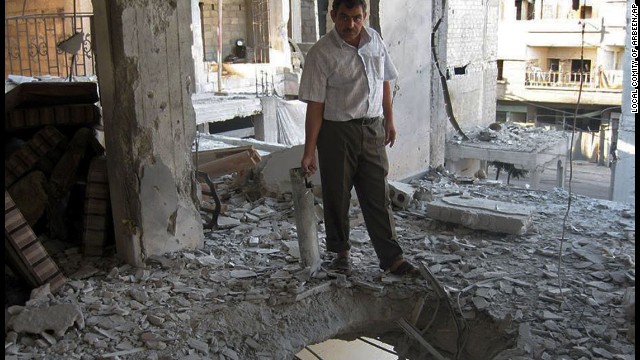 A man stands inside a home damaged by heavy shelling in Arbeen, a suburb of Damascus, Syria, on September 7.
 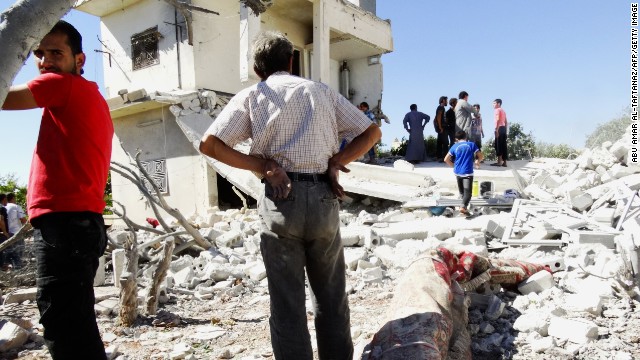 Men gather on the remains of a destroyed building after reported airstrikes by Syrian government forces in the rebel-held northwestern Syrian province of Idlib on Thursday, September 5.
 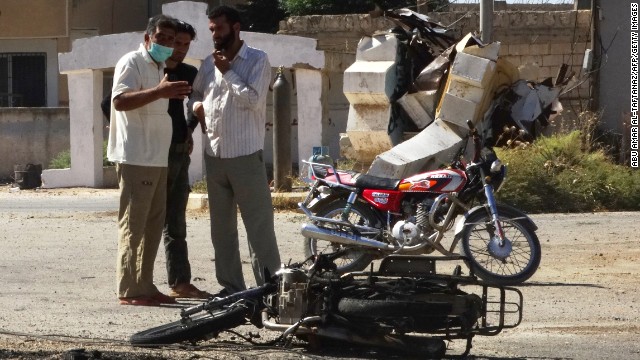 Men observe the wreckage of a motorbike in the Syrian province of Idlib on September 5. The Syrian Observatory for Human Rights watchdog said that Syrian war planes bombed rebel-held areas in Idlib, Aleppo, Hama and Lattakia.
 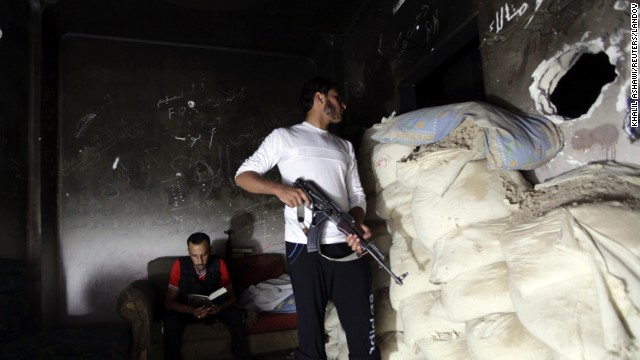 A Free Syrian Army fighter looks through a hole from behind sandbags, while a fellow fighter reads the Quran in Deir Ezzor, Syria, on Tuesday, September 3. The United States and other Western nations blame the Assad regime for a chemical weapons attack that’s believed to have killed more than 1,400 people.
 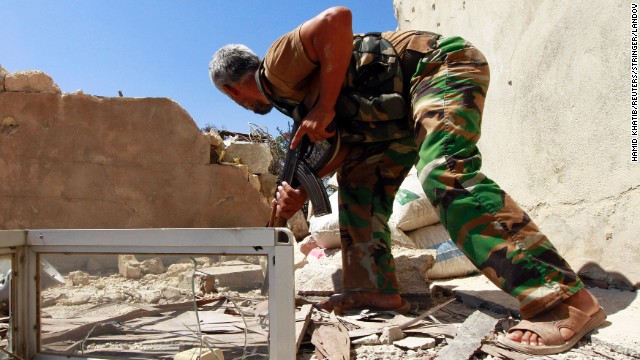 A Free Syrian Army fighter takes cover as he watches forces loyal to President Bashar al-Assad near Hanano barracks in Aleppo on September 3.
 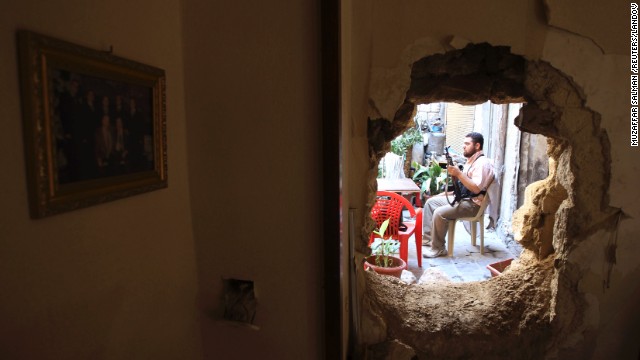 A Free Syrian Army fighter is seen through a hole in a wall of a building in Aleppo on September 3.
 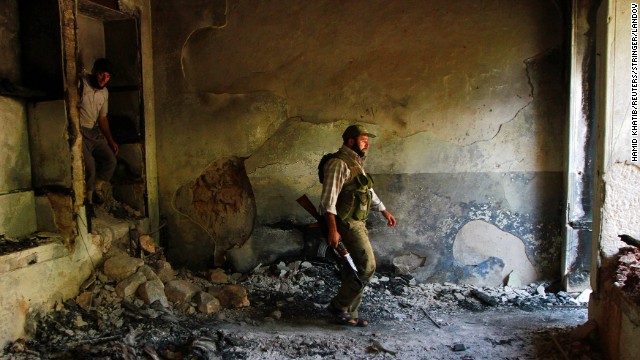 Free Syrian Army fighters walk inside a damaged house in Aleppo on September 3.
 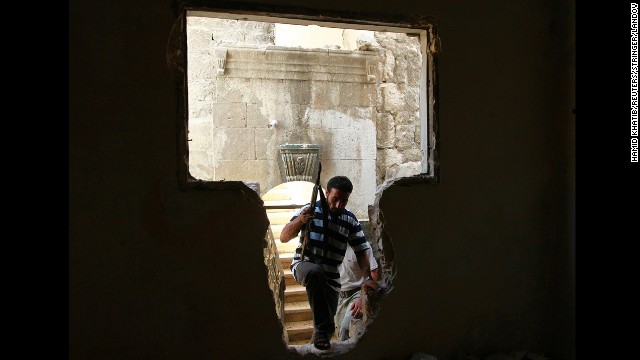 A Free Syrian Army fighter walks through a hole in a wall in Aleppo on September 3.
 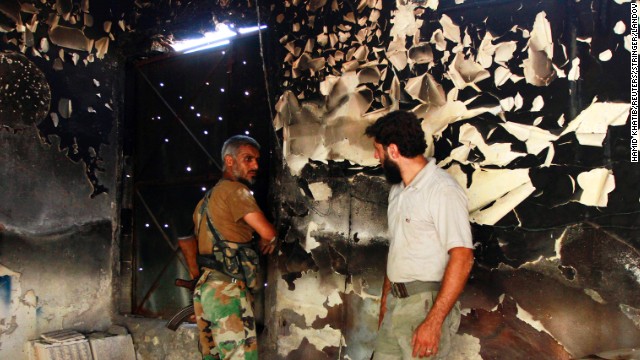 Free Syrian Army fighters talk inside a burnt house in Aleppo on September 3.
 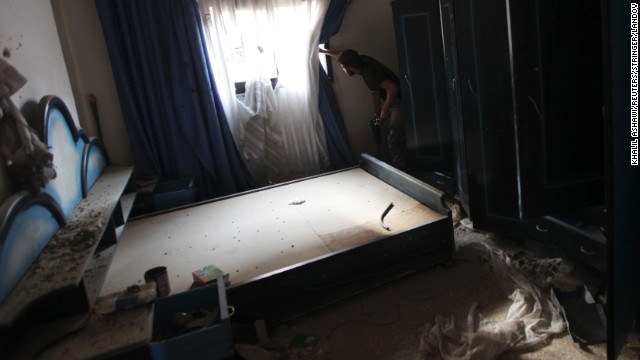 A Free Syrian Army fighter peeks through the curtains of a bedroom in Deir ez-Zor, Syria, on Monday, September 2.
 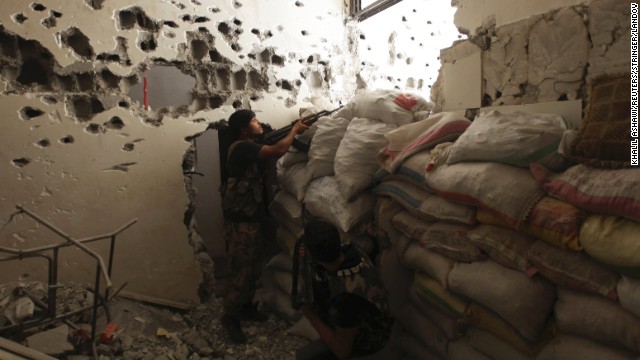 Free Syrian Army fighters take their positions behind piled sandbags, as one of them points his weapon, in Deir ez-Zor on September 2.
 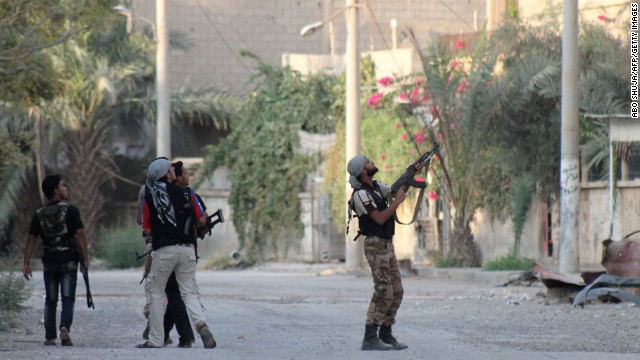 A rebel fighter points his weapon at Syrian regime forces in Deir ez-Zor on September 2.
 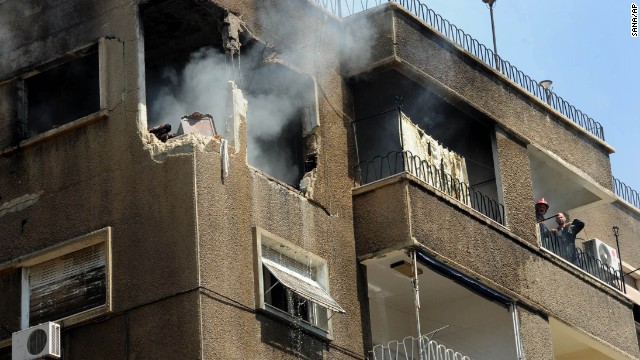 Syrian firefighters try to extinguish a fire after a missile hit a residential building in Damascus, Syria, on September 2.
 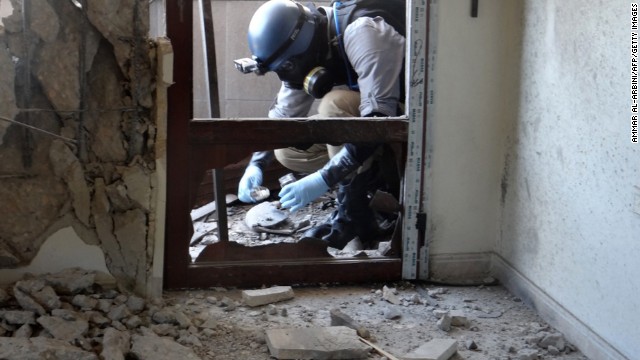 A U.N. arms expert collects samples during an inspection of a suspected chemical weapons strike site in the Ghouta area outside Damascus on August 29.
 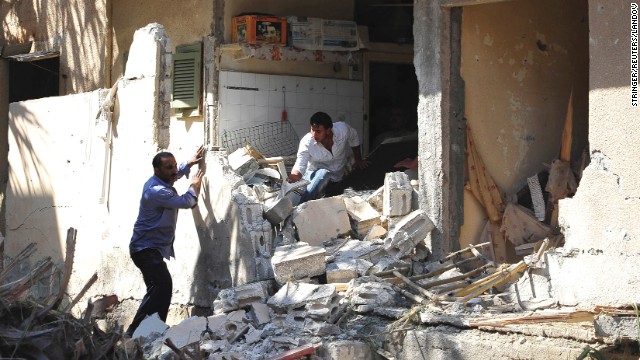 People search for belongings in rubble in Raqqa, Syria, on August 29.
 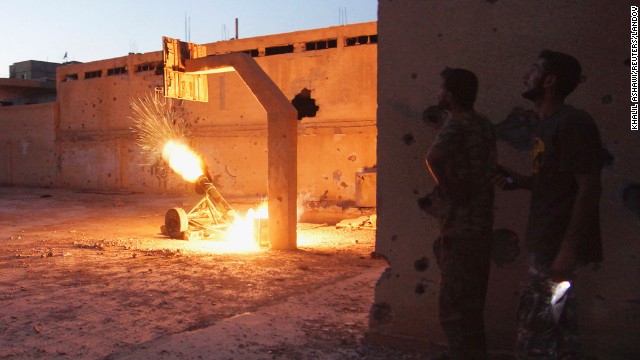 Free Syrian Army fighters launch a rocket toward forces loyal to Syrian President Bashar al-Assad in Deir Ezzor on August 29.
 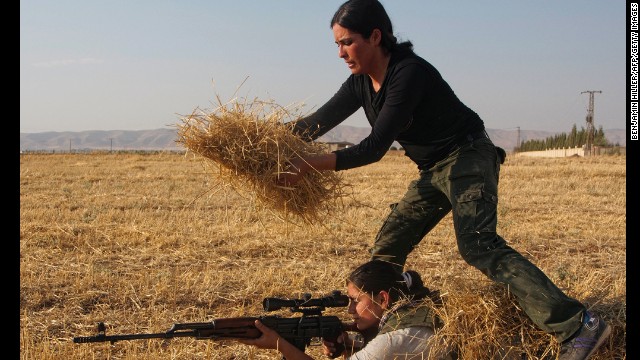 A Syrian Kurd uses hay to hide another woman in a training session organized by the Kurdish Women’s Defense Units on Wednesday, August 28, in a northern Syrian border village. They’re preparing if the area comes under attack.
 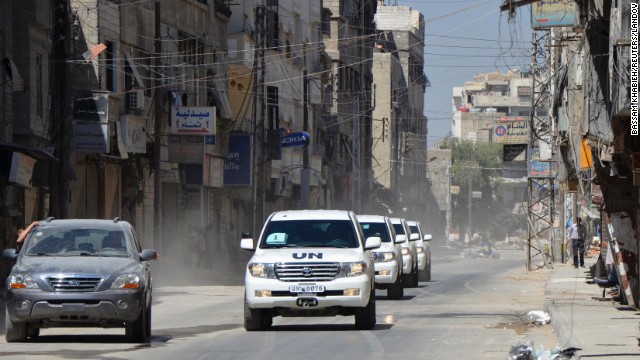 Free Syrian Army fighters escort U.N. vehicles with chemical weapons experts on August 28 through a site of a suspected chemical weapons attack outside Damascus.
 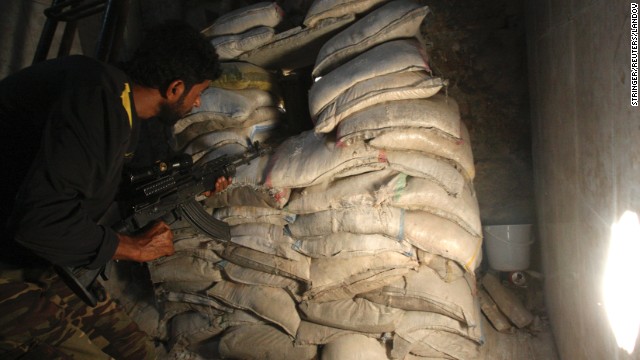 A Free Syrian Army fighter takes position behind sandbags in the old city of Aleppo, Syria, on Tuesday, August 27.
 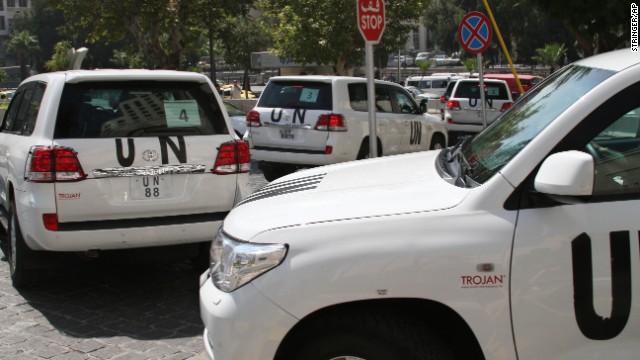 A U.N. team leaves its Damascus, Syria, hotel in a convoy on Monday, August 26. The team was to investigate an alleged chemical attack that killed hundreds last week in a suburb of the Syrian capital. Sniper fire hit a vehicle used by the U.N. chemical weapons investigation team multiple times Monday, according to the United Nations.
 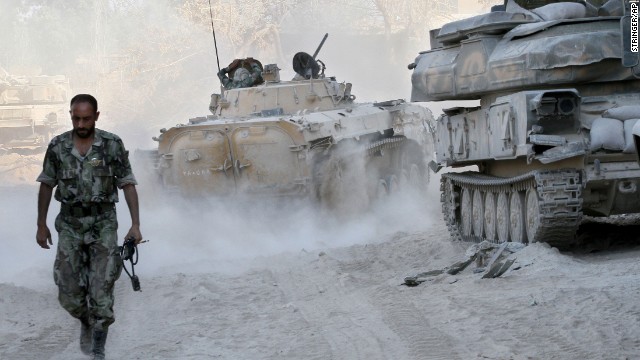 A Syrian soldier walks down a street in Damascus on Saturday, August 24.
 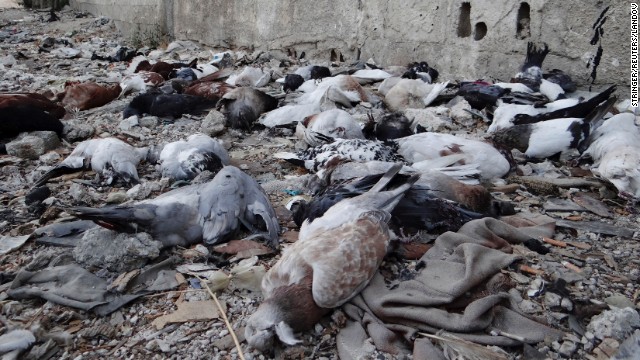 Pigeons lie dead on the ground on August 24 from after what activists say is the use of chemical weapons by government forces in the Damascus suburb of Arbeen.
 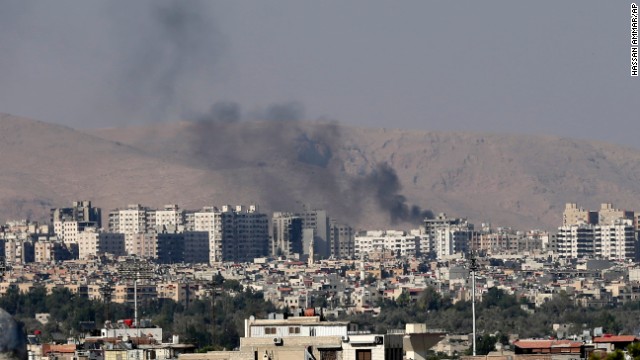 Columns of smoke rise in Barzeh after heavy shelling on Friday, August 23.
 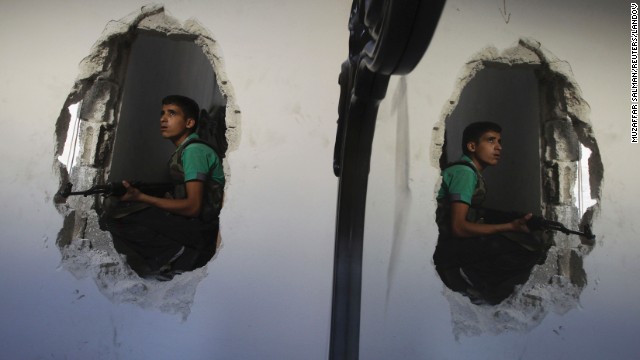 A young Free Syrian Army fighter is reflected in a mirror as he takes position in a house in Aleppo on Thursday, August 22.
 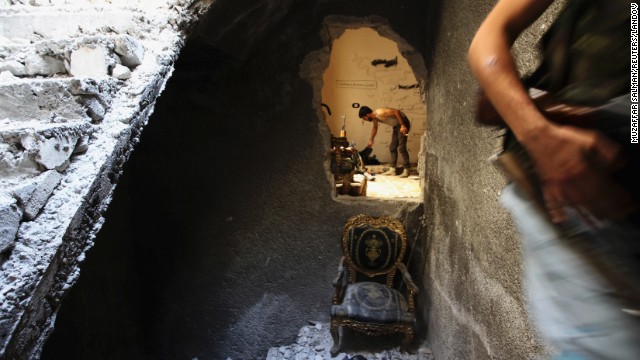 Rebels move around a building in Aleppo on August 22.
 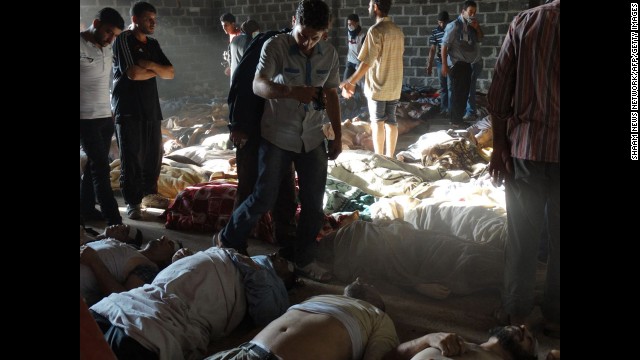 Syrian rebels claim pro-government forces used chemical weapons to kill citizens outside Damascus on Wednesday, August 21. People inspect bodies in this photo released by the Syrian opposition Shaam News Network.
 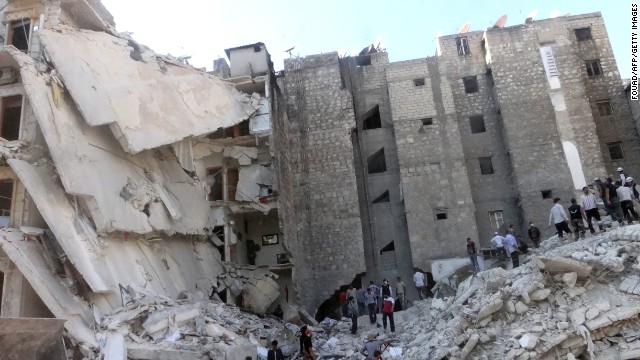 People search the rubble of a bombed building in Aleppo, Syria, on Friday, August 16.
 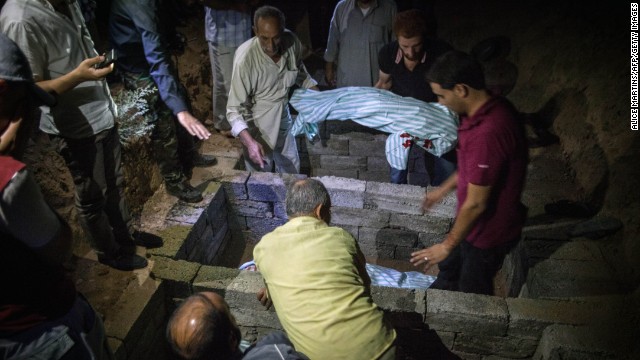 Men bury the bodies of six members of the same family killed in a bombing in Raqqa on Saturday, August 10.
 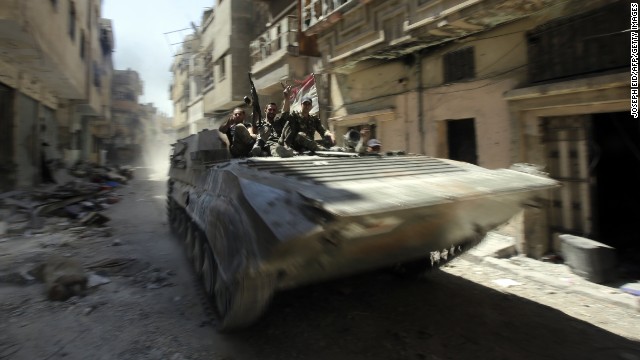 Syrian Army soldiers patrol a devastated street in Homs on Wednesday, July 31.
 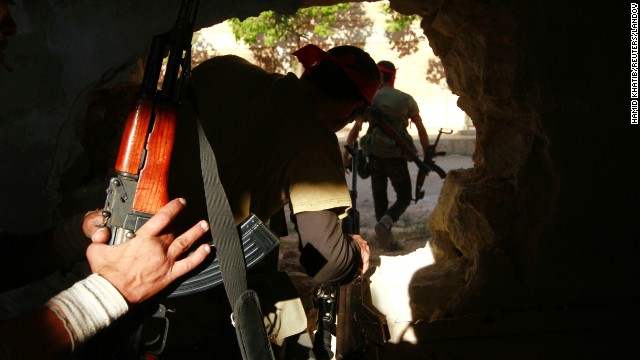 Free Syrian Army fighters move through a hole in a wall in Khan al-Assal on Monday, July 22, after seizing the town.
 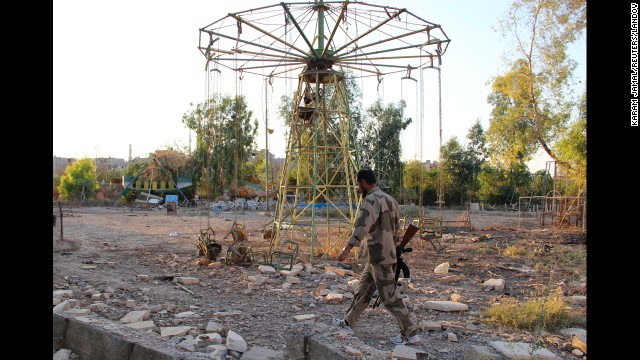 A rebel fighter walks past swings in a deserted playground in Deir al-Zor, Syria, on Sunday, July 21.
 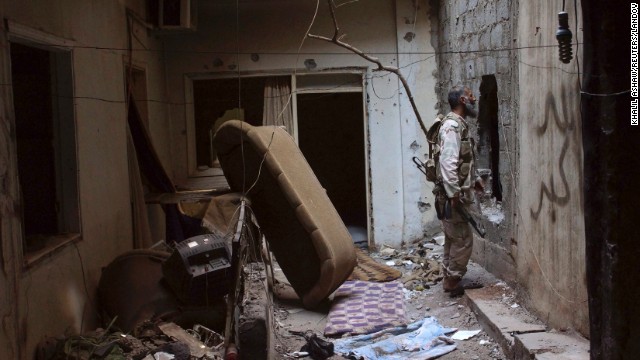 A rebel fighter speaks with a fellow fighter through a hole in a wall in Deir al-Zor on July 21.
 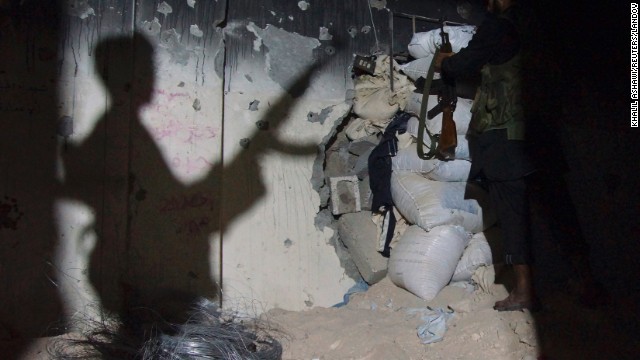 A Free Syrian Army fighter casts a shadow on a wall as he carries his weapon in a shelter in Deir al-Zor on Thursday, July 18.
 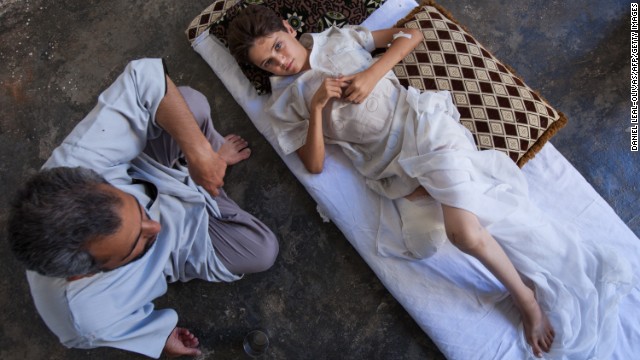 Yahya Sweed, 13, is comforted by his father as he lies on a bed in Kfar Nubul on Tuesday, July 16. The boy was injured by shrapnel, resulting in the amputation of his right leg.
 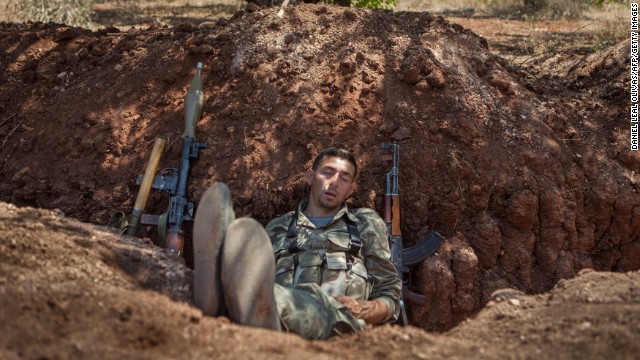 A rebel fighter naps in a trench about 300 feet from the Syrian government forces’ positions along the highway connecting Idlib with Latakia on Monday, July 15.
 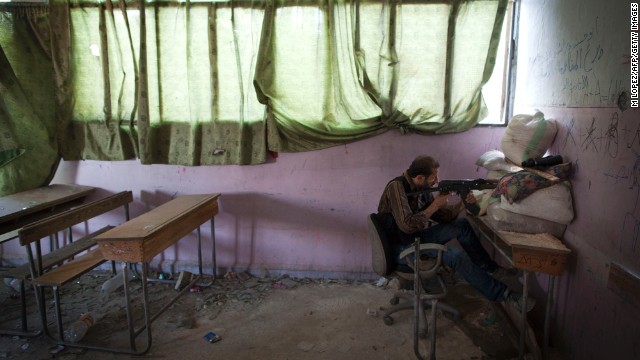 A rebel fighter uses a hole in the wall of a destroyed school to aim at Syrian government forces in the Izaa district of Aleppo on Sunday, July 14.
 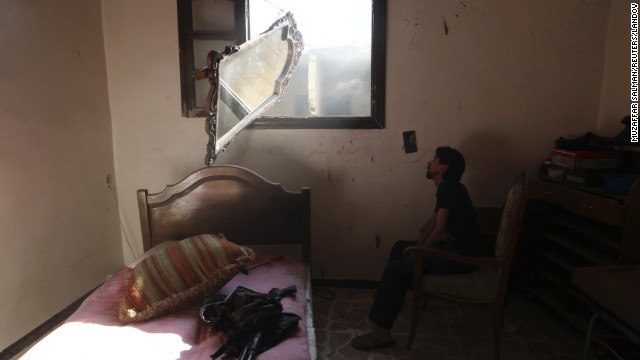 A Free Syrian Army fighter uses a mirror to scope out snipers loyal to Syrian President Bashar al-Assad in Aleppo on Friday, July 12.
 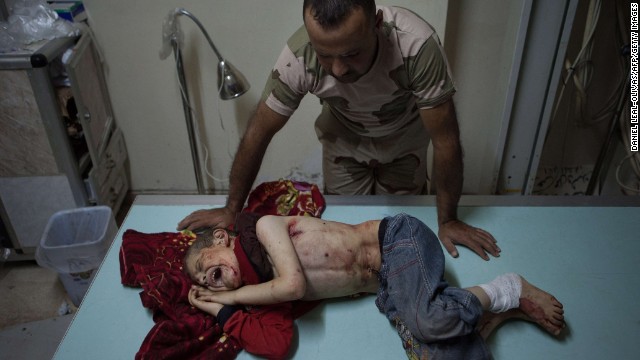 A Free Syrian Army fighter stands over a boy who was injured during shelling in Al-Bara on Monday, July 8.
 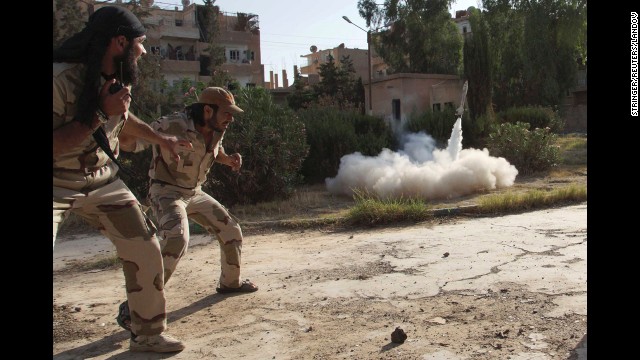 Members of the Free Syrian Army fire a homemade rocket toward regime forces in Deir al-Zor on Sunday, June 16.
 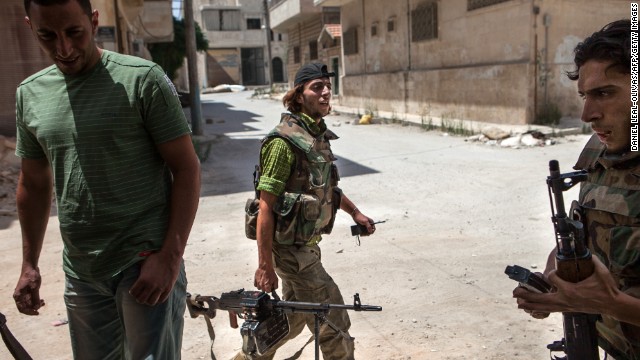 Syrian rebels leave their position in the northwestern town of Maaret al-Numan on Thursday, June 13. The White House said that the Syrian government has crossed a “red line” with its use of chemical weapons and announced it would start arming the rebels.
 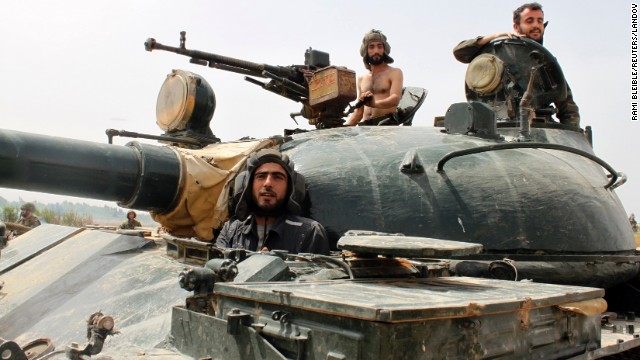 Forces loyal to Syrian President Bashar al-Assad are seen near Qusayr on Thursday, May 30.
 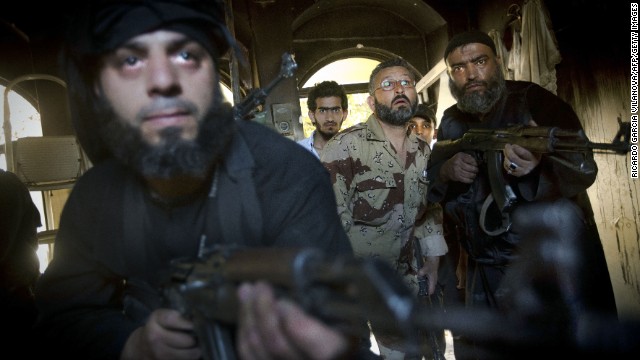 Syrian rebels take position in a house during clashes with regime forces in the old city of Aleppo on May 22.
 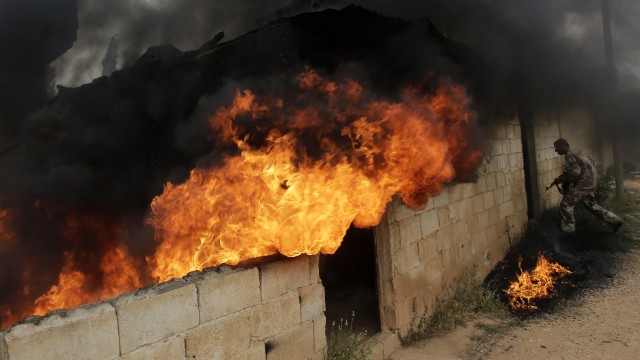 Syrian army soldiers take control of the village of Western Dumayna north of the rebel-held city of Qusayr on Monday, May 13. Syrian troops captured three villages in Homs province, allowing them to cut supply lines to rebels inside Qusayr town, a military officer told AFP.
 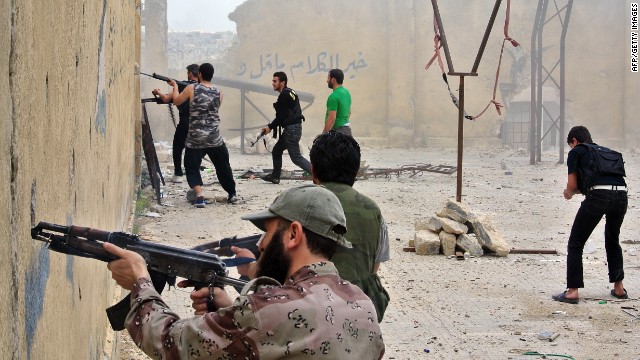 Rebel fighters fire at government forces in the northern Syrian city of Aleppo on Sunday, May 12.
 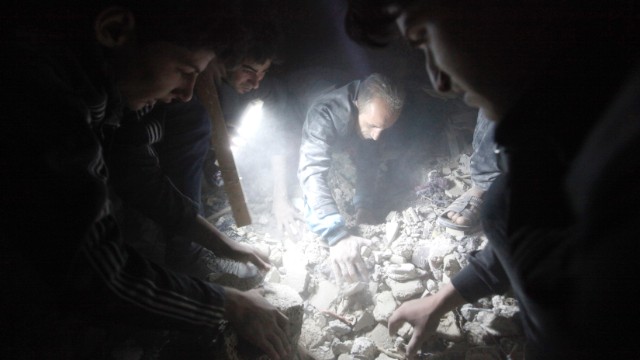 Searchers use a flashlight as they look for survivors among the rubble created by what activists say was a missile attack from the Syrian regime, in Raqqa province, Syria, on April 25.
 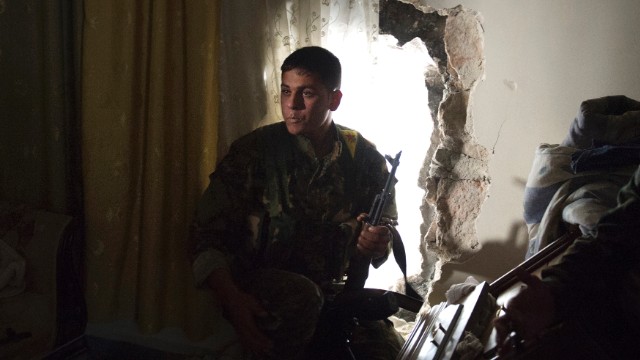 A Kurdish fighter from the “Popular Protection Units” (YPG) takes position inside a building in the majority-Kurdish Sheikh Maqsood area of Aleppo, on Apri. 21.
 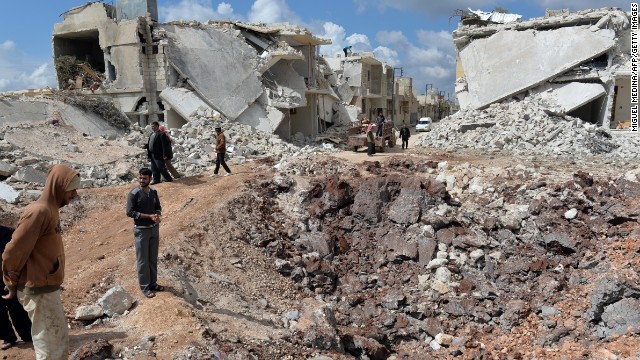 People walk past destroyed houses in the northern Syrian town of Azaz on Sunday, April 21.
 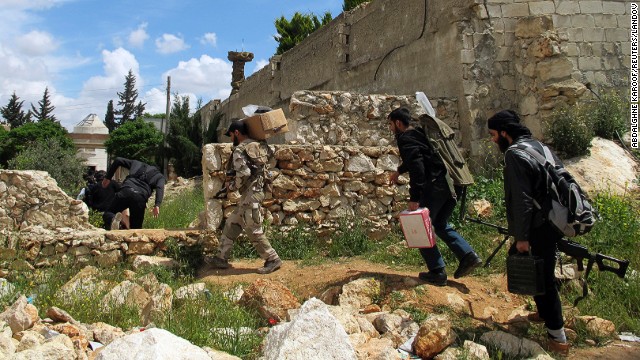 Free Syrian Army fighters take positions prior to an offensive against government forces in the Khan al-Assal area, near Aleppo on Saturday, April 20.
 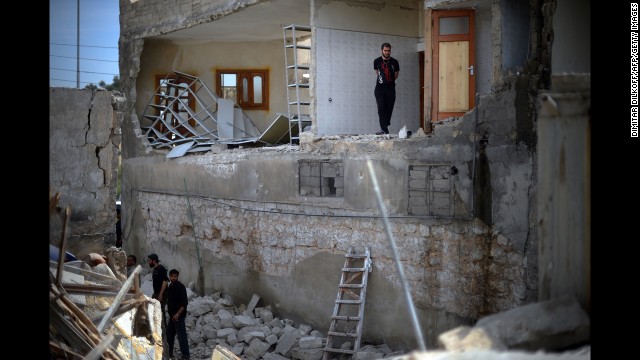 Men inspect damage at a house destroyed in an airstrike in Aleppo on April 15.
 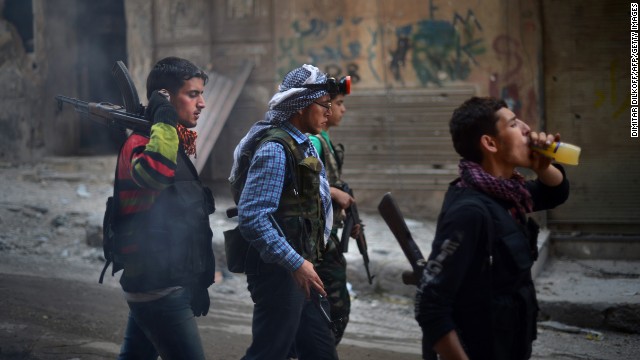 Syrian and Kurdish rebel fighters walk in the Sheikh Maqsud district of Aleppo on April 14.
 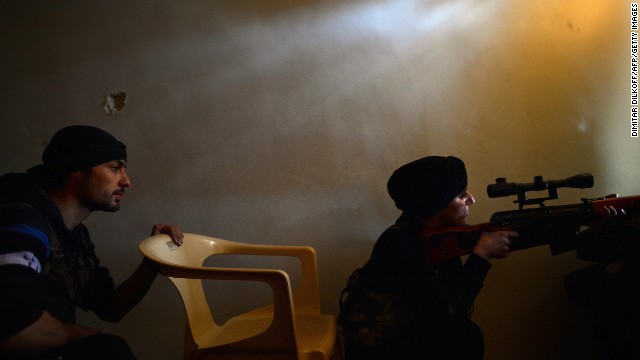 A female rebel monitors the movement of Syrian government forces in Aleppo’s Sheikh Maqsud neighborhood on Thursday, April 11.
 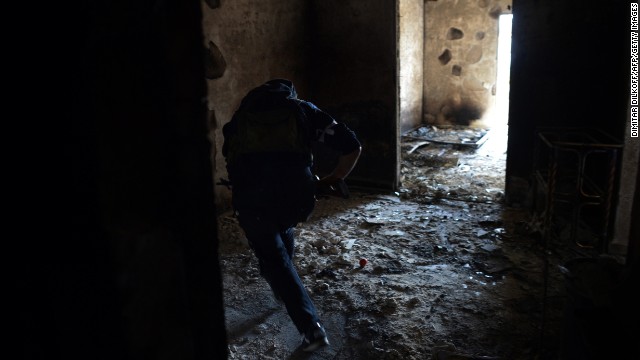 A rebel runs to avoid sniper fire from Syrian government forces in Aleppo on April 11.
 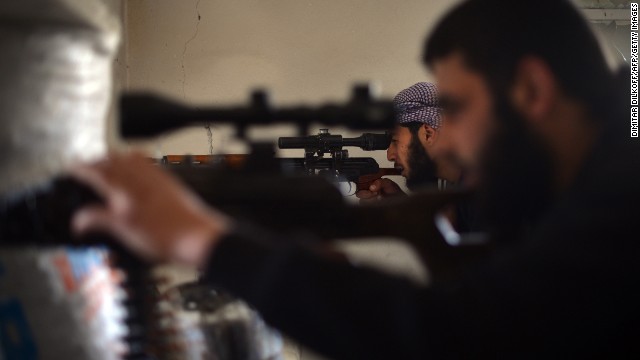 Syrian rebels observe the movement of Syrian government forces around Al-Kendi hospital in Aleppo on Wednesday, April 10.
 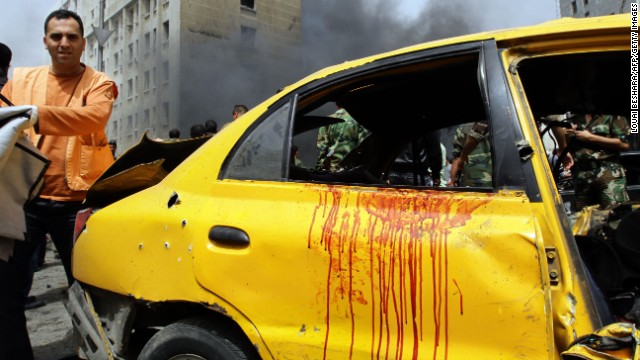 Rescue teams and security forces check out the scene of a deadly car bomb explosion in Damascus on April 8.
 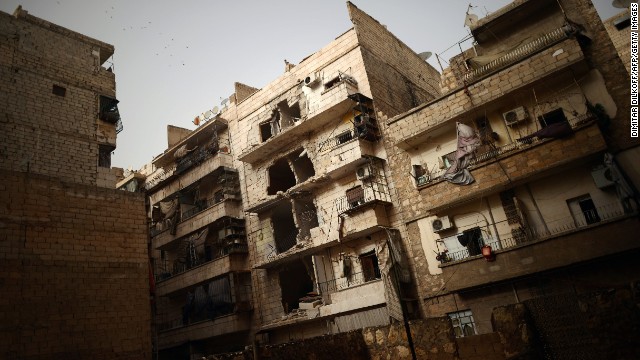 The fighting has taken a toll on buildings in Aleppo’s Saladin district, seen here on April 8.
 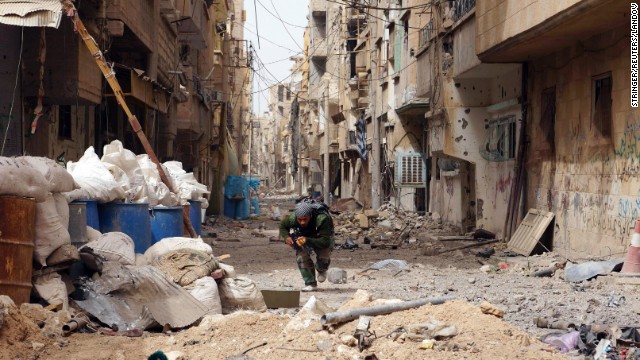 A Syrian rebel runs for cover in Deir ez-Zor on April 2.
 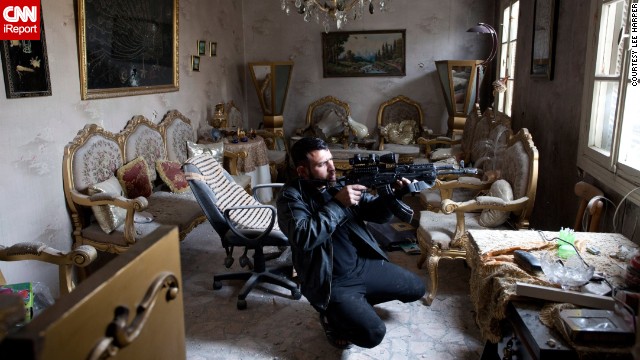 A rebel checks for snipers across the street toward the Citadel in Aleppo, Syria, on Saturday, March 30, in this photo taken by iReporter Lee Harper.
 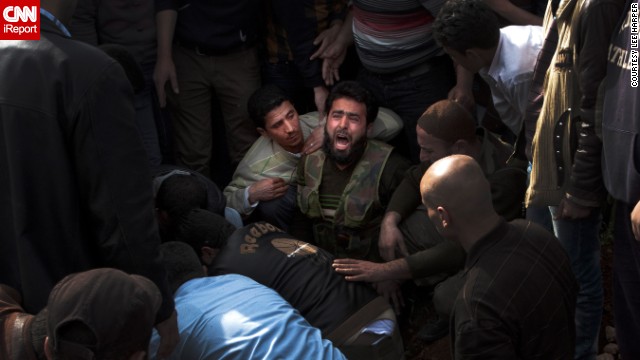 A Free Syrian fighter mourns the death of a friend in Aleppo on March 30, in this photo taken by iReporter Lee Harper.
 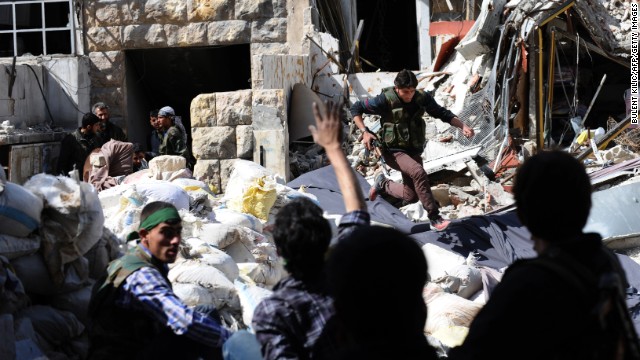 A Syrian opposition fighter runs for cover from Syrian army snipers in Aleppo on Wednesday, March 27.
 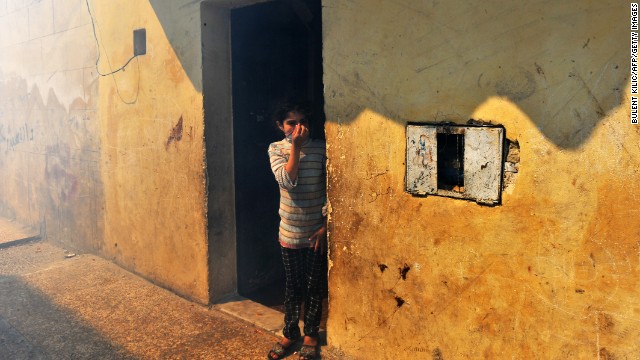 A Syrian girl covers her face to protect herself from fumes as a street covered with uncollected garbage is fumigated in Aleppo on Sunday, March 24.
 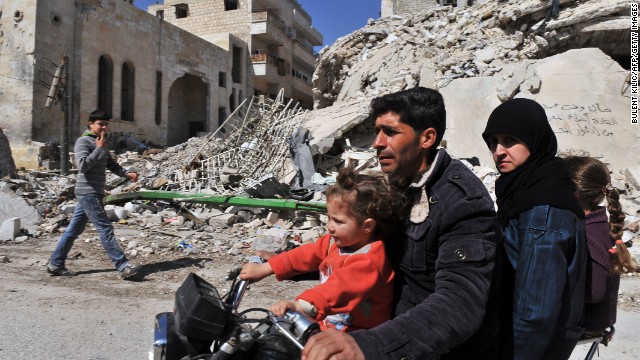 A Syrian man and his family drive past damaged buildings in Maarat al-Numan, on Wednesday, March 20.
 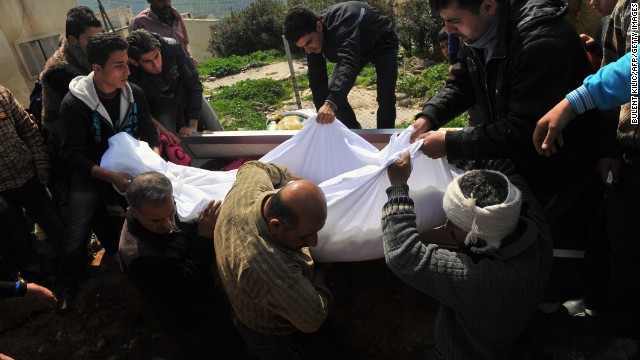 Syrians carry the body of a Syrian army soldier during a funeral ceremony in Idlib province on Tuesday, March 19.
 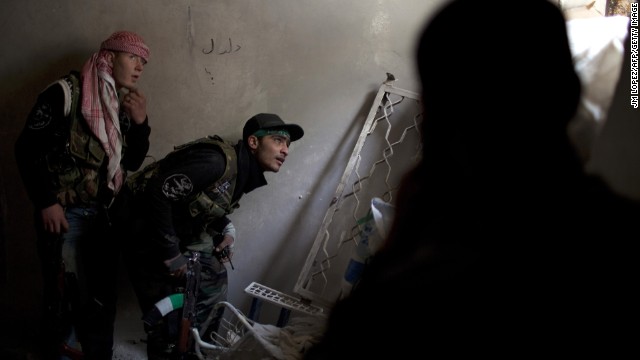 Syrian rebels take position in Aleppo, the largest city in the country, on March 11.
 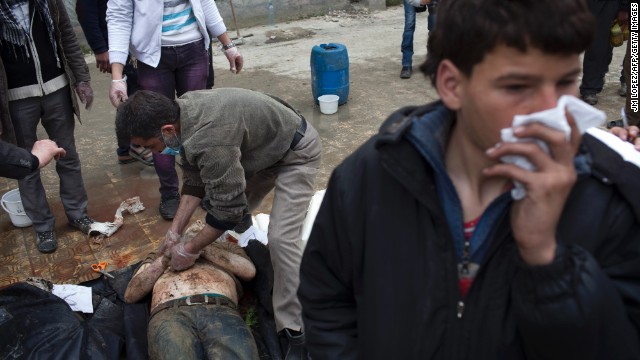 Syrian men search for their relatives amongst the bodies of civilians executed and dumped in the Quweiq River on March 11.
 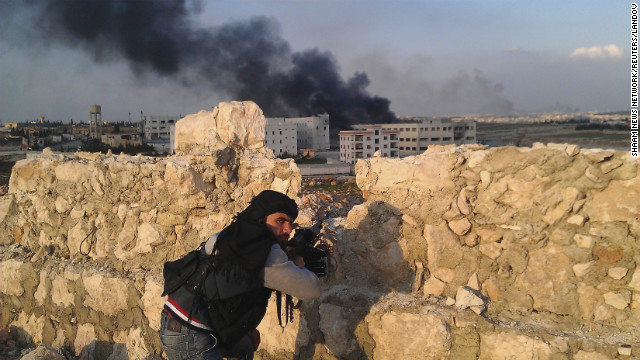 A Free Syrian Army fighter looks back as smoke rises during fighting between rebel fighters and forces loyal to Syria’s President Bashar al-Assad on the outskirts of Aleppo on Saturday, March 2.
 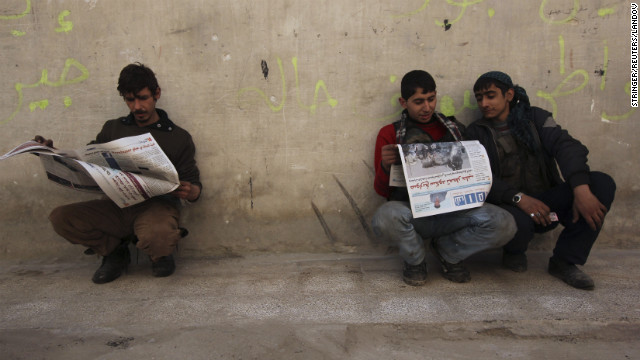 Residents read Shaam News newspapers published by the Free Syrian Army in Aleppo on March 2.
 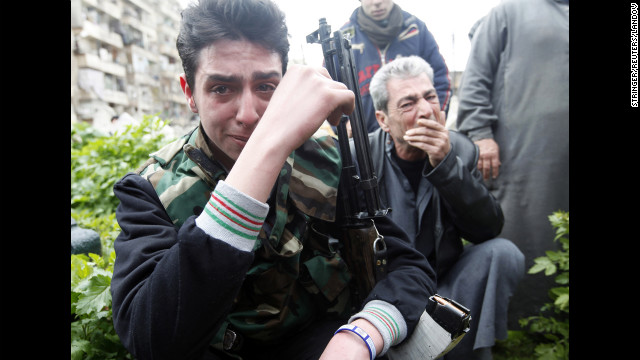 A member of the Free Syrian Army reacts to the death of a comrade who was killed in fighting, at Bustan al Qasr cemetery in Aleppo on Friday, March 1.
 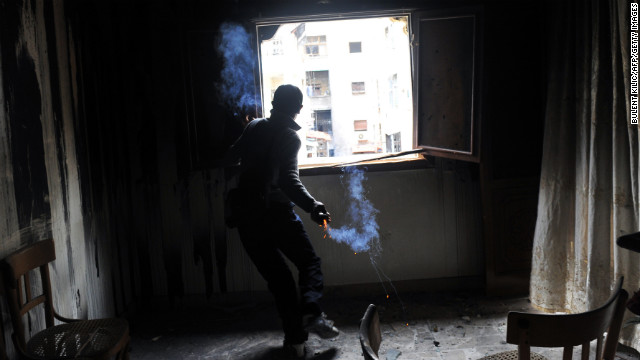 A rebel fighter throws a home-made grenade at Syrian government forces in Aleppo on February 16.
 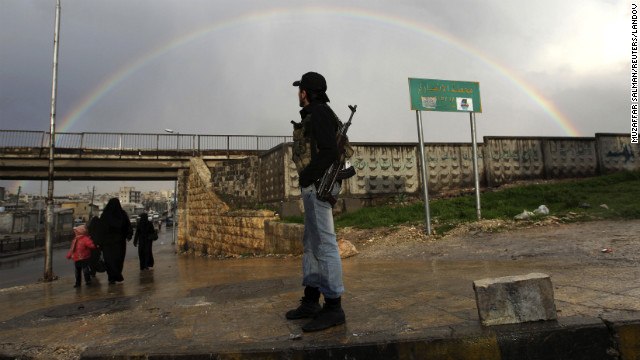 A member of the Free Syrian Army stands with his weapon as he looks at a rainbow in Aleppo on February 16.
 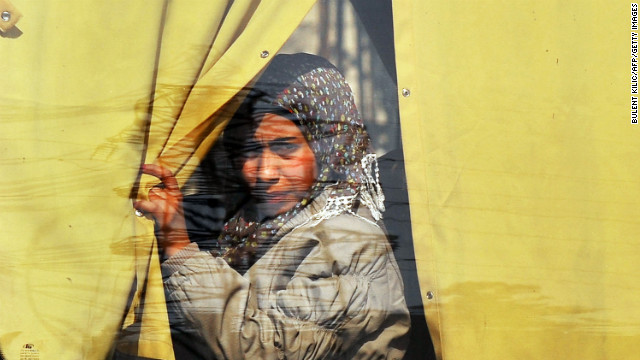 A Syrian woman looks through a bus window in Aleppo on February 14.
 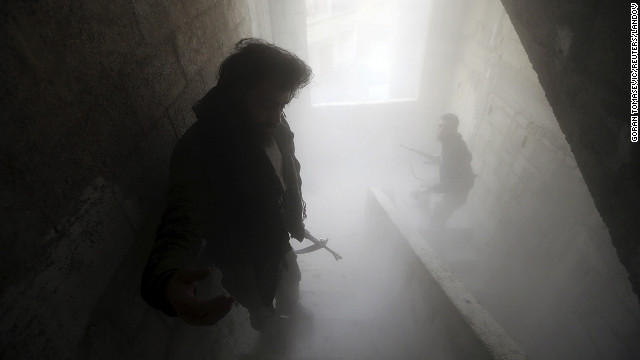 Free Syrian Army fighters walk through a dust-filled stairwell in Damascus on February 7.
 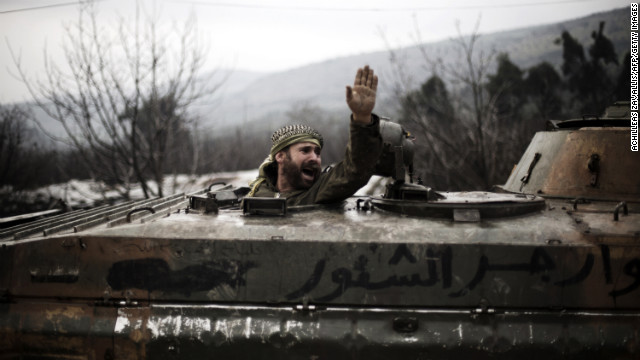 A Syrian rebel gestures at comrades from inside a broken armored personnel carrier in Al-Yaqubia on February 6.
 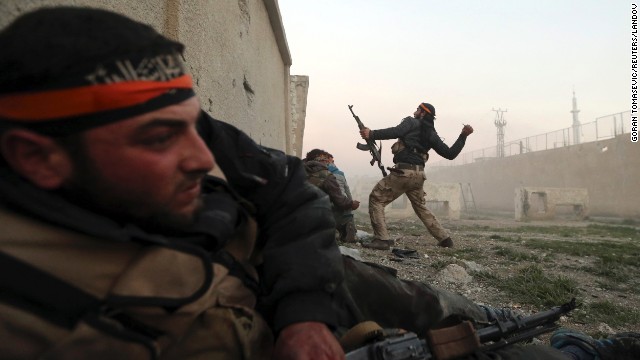 A rebel fighter throws a hand grenade inside a Syrian Army base in Damascus on February 3.
 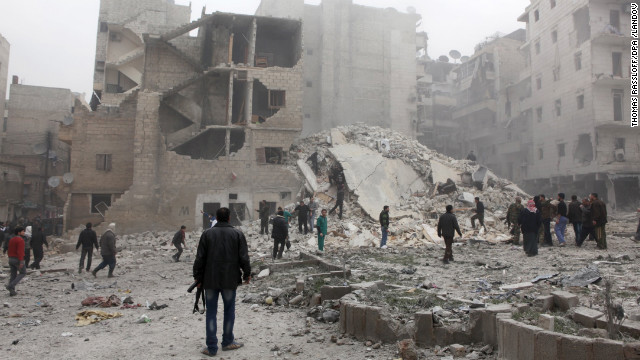 People stand in the dust of a building destroyed in an airstrike in Aleppo, Syria on February 3.
 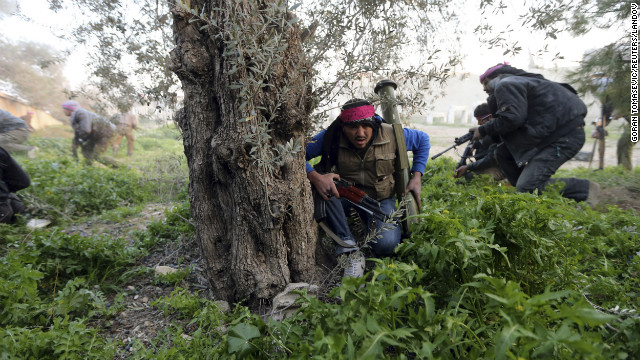 Free Syrian Army fighters run as they enter a Syrian Army base during heavy fighting in the Arabeen neighborhood of Damascus on February 3.
 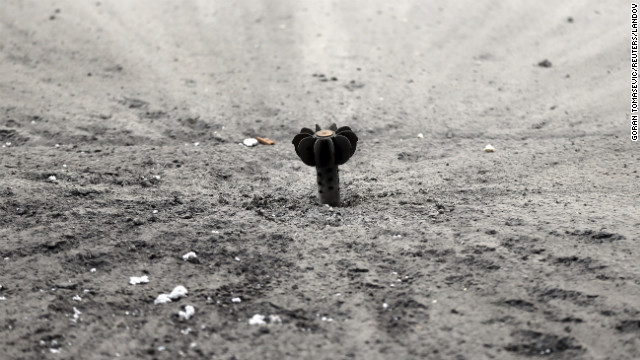 An unexploded mortar shell fired by the Syrian Army sits lodged in the ground in Damascus on January 25.
 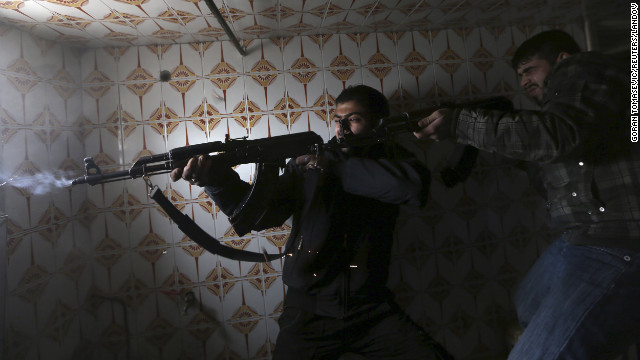 Fighters from Fateh al Sham unit of the Free Syrian Army fire on Syrian Army soldiers at a check point in Damascus on January 20.
 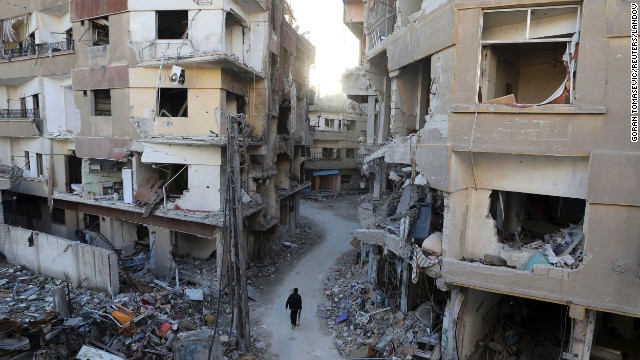 A Free Syrian Army fighter walks between buildings damaged during Syrian Air Force strikes in Damascus on January 19.
 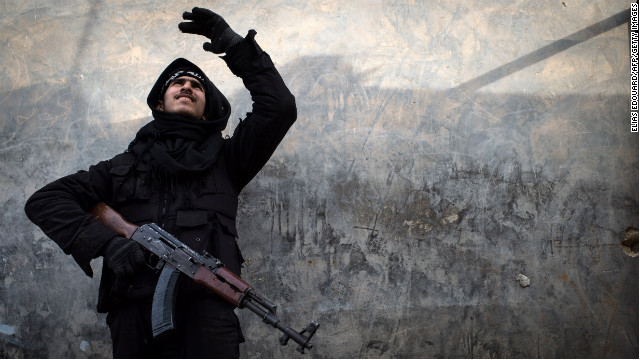 A Syrian rebel fighter tries to locate a government jet fighter in Aleppo on January 18.
 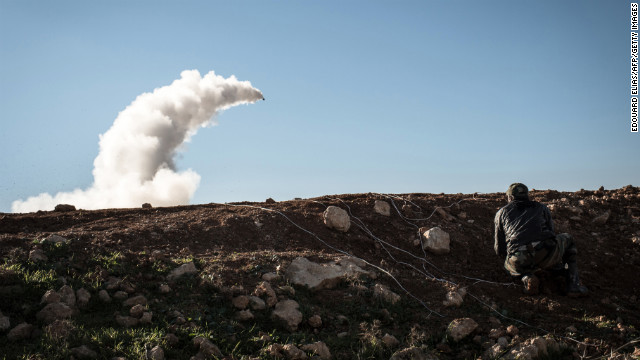 Syrian rebels launch a missile near the Abu Baker brigade in Albab on January 16.
 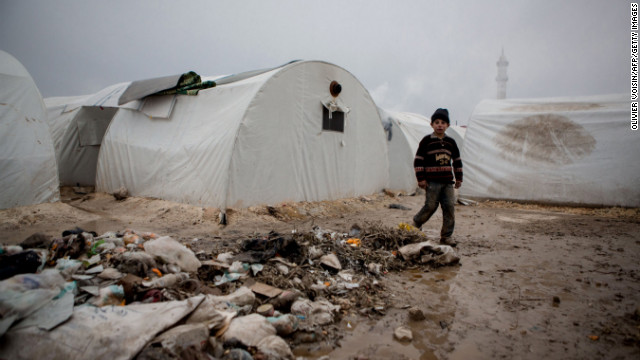 A Syrian boy walks near rubbish next to tents at a refugee camp near the northern city of Azaz on the Syria-Turkey border, on January 8.
 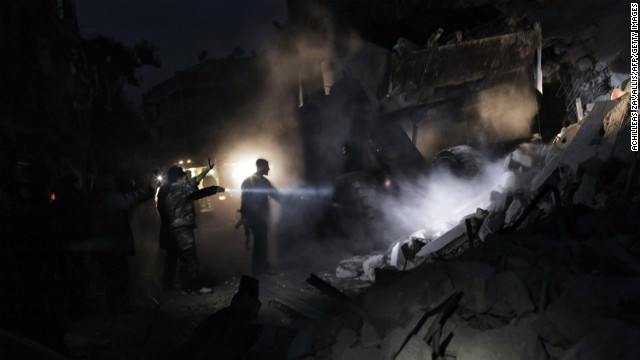 Syrians look for survivors amid the rubble of a building targeted by a missile in Aleppo on January 7.
 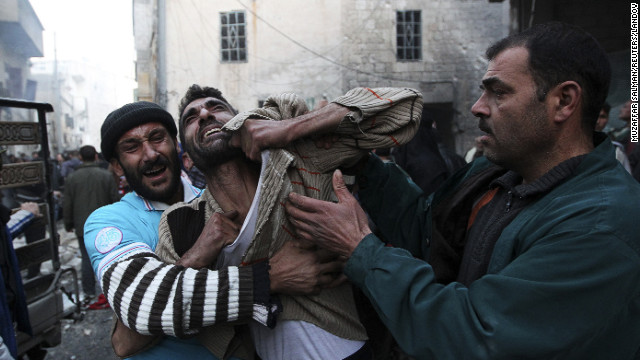 A father reacts after hearing of a shelling by forces loyal to Syria’s President Bashar al-Assad in Aleppo on January 3.
 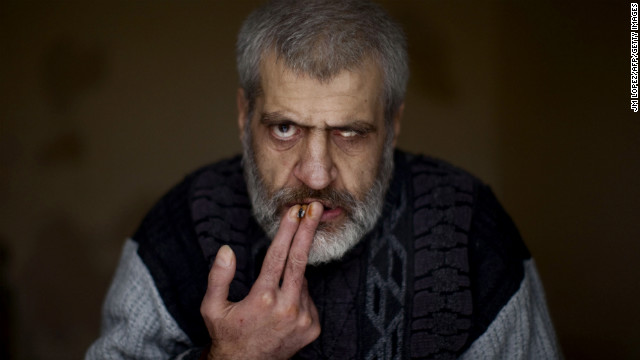 A patient smokes a cigarette at Dar Al-Ajaza psychiatric hospital in Aleppo on December 18, 2012. The psychiatric ward, housing around 60 patients, has lacked the means to function properly since fighting broke out there in July.
 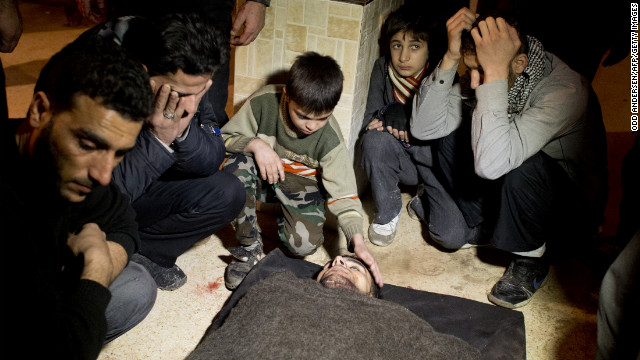 Syrians mourn a fallen rebel fighter at a rebel base in the al-Fardos area of Aleppo on December 8, 2012.
 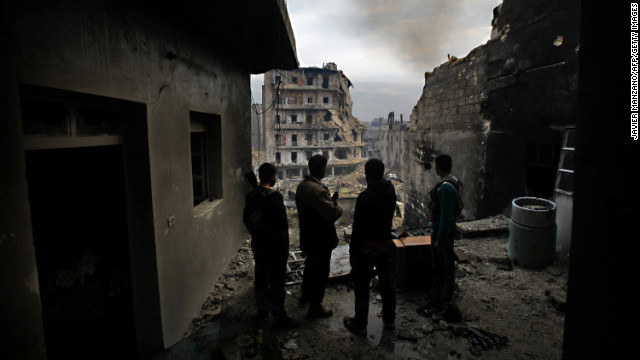 Members of Liwa (Brigade) Salahadin, a Kurdish military unit fighting alongside rebel fighters, monitor the area in the besieged district of Karmel al-Jabl in Aleppo on December 6, 2012.
 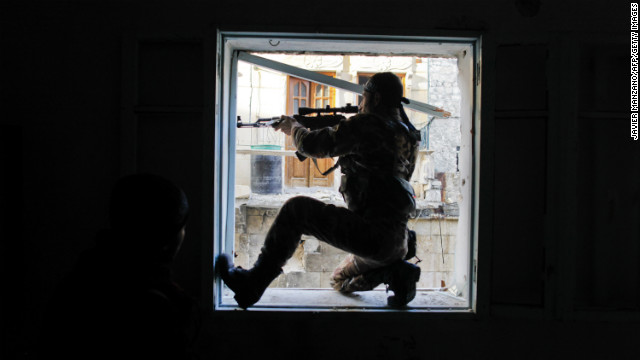 A member of Liwa Salahadin aims at a regime fighter in the besieged district of Karmel al-Jabl in Aleppo on December 6, 2012.
 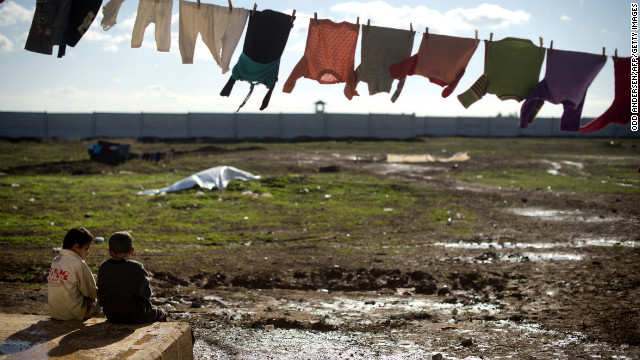 Two young boys sit underneath a washline in a refugee camp on the border between Syria and Turkey near Azaz on December 5, 2012.
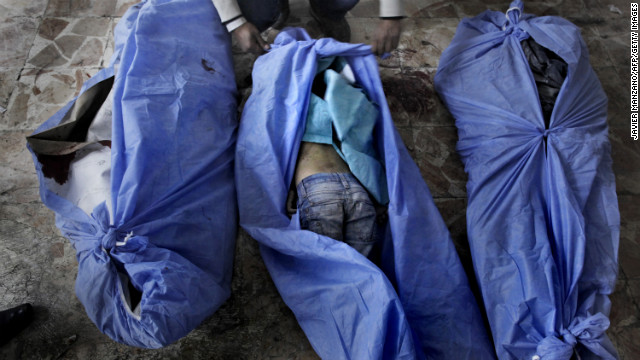 The bodies of three children, who were allegedly killed in a mortar shell attack that landed close to a bakery in Aleppo, on December 2, 2012, are laid out for identification by family members at a makeshift hospital at an undisclosed location of the city.
 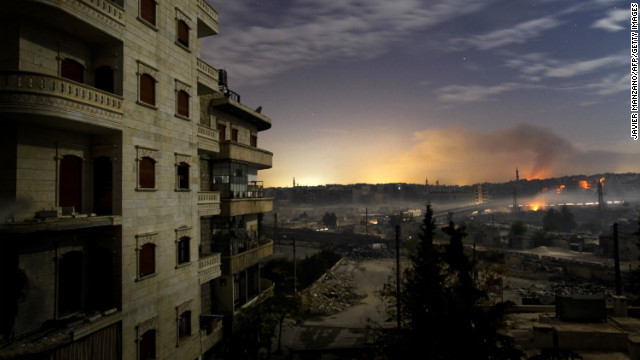 Smoke rises in the Hanano and Bustan al-Basha districts in Aleppo on December 1, 2012 as fighting continues through the night.
 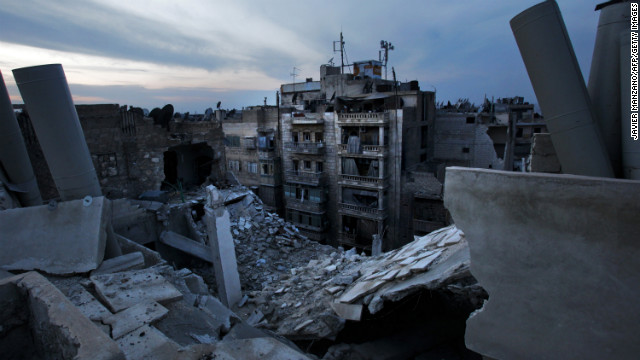 Damaged houses in Aleppo are seen after an airstrike on November 29, 2012.
 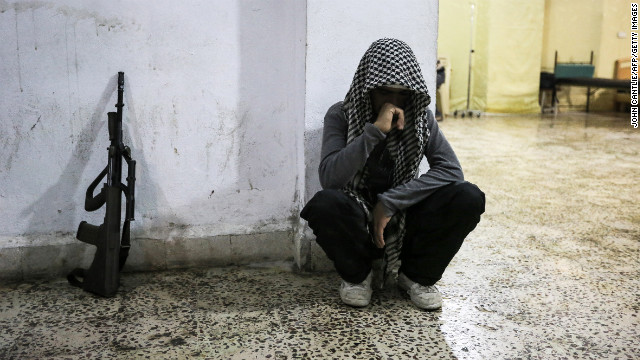 A Syrian rebel mourns the death of a comrade in Maraat al-Numan on November 20, 2012.
 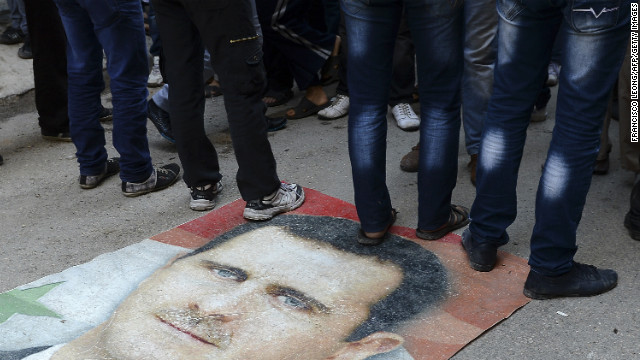 Syrians protesters stand on Assad’s portrait during an anti-regime demonstration in Aleppo on November 16, 2012.
 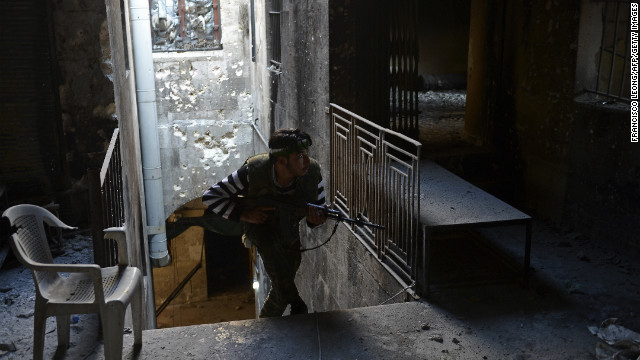 A Syrian rebel takes cover during fighting against Syrian government forces in Aleppo on November 15, 2012.
 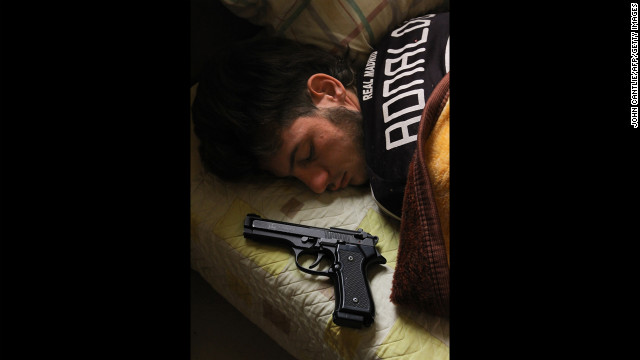 Syrian opposition fighter Bazel Araj, 19, sleeps next to his pistol in Aleppo on November 11, 2012.
 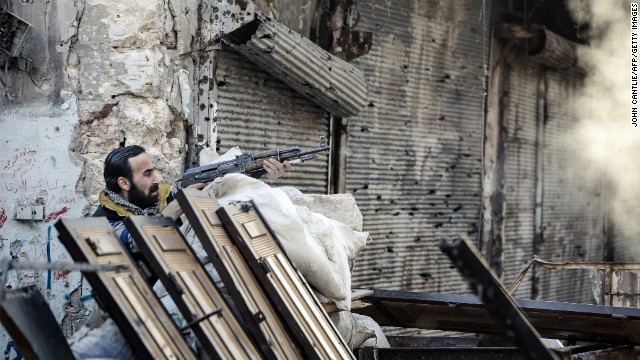 A rebel fighter fires at a Syrian government position in Aleppo on November 6, 2012.
 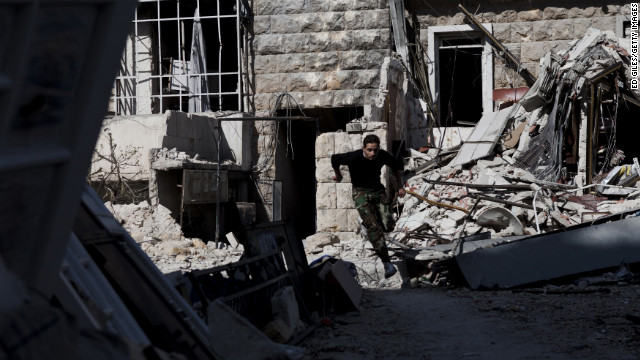 A Syrian rebel leaps over debris left in the street while running across a “sniper alley” near the Salahudeen district in Aleppo on November 4, 2012.
 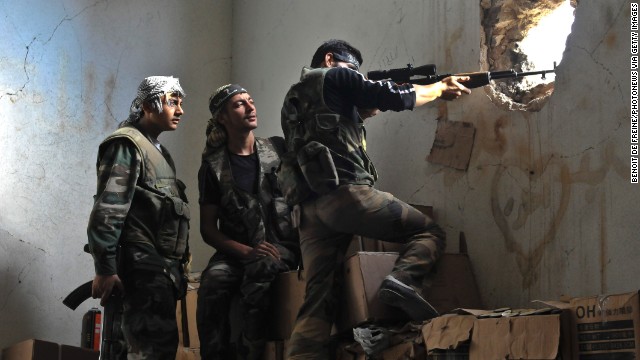 Rebels hold their position in the midst of a battle on November 3, 2012 in Aleppo.
 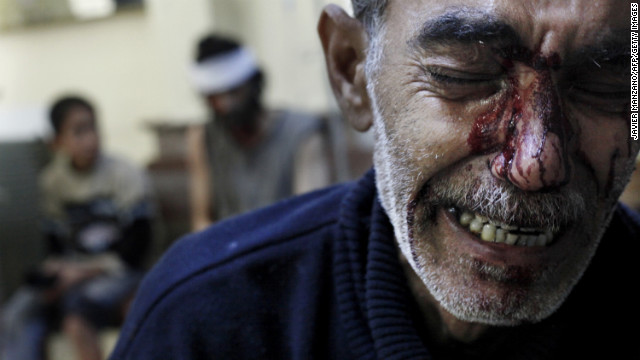 A man cries while being treated in a local hospital in a rebel-controlled area of Aleppo on October 31, 2012.
 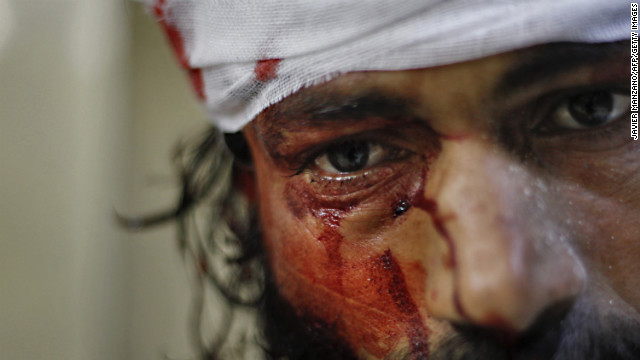 A man is treated for wounds after a government jet attacked the Karm al-Aser neighborhood in eastern Aleppo on October 31, 2012.
 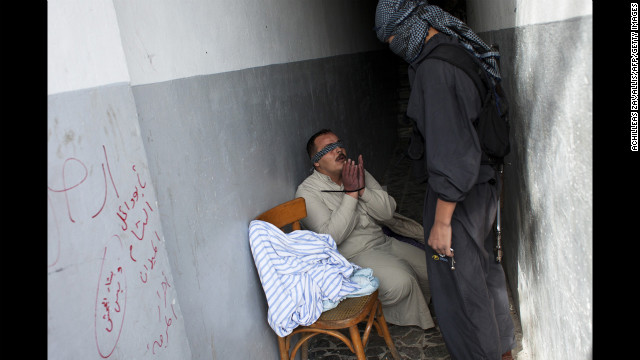 A Syrian rebel interrogates a handcuffed and blindfolded man suspected of being a pro-regime militiaman in Aleppo on October 26, 2012.
 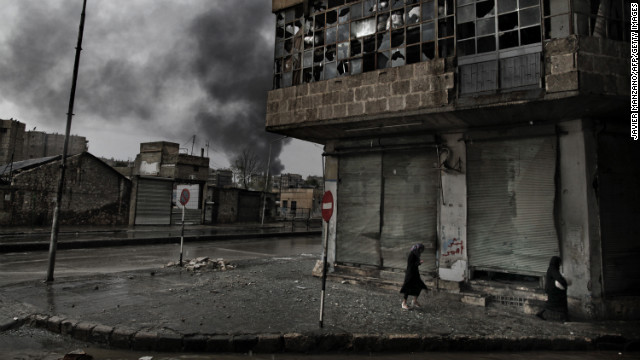 Smoke rises from a fuel station following a mortar attack as Syrian women walk on a rainy day in the Arqub neighborhood of Aleppo on October 25, 2012.
 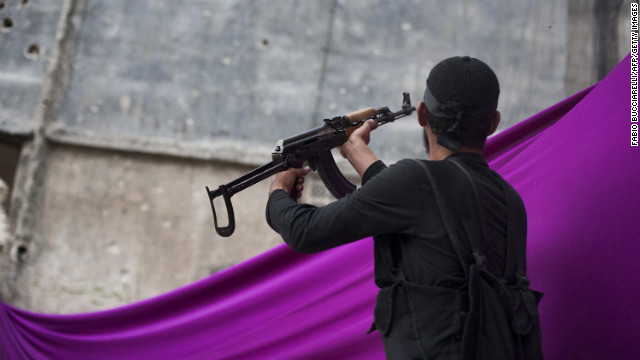 A Syrian rebel fires at an army position in the Karm al-Jabal district of Aleppo on October 22, 2012.
 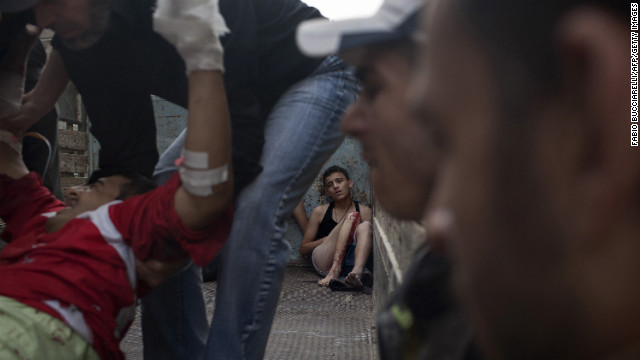 A wounded Syrian boy sits on the back of a truck carrying victims and wounded people to a hospital following an attack by regime forces in Aleppo on October 21, 2012.
 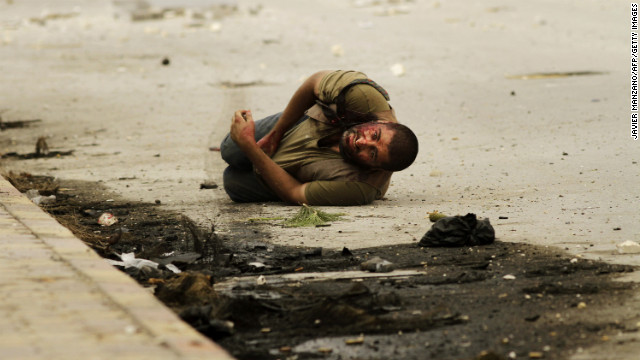 A man lies on the ground after being shot by a sniper for a second time as he waits to be rescued by members of the Al-Baraa Bin Malek Battalion, part of the Free Syria Army’s Al-Fatah brigade, in Aleppo on October 20, 2012.
 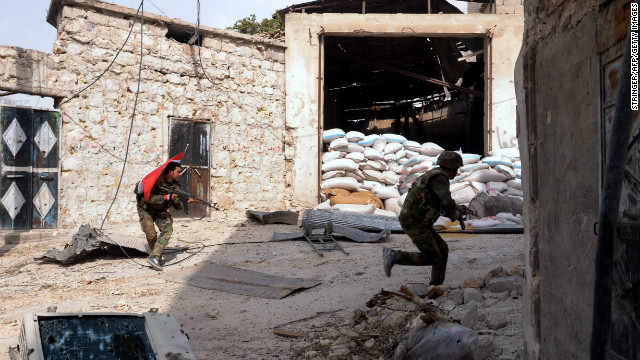 Syrian army soldiers run for cover during clashes with rebel fighters at Karam al-Jabal neighborhood of Aleppo on October 20, 2012.
 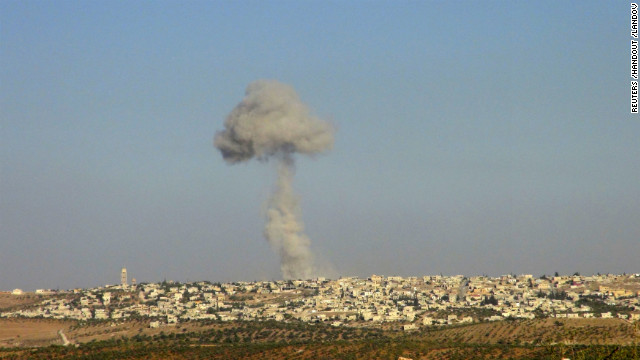 Smoke rises after a Syrian Air Force fighter jet fired missiles at the suburbs of the northern province of Idlib on October 16, 2012.
 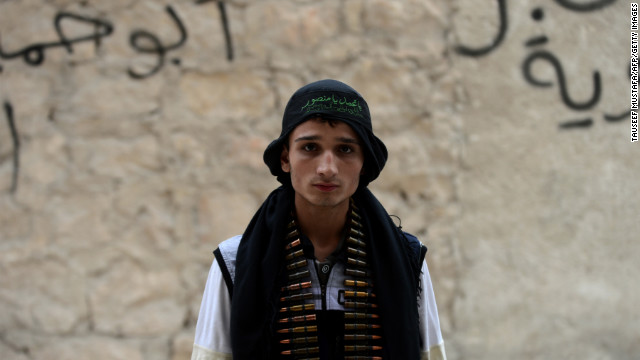 A Syrian opposition fighter stands near a post in Aleppo on October 11, 2012.
 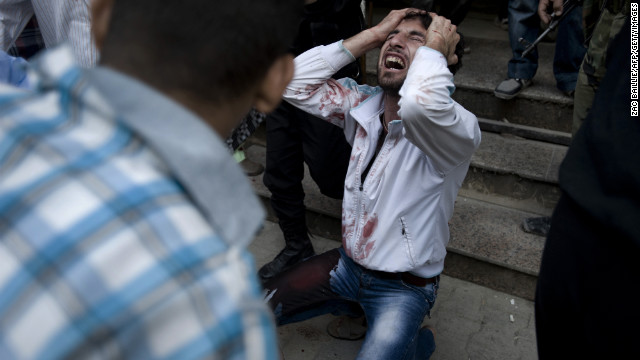 A Syrian man mourns the death of his father, who was killed during a government attack in Aleppo on October 10, 2012.
 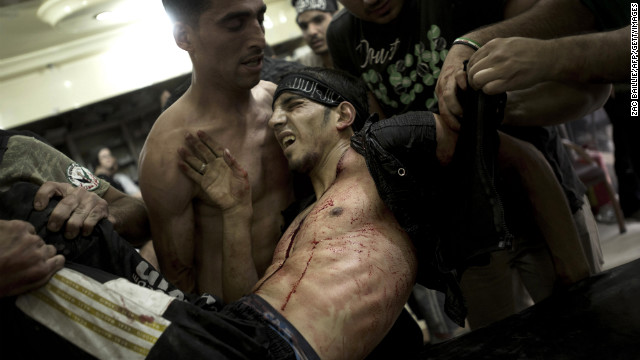 A rebel fighter is carried by his friends and laid on a gurney to be treated for gunshot wounds sustained during heavy battles with government forces in Aleppo on October 1, 2012.
 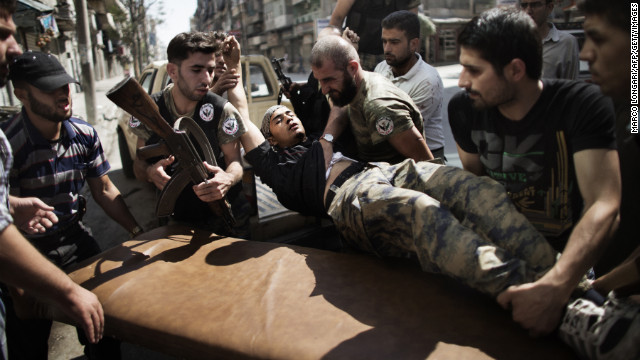 Syrian rebels help a wounded comrade to an Aleppo hospital after he was injured in a Syrian army strike on September 18, 2012.
 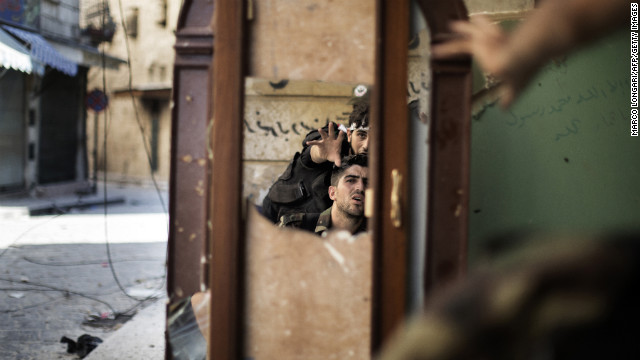 Free Syria Army fighters are reflected in a mirror they use to see a Syrian Army post only 50 meters away in Aleppo on September 16, 2012.
 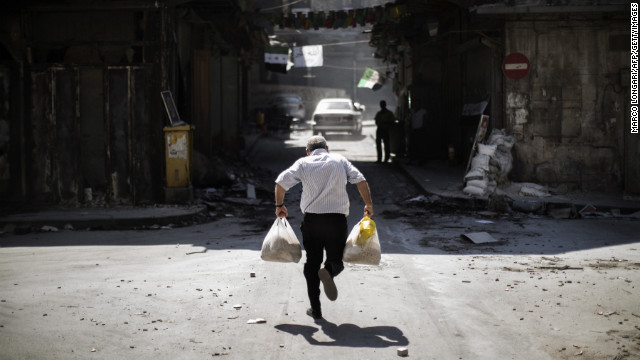 A Syrian man carrying grocery bags tries to dodge sniper fire as he runs through an alley near a checkpoint manned by the Free Syria Army in Aleppo on September 14, 2012.
 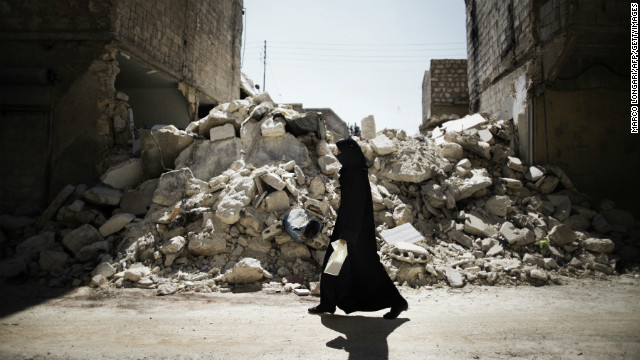 A woman walks past a destroyed building in Aleppo on September 13, 2012.
 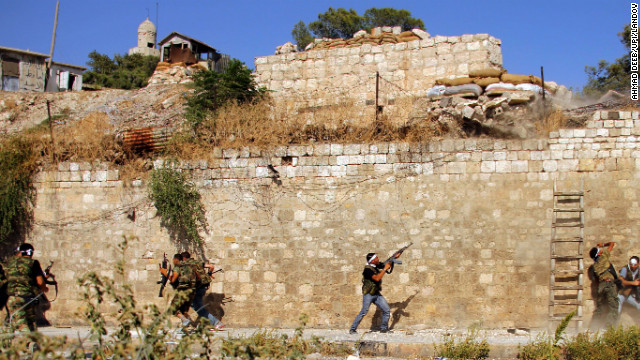 Free Syrian Army fighters battle during street fighting against Syrian army soldiers in Aleppo on September 8, 2012.
 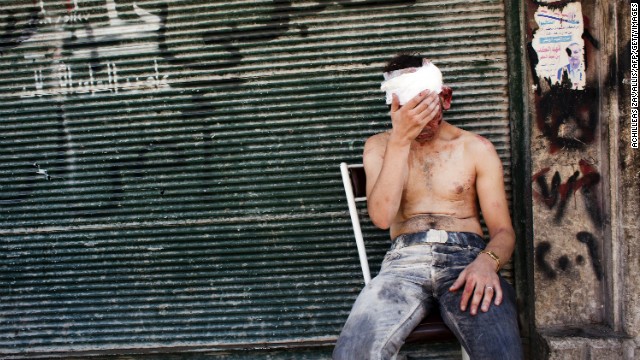 A Syrian man wounded by shelling sits on a chair outside a closed shop in Aleppo on September 4, 2012.
 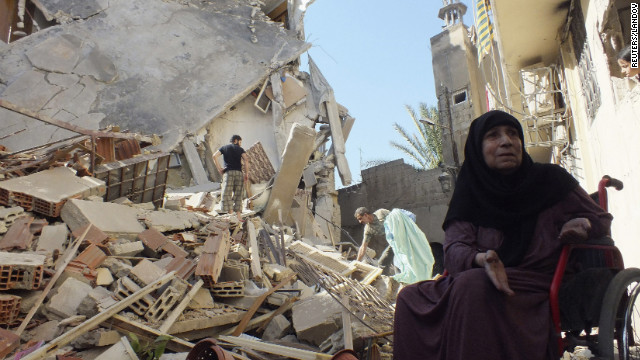 A woman sits in her wheelchair next to her house, damaged by a Syrian air raid, near Homs on August 26, 2012.
 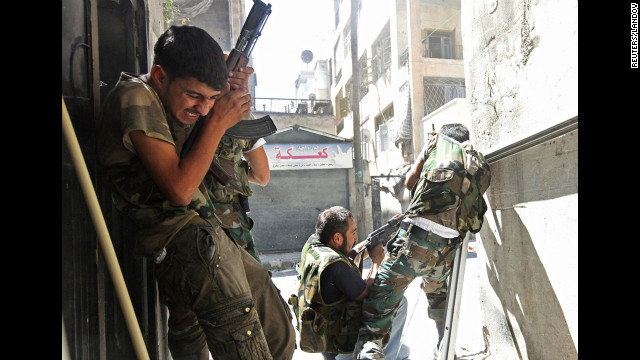 Members of the Free Syrian Army clash with Syrian army soliders in Aleppo’s Saif al-Dawla district on August 22, 2012.
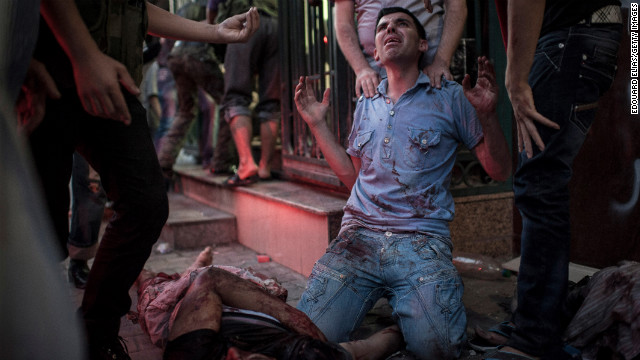 A man mourns in front of a field hospital on August 21, 2012 in Aleppo.
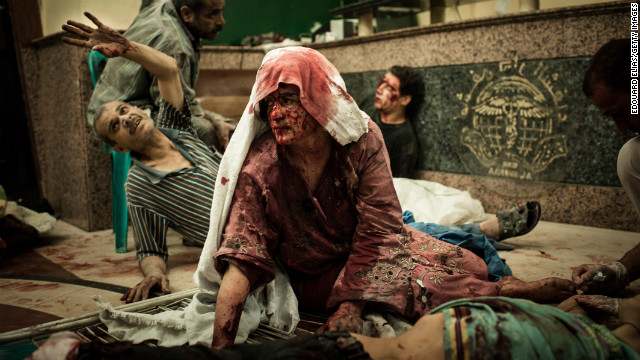 Wounded civilians wait in a field hospital after an air strike on August 21, 2012 in Aleppo.
 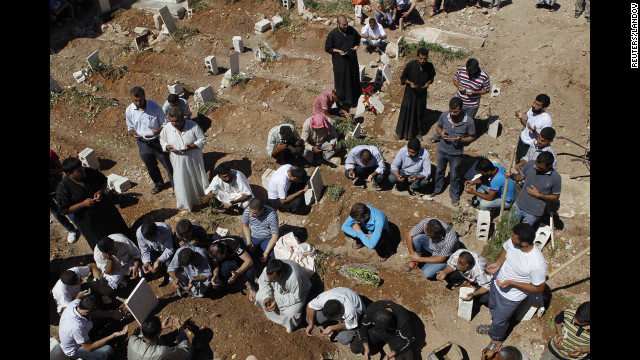 People pray during the funeral of a Free Syrian Army fighter, Amar Ali Amero, on August 21, 2012.
 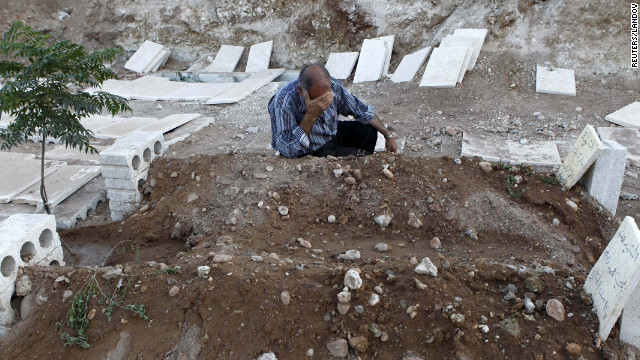 A man cries near the graves of his two children killed during a recent Syrian airstrike in Azaz on August 20, 2012.
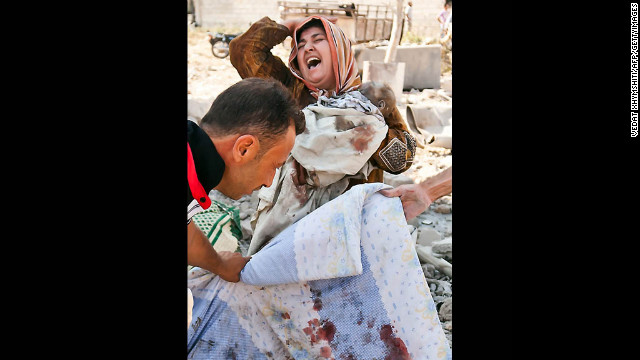 A Syrian woman holds her dead baby as she screams upon seeing her husband’s body being covered following an airstrike by regime forces on the town of Azaz on August 15, 2012.
 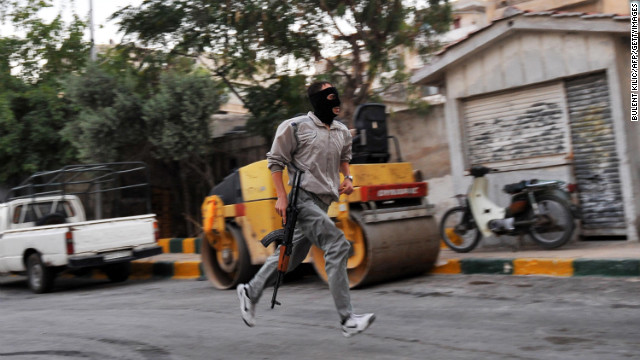 A Syrian rebel runs in a street of Selehattin during an attack on the municipal building on July 23, 2012.
 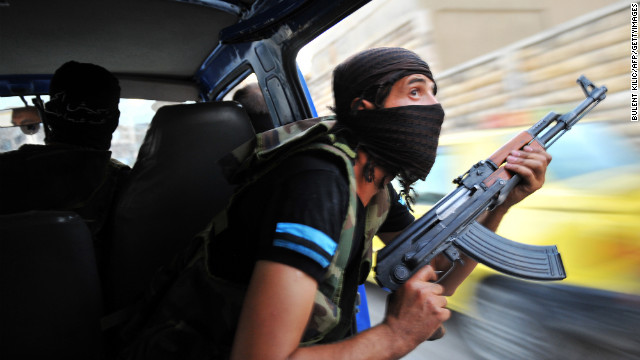 Syrian rebels hunt for snipers after attacking the municipality building in the city center of Selehattin on July 23, 2012.
 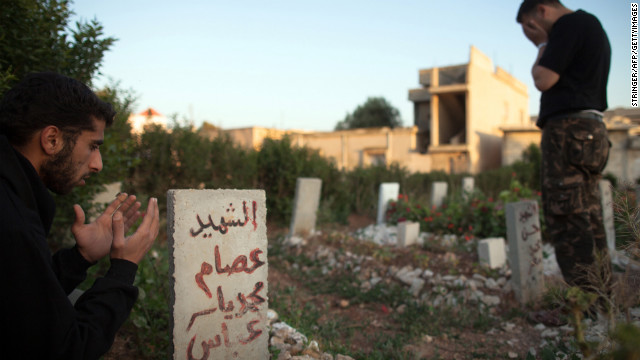 Members of the Free Syrian Army’s Mugaweer (commandos) Brigade pay their respects in a cemetery on May 12, 2012 in Qusayr.
 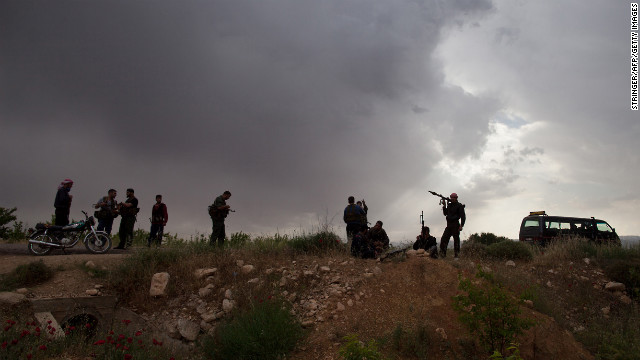 Syrian rebels take position near Qusayr on May 10, 2012.
 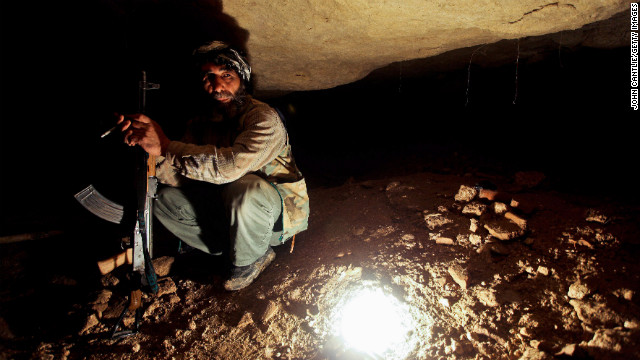 A Free Syrian Army member takes cover in underground caves in Sarmin on April 9, 2012.
 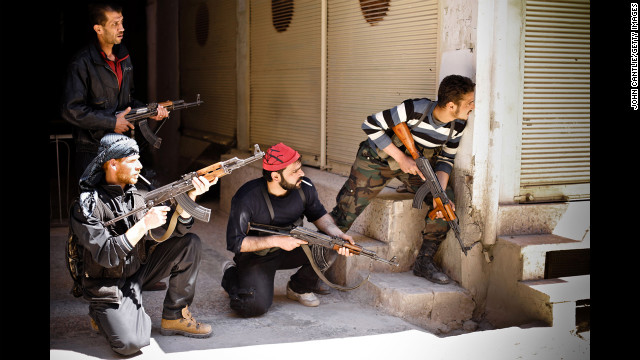 Rebels prepare to engage government tanks that advanced into Saraquib on April 9, 2012.
 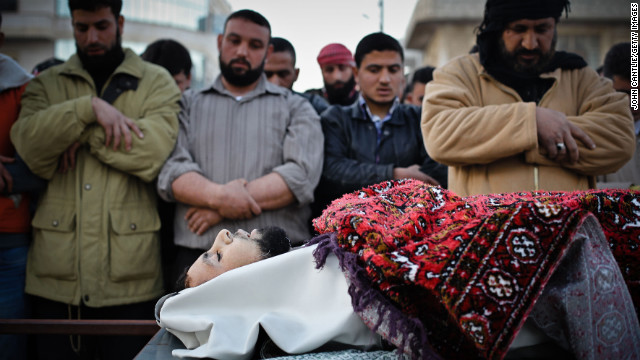 Men say prayers during a ceremony in Binnish on April 9, 2012.
 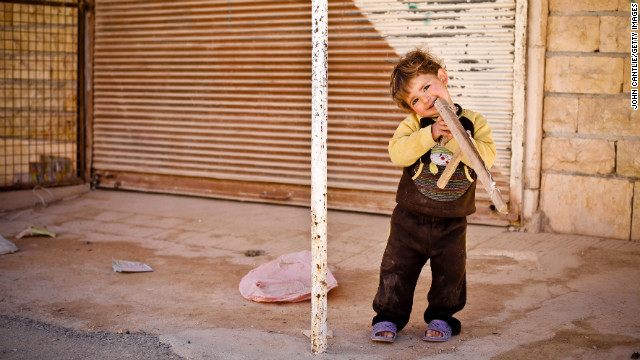 A young boy plays with a toy gun in Binnish on April 9, 2012.
 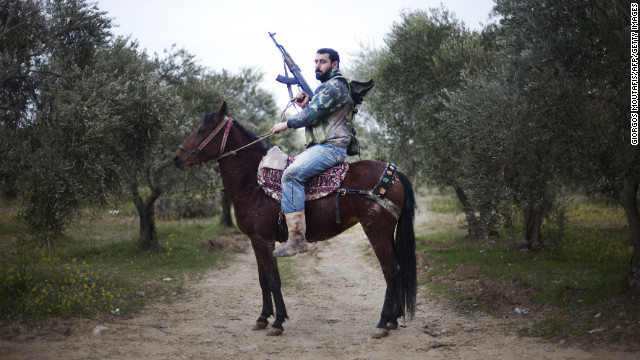 A Free Syrian Army rebel mounts his horse in the Al-Shatouria village near the Turkish border in northwestern Syria on March 16, 2012, a year after the uprising began.
 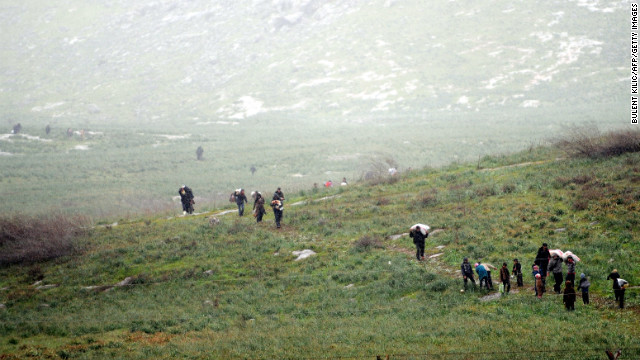 Syrian refugees walk across a field before crossing into Turkey on March 14, 2012.
 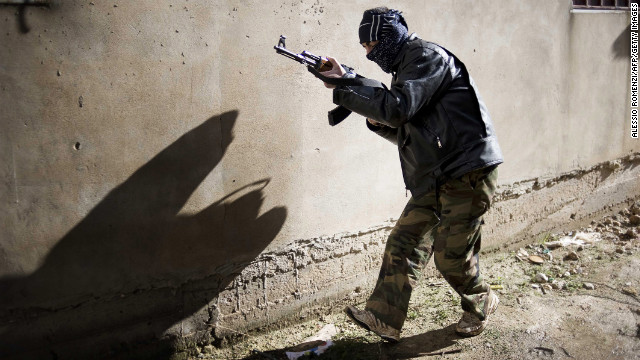 A rebel takes position in Al-Qsair on January 27, 2012.
 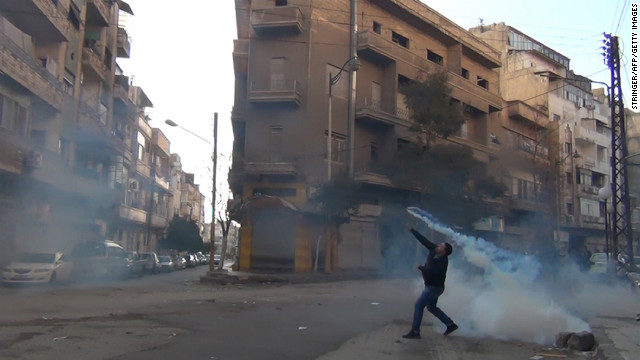 A protester in Homs throws a tear gas bomb back towards security forces, on December 27, 2011.
 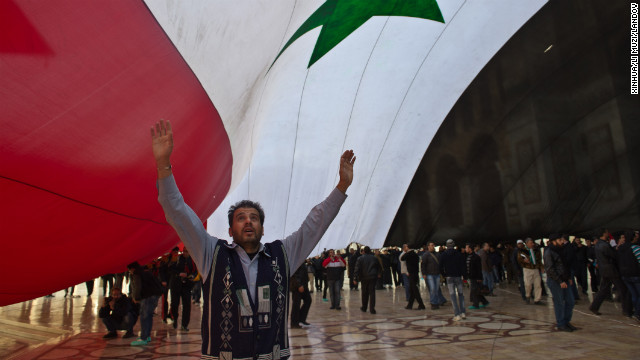 A man stands under a giant Syrian flag outside the Umayyad Mosque in Damascus on December 24, 2011.
 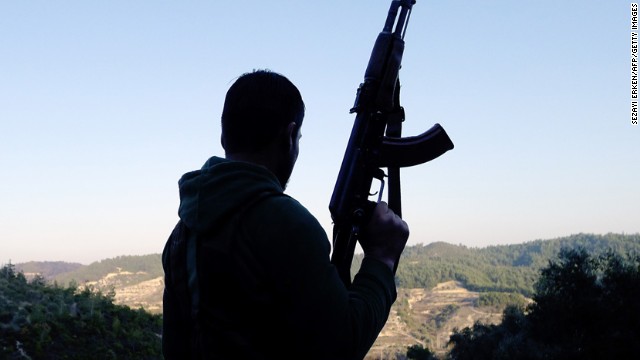 A member of the Free Syrian Army looks out over a valley in the village of Ain al-Baida on December 15, 2011.
 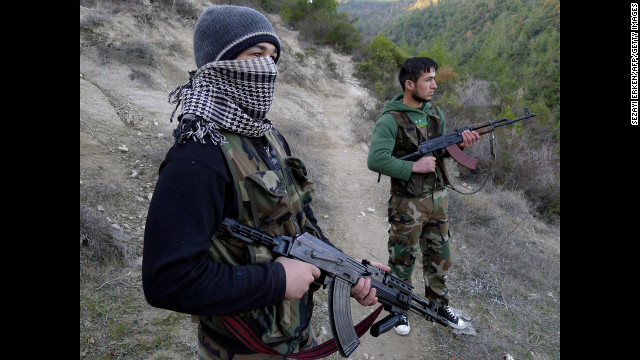 Members of the Free Syrian Army stand in an valley near the village of Ain al-Baida, close to the Turkish border, on December 15, 2011.
 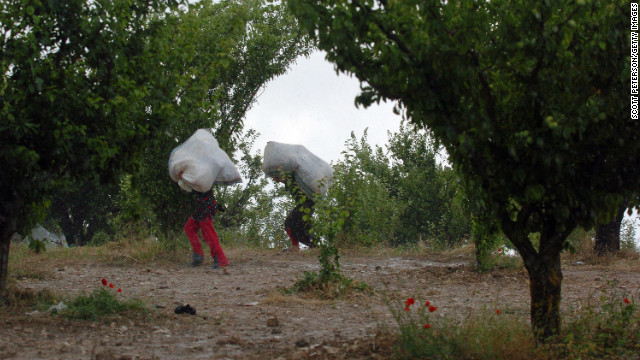 Displaced Syrian refugees walk through an orchard adjacent to Syria’s northern border with Turkey on June 14, 2011, near Khirbet al-Jouz.
 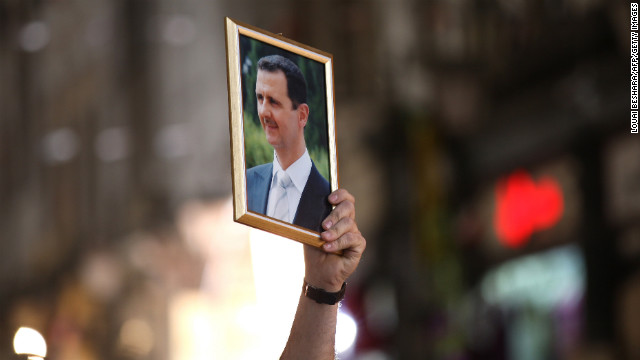 A Syrian man holds up a portrait of President Bashar al-Assad during a rally to show support for the president in Damascus on April 30, 2011.
 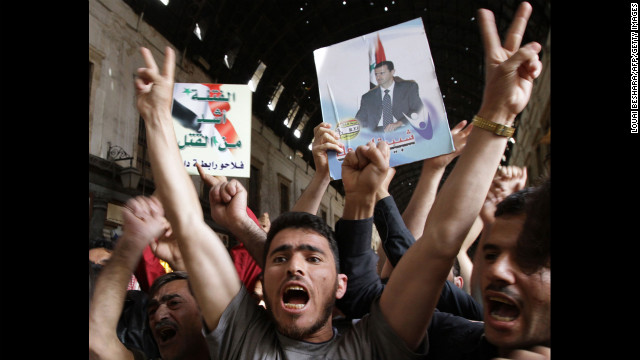 Syrians rally to show their support for President Bashar al-Assad in Damascus on April 30, 2011.
 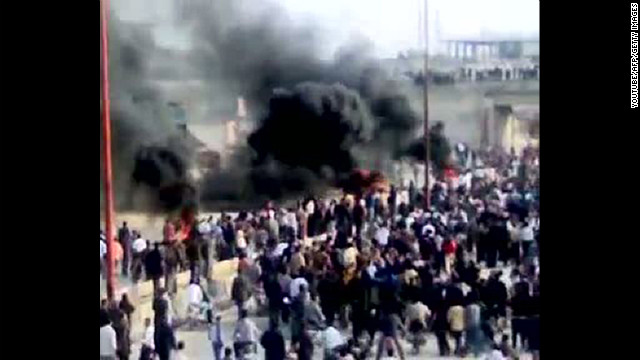 A screen grab from YouTube shows thick smoke rising above as Syrian anti-government protesters demonstrate in Moaret Al-Noman on April 29, 2011.
 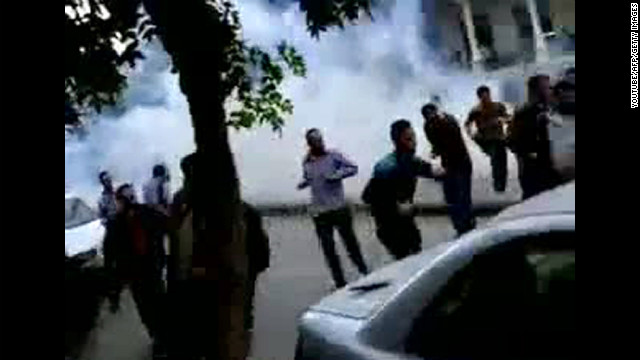 A screen grab from YouTube shows Syrian anti-government protesters run for cover from tear gas fired by security forces in Damascus on April 29, 2011, during the “Day of Rage” demonstrations called by activists to put pressure on al-Assad.
 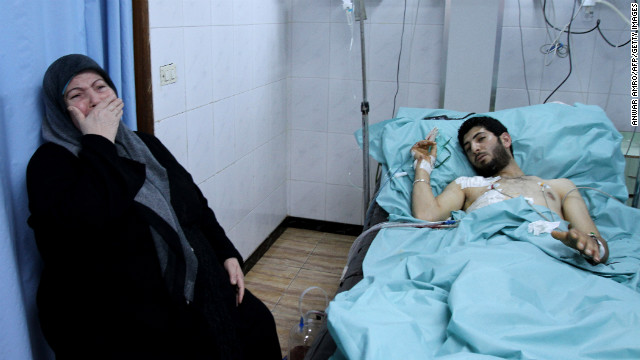 A woman sits by the hospital bed of a man allegedly injured when an armed group seized rooftops in Latakia on March 27, 2011, and opened fire at passers-by, citizens and security forces personnel according to official sources.
 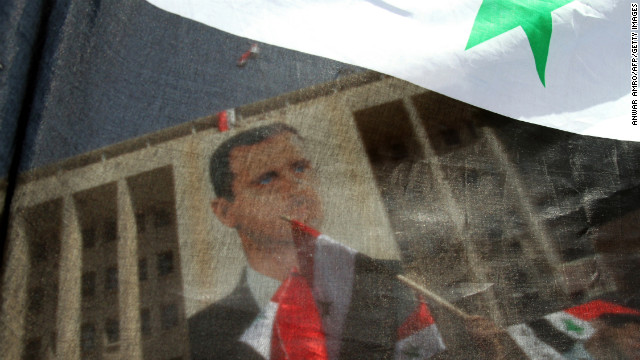 Syrians wave their national flag and hold portraits of al-Assad during a rally to show their support for their leader in Damascus on March 29, 2011.
 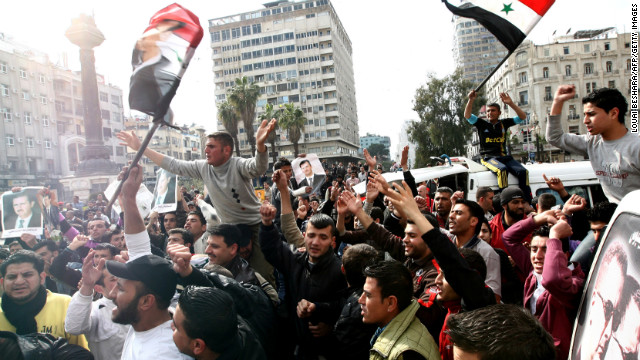 Syrian protesters chant slogans in support of al-Assad during a rally in Damascus on March 25, 2011.
 Syrian civil war in photos
Syrian civil war in photos
Syrian civil war in photos
Syrian civil war in photos
Syrian civil war in photos
Syrian civil war in photos
Syrian civil war in photos
Syrian civil war in photos
Syrian civil war in photos
Syrian civil war in photos
Syrian civil war in photos
Syrian civil war in photos
Syrian civil war in photos
Syrian civil war in photos
Syrian civil war in photos
Syrian civil war in photos
Syrian civil war in photos
Syrian civil war in photos
Syrian civil war in photos
Syrian civil war in photos
Syrian civil war in photos
Syrian civil war in photos
Syrian civil war in photos
Syrian civil war in photos
Syrian civil war in photos
Syrian civil war in photos
Syrian civil war in photos
Syrian civil war in photos
Syrian civil war in photos
Syrian civil war in photos
Syrian civil war in photos
Syrian civil war in photos
Syrian civil war in photos
Syrian civil war in photos
Syrian civil war in photos
Syrian civil war in photos
Syrian civil war in photos
Syrian civil war in photos
Syrian civil war in photos
Syrian civil war in photos
Syrian civil war in photos
Syrian civil war in photos
Syrian civil war in photos
Syrian civil war in photos
Syrian civil war in photos
Syrian civil war in photos
Syrian civil war in photos
Syrian civil war in photos
Syrian civil war in photos
Syrian civil war in photos
Syrian civil war in photos
Syrian civil war in photos
Syrian civil war in photos
Syrian civil war in photos
Syrian civil war in photos
Syrian civil war in photos
Syrian civil war in photos
Syrian civil war in photos
Syrian civil war in photos
Syrian civil war in photos
Syrian civil war in photos
Syrian civil war in photos
Syrian civil war in photos
Syrian civil war in photos
Syrian civil war in photos
Syrian civil war in photos
Syrian civil war in photos
Syrian civil war in photos
Syrian civil war in photos
Syrian civil war in photos
Syrian civil war in photos
Syrian civil war in photos
Syrian civil war in photos
Syrian civil war in photos
Syrian civil war in photos
Syrian civil war in photos
Syrian civil war in photos
Syrian civil war in photos
Syrian civil war in photos
Syrian civil war in photos
Syrian civil war in photos
Syrian civil war in photos
Syrian civil war in photos
Syrian civil war in photos
Syrian civil war in photos
Syrian civil war in photos
Syrian civil war in photos
Syrian civil war in photos
Syrian civil war in photos
Syrian civil war in photos
Syrian civil war in photos
Syrian civil war in photos
Syrian civil war in photos
Syrian civil war in photos
Syrian civil war in photos
Syrian civil war in photos
Syrian civil war in photos
Syrian civil war in photos
Syrian civil war in photos
Syrian civil war in photos
Syrian civil war in photos
Syrian civil war in photos
Syrian civil war in photos
Syrian civil war in photos
Syrian civil war in photos
Syrian civil war in photos
Syrian civil war in photos
Syrian civil war in photos
Syrian civil war in photos
Syrian civil war in photos
Syrian civil war in photos
Syrian civil war in photos
Syrian civil war in photos
Syrian civil war in photos
Syrian civil war in photos
Syrian civil war in photos
Syrian civil war in photos
Syrian civil war in photos
Syrian civil war in photos
Syrian civil war in photos
Syrian civil war in photos
Syrian civil war in photos
Syrian civil war in photos
Syrian civil war in photos
Syrian civil war in photos
Syrian civil war in photos
Syrian civil war in photos
Syrian civil war in photos
Syrian civil war in photos
Syrian civil war in photos
Syrian civil war in photos
Syrian civil war in photos
Syrian civil war in photos
Syrian civil war in photos
Syrian civil war in photos
Syrian civil war in photos
Syrian civil war in photos
Syrian civil war in photos
Syrian civil war in photos
Syrian civil war in photos
Syrian civil war in photos
Syrian civil war in photos
Syrian civil war in photos
Syrian civil war in photos
Syrian civil war in photos
Syrian civil war in photos
Syrian civil war in photos
Syrian civil war in photos
Syrian civil war in photos
Syrian civil war in photos
Syrian civil war in photos
Syrian civil war in photos
Syrian civil war in photos
Syrian civil war in photos
Syrian civil war in photos
Syrian civil war in photos
Syrian civil war in photos
Syrian civil war in photos
Syrian civil war in photos
Syrian civil war in photos
Syrian civil war in photos
Syrian civil war in photos
Syrian civil war in photos
Syrian civil war in photos
Syrian civil war in photos
HIDE CAPTION
<<
<</span>

1

2

3

4

5

6

7

8

9

10

11

12

13

14

15

16

17

18

19

20


>
>>
Syrian civil war in photos  President Obama’s full Syria speech
 Did Obama’s threat cause Russia shift?
 Did Obama make his case on Syria?
– Using a New York Times op-ed “to speak directly to the American people and their political leaders … at a time of insufficient communication between our societies,” Russian President Vladimir Putin warned about the ramifications to the Middle East and the world if countries bypass the United Nations and pursue military action.
“The potential strike by the United States against Syria … will result in more innocent victims and escalation, potentially spreading the conflict far beyond Syria’s borders,” Putin wrote in the editorial, which appeared online Wednesday night. “A strike would increase violence and unleash a new wave of terrorism.
“It could undermine multilateral efforts to resolve the Iranian nuclear problem and the Israeli-Palestinian conflict and further destabilize the Middle East and North Africa. It could throw the entire system of international law and order out of balance.”
– Calling the ongoing civil war an “internal conflict, fueled by foreign weapons supplied to the opposition,” Putin cautioned against siding with an opposition in Syria he says includes “more than enough (al) Qaeda fighters and extremists of all stripes.” (He did not mention the fact Russia has long supplied arms to Syria’s government.)
– Russia, its leader said, is “not protecting the Syrian government” but rather favors “a compromise plan.” Military action against the Syrian government without U.N. Security Council approval “is unacceptable under the United Nations charter and would constitute an act of aggression,” according to Putin.
– Disputing assertions by Obama and others, Putin said “there is every reason to believe (chemical weapons were) used not by the Syrian army, but by opposition forces to provoke intervention by their powerful foreign patrons, who would be siding with the fundamentalists.”
– Using military force has “proved ineffective and pointless” in places like Afghanistan, Libya and Iraq, Russia’s president claimed in the op-ed. He surmised that civilian casualties in Syria, if there were strikes, would be “inevitable.”
It is extremely dangerous to encourage people to see themselves as exceptional, whatever the motivation.
Russian President Vladimir Putin
– Putin ended his piece by saying that he and Obama share “a growing trust.” Yet he also challenged Obama’s case for American exceptionalism in his speech Tuesday night, saying, “It is extremely dangerous to encourage people to see themselves as exceptional, whatever the motivation.” “We are all different,” Putin concluded, “but when we ask for the Lord’s blessings, we must not forget that God created us equal.”
Previous developments:
World diplomacy:
– U.N. chemical weapons inspectors are expected next week to deliver their report about an August 21 attack outside Damascus to the U.N. Security Council, sources say. One diplomatic source told CNN that the findings would be presented on Monday. Another source told CNN that the report would “likely” be presented Monday or Tuesday. The United Nations has not detailed a timeline, and the fluid diplomatic movement on the Syria crisis could contribute to delays.
– U.S. Secretary of State John Kerry and Russian Foreign Minister Sergey Lavrov spoke by phone Wednesday, on the eve of their scheduled meeting in Switzerland. The two discussed a “shared objective of having a substantive discussion about the mechanics of identifying, verifying and ultimately destroying Assad’s chemical weapons stockpile,” a senior State Department official said.
– State Department spokeswoman Jen Psaki said the talks in Geneva between U.S. Secretary of State John Kerry and Russian Foreign Minister Sergey Lavrov will last two days — Thursday and Friday, and possibly could extend to Saturday. She said Kerry hopes to meet with Lakhdar Brahimi, the U.N. and Arab League special envoy to Syria.
– This meeting comes as Russia announced an initiative to place Syrian chemical weapons under international control. Kerry is bringing an interagency team of experts to deal with “identifying the mechanics” of how the plan will work, Psaki said. “So how would you go in? How would you destroy? What are the steps you would take?”
It’s too early to tell whether this offer will succeed, and any agreement must verify that the Assad regime keeps its commitments.
U.S. President Barack Obama
– Russian officials have submitted a plan to the United States for putting Syria’s chemical weaponry under international control, Russia’s Itar-Tass news agency reported Wednesday, citing a Russian diplomatic source.
– U.S. Secretary of State John Kerry will be heading to Geneva, Switzerland, for talks Thursday with Russian Foreign Minister Sergey Lavrov. The two diplomats have talked nine times since the August 21 attack.
– U.N. Secretary-General Ban Ki-Moon said Wednesday that “while there have been significant efforts by the international community to end the violence and push for a political solution, these efforts have not yet borne fruit.”
– “Our collective failure to prevent atrocity crimes in Syria over the past two and a half years will remain a heavy burden on the standing of the United Nations and its member states,” Ban said.
– A news report quoted Luxembourg’s foreign minister as saying the U.N. inspectors’ report on the August 21 chemical weapons attack in Syria could be released Monday. A U.N. diplomat with knowledge of Jean Asselborn’s comments said it “seemed likely the report could be delivered in that time frame.”
– French President Francois Hollande, in a statement, said Paris is determined to explore all avenues at the U.N. Security Council “to allow an effective and verifiable monitoring” of chemical weapons in Syria. “France will remain – in constant contact with its partners – ready to” take action against “the use of chemical weapons by the Syrian regime and to dissuade it from doing it again,” Hollande said.
– China says it will stay in communication with all relevant parties on possible actions that could be taken by the U.N. Security Council. “We maintain that actions taken by the Security Council should be based on the consensus reached between all parties through full consultation. And these actions should help ease tensions in Syria, maintain stability in the region and solve the Syrian issue politically,” the Ministry of Foreign Affairs said.
– European Commission President Jose Manuel Barroso said “the proposal to put Syria’s chemical weapons beyond use is potentially a positive development” and that “the Syrian regime must now demonstrate that they are willing to implement this without any delay.” Barroso stressed that “only a political solution stands a chance of delivering the lasting peace that the Syrian people deserve.”
– The United States, France, and the United Kingdom are discussing a U.N. Security Council draft resolution, according to a spokesman for British Prime Minister David Cameron. “The Russian government has put an idea forward, and the situation has moved forward a bit quicker that initially envisaged,” the spokesman said.
– The Duma, Russia’s lower house of parliament, urged the U.S. Congress and parliaments of other nations to drop plans for an American attack on Syria, Russia’s RIA Novosti news agency reported.
 What’s next for Congress on Syria?
 Lieberman: Al-Assad scared of a strike
 Obama: Al-Assad regime is not a threat
 The White House’s mixed message on Syria
The White House’s mixed message on Syria
– White House spokesman Jay Carney said Wednesday that any diplomatic solution on Syria’s chemical weapons, which will be the focus of U.S.-Russia talks this week, “needs to be credible, it needs to be verifiable, and we will work with our allies and partners to test whether it can be achieved.”
– Trying to reach a diplomatic solution on Syria’s chemical weapons “will take some time,” Carney said, adding that “we also aren’t interested in delaying tactics and we believe in holding (Syrian President Bashar al-Assad) accountable.
– Carney said that conversations were taking place and papers exchanged with Russia on a diplomatic solution for Syria’s chemical weapons but that he was unaware of a full formal proposal, adding that “I think we’re not at the stage of putting down public pieces of paper.”
– U.S. Defense Secretary Chuck Hagel talked Wednesday afternoon with the commander of the USS Barry, a destroyer that was ordered to remain in the eastern Mediterranean Sea in anticipation of a possible strike on Syria, the Pentagon said. Hagel praised those on the Barry and other naval ships “for maintaining their posture and ensuring that the United States military can carry out the orders of the commander-in-chief, if called upon,” according to the Pentagon statement.
U.S. Congress:
– Bob Casey, a Pennsylvania Democratic senator, is part of a bipartisan group of senators working on an alternative resolution on Syria that would set key benchmarks that must be met to avoid a military strike in Syria. “What we’re working on now, a number of us in the Senate, is a measure that will still incorporate, maintain the use of force authorization,” he told CNN’s “New Day.” “But added to that would be a set of conditions that the Syrian regime would have to meet. They’d have to meet them on a strict timetable.”
– Senate Majority Leader Harry Reid said “all eyes are on” Russian President Vladimir Putin as Moscow pursues an initiative to put Syrian chemical arms under international control. “We all know that he was former head of the KGB. We all know about the KGB. He is president of that very big country and we are all so grateful that even though relations aren’t perfect with Russia they are OK. So much better than they have been prior to the breakup of that massive country, the Soviet Union. So we hope that Russia is a productive partner in these negotiations.”
– U.S. Rep. Ted Poe, a Texas Republican, said he wished President Obama was “just as concerned about Americans murdered by terrorists” in Benghazi, Libya last year as he is with “Syrians being killed by Syrians.”
– Republican House member Mo Brooks of Alabama said he rejects President Obama’s “argument that the best way to keep Syrians from killing Syrians is for Americans to kill Syrians. America has peaceful options. We should pursue them more vigorously.”
– The House Democratic caucus had a closed-door meeting on Syria. U.S. Rep. Debbie Wasserman Schultz, a Florida Democrat, praised President Obama’s speech to the nation and reiterated a call for Syrian President Bashar al-Assad to be removed from power. “We have a responsibility to deter and degrade his ability to do that again,” the lawmaker said, referring to al-Assad and last month’s deadly chemical weapons attack. “And we’ve got to be in a position to be able to be ready to do that if a diplomatic solution, which is our first priority, isn’t successful.”
On the ground:
– As diplomatic efforts continued to address chemical weapons in Syria, the death toll from the nation’s 2-year-old civil war continued to climb. The Local Coordination Committees of Syria, a network of opposition activists, reported 72 deaths nationwide Wednesday — including 14 children and nine women.
– The same organization documented 499 places in Syria that were shelled during the day, including 34 strikes from Syrian military planes and cluster bombs outside Damascus.
– Opposition activists accused the government of conducting airstrikes on a hospital in the rebel-held town of Al-Bab in northern Syria. The attack killed 11 people and wounded dozens more, the opposition Syrian Observatory for Human Rights said. CNN could not independently confirm the report. The U.N. Commission of Inquiry, which issued a report about Syria on Wednesday, cites “attacks on hospitals and health-care facilities” by government and pro-government forces in Hama, Homs, Idlib, Daraa, Raqqa and Damascus in recent months. It also lists one attack by an anti-government armed group against a hospital in Daraa.
– Oxfam, the aid and development charity, says it welcomes steps by the United States and other governments to seek “peaceful means of bringing Syria’s life threatening chemical weapons under control.” “We have serious concerns that the use of military intervention will damage the prospects for peace and threatens to further destabilize the region,” President Ray Offenheiser said.
– A video statement from the top rebel commander in Syria, Brig. General Salim Idris, emerged online Wednesday in which he rejects the Russian initiative to put chemical weapons under international control as a standalone solution. In the statement, Idris calls for “the perpetrators of the crime” to be brought before the International Criminal Court and for “supporting nations” to provide additional arms and ammunition. He also urges Free Syrian Army soldiers to continue working toward the final objective of toppling the al-Assad regime.
– Israeli Prime Minister Benjamin Netanyahu said it should be ensured that chemical weapons harbored by the Syrian regime be dismantled and that the world needs to make sure that those who use weapons of mass destruction “pay a price.” “The message that will be received in Syria will also be received in Iran,” he said.
– “Not far north of here, dozens and sometimes hundreds of innocent civilians are slaughtered every day, some of them executed by gas – chemical weapons. This is a serious crime, a crime against humanity,” Netanyahu said.
– Israeli President Shimon Peres weighed in Wednesday on the crisis.”The world cannot remain silent regarding the bloodshed and murder of children that is taking place in Syria. Diplomacy is always preferable to war but the main issue at present is integrity and in particular the integrity of the Syrian regime. If Syria is honest and will take real steps to remove and destroy the chemical weapons in its territory, the U.S. will not attack. If there will be a crack in Syria’s integrity I have no doubt that the U.S. will act militarily. Syria will not go back to being what it was, the war and terror have divided that country into parts, into a number of countries.”
– Arab League Secretary-General Nabil Elaraby said on Twitter “there is no military solution to this crisis and that the cycle of violence and the continuing bloodshed of the Syrian people MUST stop as soon as possible.”
– “The Russian initiative to put the Syrian chemical weapons under international control represents a significant development in the course of addressing the current crisis,” Elaraby tweeted.
– Peter Maurer, president of the International Committee of the Red Cross, warned that fighting is raging and intensifying in Syria amid the international diplomacy. “People are suffering because of lack of medical care, lack of food, lack of water.” He urged the international community to be sure people in need get the proper assistance.
– Maurer told CNN his agency welcomes recent diplomatic efforts over the Syrian crisis and is hoping influential nations, such as the United States and Russia, use their powers and skills to help address pressing humanitarian needs.
U.N. Commission of Inquiry report:
– The U.N. Commission of Inquiry report about Syria issued Wednesday details nine mass killings from March to June, eight believed to be carried out by government and pro-government forces and one thought to be perpetrated by anti-government armed groups.
– One of the eight massacres the report attributed to government forces was a notorious event that occurred in the village of al-Bayda last May.
– Some victims in al-Bayda “appeared to have been hit in the head with blunt, heavy objects. Bodies of 30 women, also apparently executed, were found in a house not far from the centre while tens of bodies were strewn in the streets. Between 150-250 civilians were allegedly killed,” the report said. “There are reasonable grounds to believe that government forces and affiliated militia including the National Defence Forces are the perpetrators of the Al-Bayda massacre.”
– “Government forces have committed crimes against humanity, war crimes and violations of international human rights law” and “some anti-government armed groups have committed war crimes,” according to the U.N. panel, which is investigating the violation of international law in the Syria crisis.
– Fighting is “raging between Government forces, pro-Government forces, anti-Government armed groups and Kurdish armed groups,” the commission said Wednesday. Civilians “continue to pay the price for the failure to negotiate an end to this conflict,” the commission said.
– “Government and pro-government forces have continued to conduct widespread attacks on the civilian population, committing murder, torture, rape and enforced disappearance as crimes against humanity,” the commission said. “They have laid siege to neighborhoods and subjected them to indiscriminate shelling. Government forces have committed gross violations of human rights and the war crimes of torture, hostage-taking, murder, execution without due process, rape, attacking protected objects and pillage.”
– “Anti-government armed groups have committed war crimes, including murder, execution without due process, torture, hostage-taking and attacking protected objects. They have besieged and indiscriminately shelled civilian neighborhoods.”
– “Anti-government and Kurdish armed groups have recruited and used child soldiers in hostilities,” the report said.
– “Allegations were received regarding the use of chemical weapons, predominantly by government forces,” the commission said. “On the evidence currently available, it was not possible to reach a finding about the chemical agents used, their delivery systems or the perpetrators. Investigations are ongoing.”
– “The majority of casualties result from unlawful attacks using conventional weapons. Nevertheless, the debate over what international action to take, if any, has assumed new urgency following the alleged use of chemical weapons in August,” the commission said.
– Recent missions to Syria, including a U.N. mission to investigate allegations of the use of chemical weapons, “give rise to hopes that the commission will be able to visit the country in the near future,” the commission said.
– The commission said “regional armed actors” have gotten involved with the conflict “increasingly on sectarian lines.”
– Hezbollah militants fight with the government and Iraqi Shiites are traveling to Syria to fight for the regime, the U.N. report said.
– Iran has extended a $3.6 billion credit line to the government. A loan from Russia “is reportedly under discussion, while pre-conflict arms deals between Moscow and Damascus continue to be honored.”
– Influential Sunni clerics from several Arab countries, including Saudi Arabia and Egypt, are urging Sunnis “to join the jihad against” the Syrian government and its supporters. There are appeals for money and weapons to anti-government armed groups.
READ: Possible Syria strike: 5 things to pay attention to today
READ: U.N. report: Abuses on both sides of Syrian civil war
CNN’s Joe Sterling contributed to this report
See more here:
Syria crisis: Latest developments
The post Syria crisis: Latest developments appeared first on Arne Ruhnau News.
via Arne Ruhnau News http://arneruhnau.com/syria-crisis-latest-developments/

No comments:
Post a Comment