
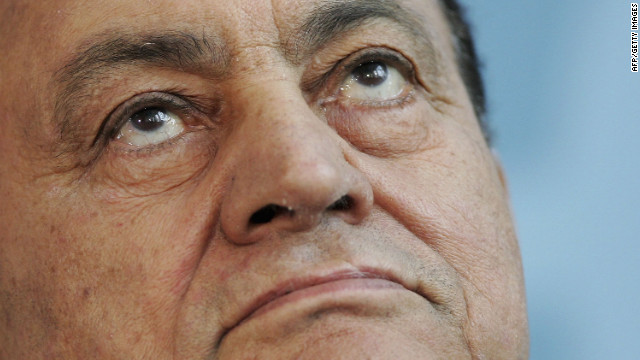
 Former Egyptian President Hosni Mubarak, 85, has been held since shortly after he was removed from power in 2011. He was convicted last year on charges of inciting violence against protesters during the popular uprising the led to his ouster and, eventually, the elections that brought Mohammed Morsy to power. He was sentenced to life in prison but appealed, and a retrial was granted early this year.
 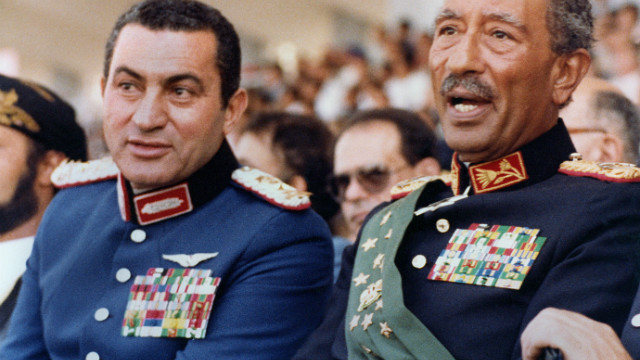 Then-Vice President Mubarak, left, joins President Anwar Sadat at a military parade on October 6, 1981, the day Islamic fundamentalists from within the army assassinated Sadat. Mubarak succeeded Sadat as Egypt’s president, maintaining power for nearly three decades.
 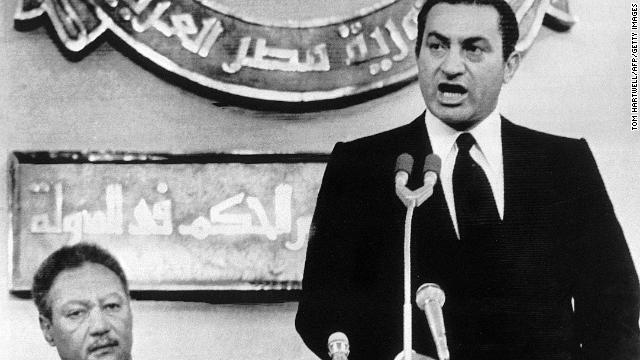 Eight days after Sadat’s assassination, Mubarak is officially sworn in as Egypt’s president on October 14, 1981. Mubarak was re-elected in 1987, 1993, 1999 and 2005.
 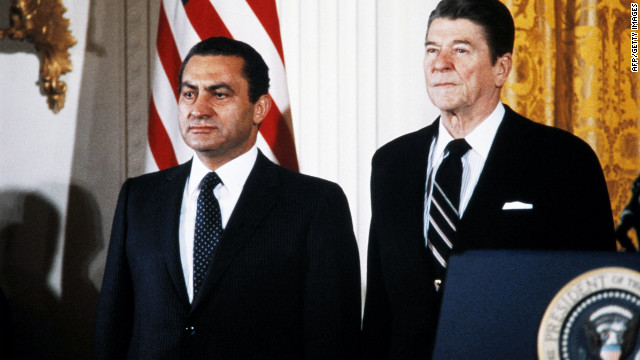 Mubarak poses with U.S. President Ronald Reagan at the White House in 1982.
 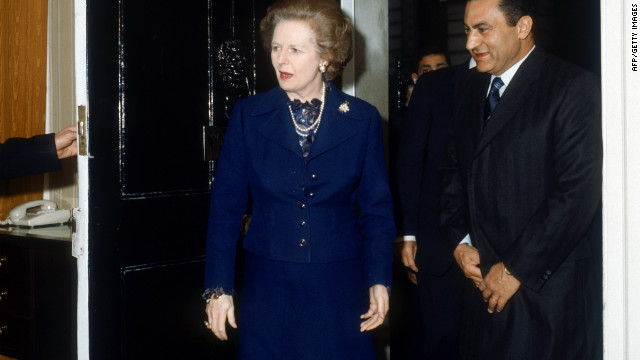 British Prime Minister Margaret Thatcher meets with Mubarak in London in 1985.
 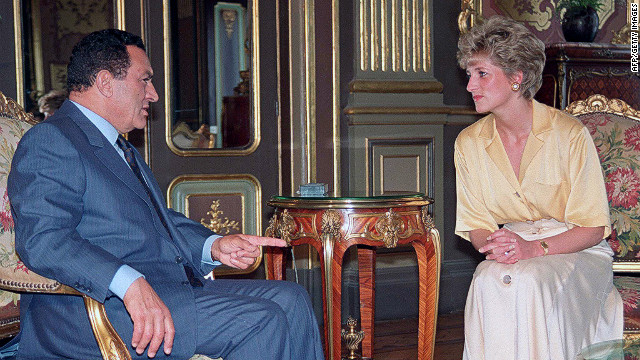 Diana, Princess of Wales, visits Mubarak in 1992 during a trip to Egypt.
 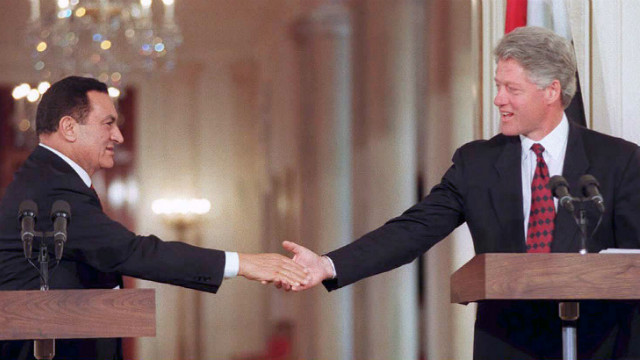 Mubarak and U.S. President Bill Clinton hold a joint press conference in 1995.
 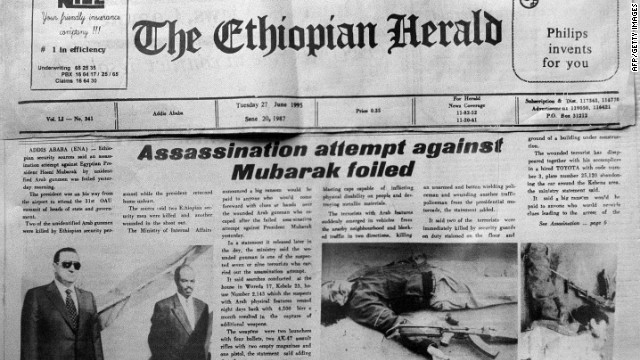 The front page of the Ethiopian Herald reports a foiled assassination attempt on Egypt’s president on June 27, 1995. Mubarak survived an attempt by an al Qaeda-affiliated group in Addis Ababa, Ethiopia.
 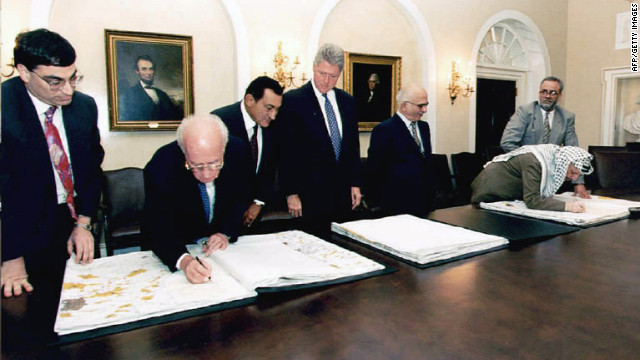 Mubarak, third from left, joins President Bill Clinton, Israeli Prime Minister Yitzhak Rabin, second from left, Jordan’s King Hussein, third from right, and Palestinian leader Yasser Arafat, second from right, in Washington in 1995. The Israeli leader and Arafat signed maps representing the redeployment of Israeli troops in the West Bank.
 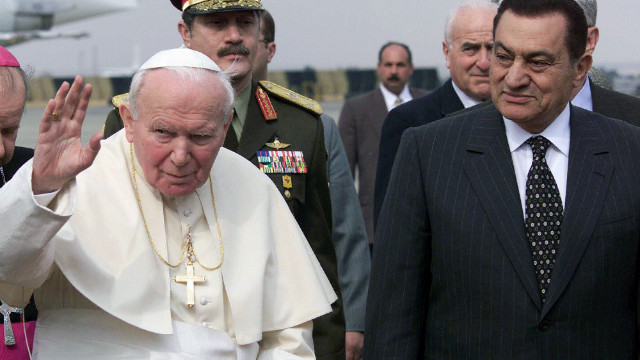 Mubarak welcomes Pope John Paul II to Egypt for a three-day visit in 2000.
 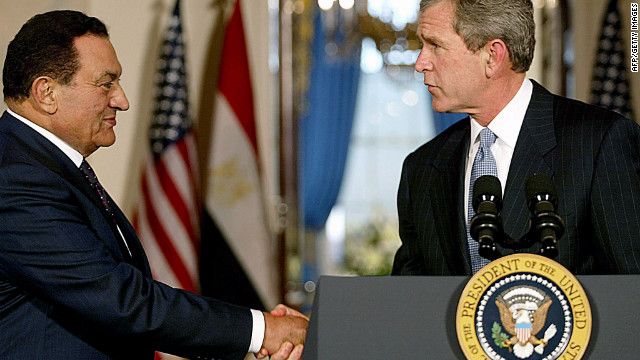 U.S. President George W. Bush greets Mubarak at the White House in 2002 to talk about the Middle East crisis and the war in Afghanistan.
 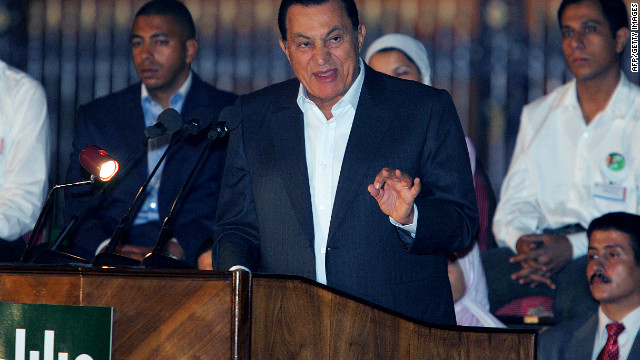 In 2005, Mubarak again runs for a six-year term in the country’s first multiparty presidential election. He was declared the official winner with about 88% of the vote, but many considered the election to be a sham.
 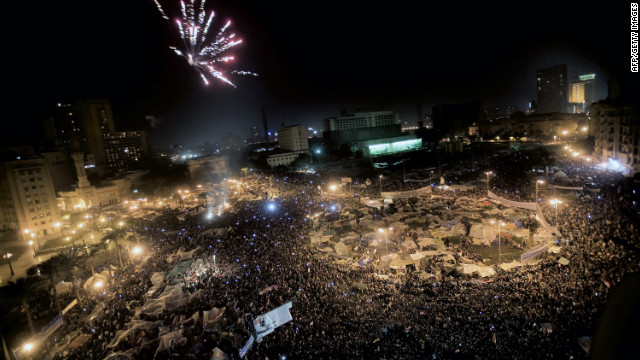 After weeks of Egyptians protesting Mubarak’s 29-year reign, the president steps down from office on February 11, 2011, causing celebrations in Cairo’s Tahrir Square.
 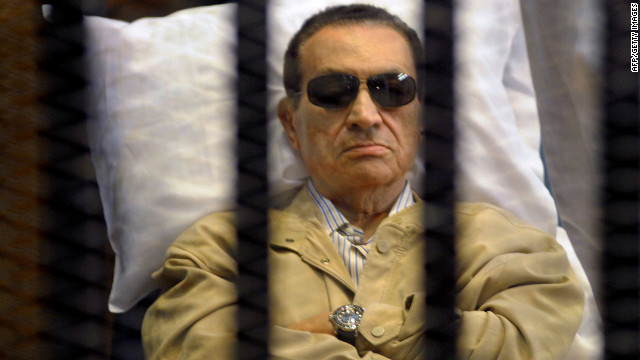 The ousted leader lies in a medical bed inside a cage in a courtroom during his verdict hearing in Cairo on June 2, 2012. A judge sentenced Mubarak to life in prison for his role in ordering the killing of protesters in the 2011 uprisings.
 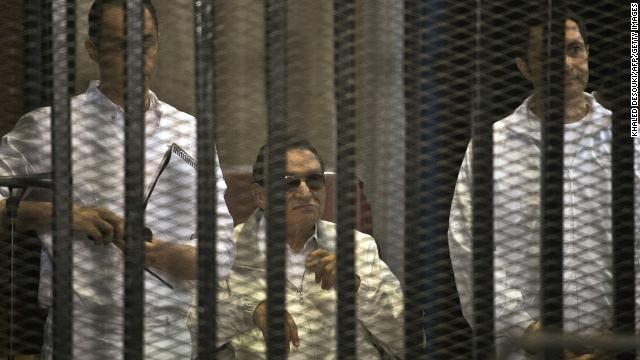 Mubarak and his sons Gamal, left, and Alaa are seen behind the defendants’ cage during their retrial at the Police Academy in Cairo on June 8. Mubarak was granted a retrial in January. On August 21, a court ordered Mubarak be freed, pending his retrial.
 HIDE CAPTION
Mubarak through the years
Mubarak through the years
Mubarak through the years
Mubarak through the years
Mubarak through the years
Mubarak through the years
Mubarak through the years
Mubarak through the years
Mubarak through the years
Mubarak through the years
Mubarak through the years
Mubarak through the years
Mubarak through the years
Mubarak through the years
Mubarak through the years
<<
<</span>

1

2

3

4

5

6

7

8

9

10

11

12

13

14

15
>
>>
STORY HIGHLIGHTS
- Another top Muslim Brotherhood official is arrested
- Egypt’s military issues a decree placing Mubarak under house arrest, state TV says
- Analyst Robin Wright says Mubarak’s pending release is an “extraordinary development”
- He was convicted in the deaths of numerous protesters but was granted a retrial this year
(CNN) — [Breaking news update at 9:46 a.m. ET]
A helicopter has landed at an Egyptian prison to transfer former president Hosni Mubarak to a health center where he’ll be under house arrest, state-run Nile TV reported Thursday.
Egypt’s military had issued a decree to place Mubarak under house arrest while he awaits a retrial on charges of inciting violence against protesters during the 2011 uprising, Egyptian media reported earlier.
[Initial story, posted at 2:39 a.m. ET]
Egypt arrests Muslim Brotherhood spokesman Ahmed Arif
(CNN) — Egypt’s interim military government extended its crackdown on the Muslim Brotherhood on Thursday, arresting the group’s spokesman, state-run television al-Masriya reported.
Ahmed Arif is the latest key member of the group to be taken into custody.
Earlier in the week, the military arrested Mohamed Badie, the group’s spiritual leader, and Safwat Hegazy, a preacher and hardline supporter of the movement. They were among about 100 members of the Muslim Brotherhood taken into custody on Tuesday.
Ousted President Mohamed Morsy has been held since early July.
The latest developments come hours after state-run media outlet Al-Ahram reported that an Egyptian court has ordered the release of deposed leader Hosni Mubarak.

 Brotherhood: We aren’t torching churches
 Brotherhood spiritual leader arrested
 The Egyptians that want to be heard
Egypt’s General Prosecutor has said he will not appeal to keep Mubarak in custody, state media reported Wednesday, clearing the way for him to be released. However, it is not clear how soon this could come.
State-run TV channel Al-Masriya cited a lawyer for Mubarak as saying he may be released as soon as Thursday.
What happened to the Arab Spring?
While the criminal case against Mubarak — accused of involvement in the deaths of protesters calling for his ouster — remains alive, news that a court has ordered him released pending retrial has some asking whether Egypt’s Arab Spring moment was all for naught.
It’s a good question, says Robin Wright, a Middle East analyst with the Woodrow Wilson Center. But it may also be premature.
While she says Mubarak’s pending release is an “extraordinary development” and a “potent symbol,” its impact could be muted by the long list of worries Egyptians are already dealing with on the ground — violence, curfews, economic woes.
“It may not play as big there as it does here,” she said.
The 85-year-old Mubarak has been held since shortly after he was removed from power in 2011. He was convicted last year on charges of inciting violence against protesters during the popular uprising that led to his ouster and, eventually, the elections that brought Morsy to power.
Muslim Brotherhood’s spiritual leader is arrested in Egypt
He was sentenced to life in prison but appealed, and a retrial was granted early this year.
While he still faces a retrial on that charge, state-run media outlet Al-Ahram reported Wednesday that an Egyptian court ordered the deposed leader freed in a separate corruption case.
The court ordered Mubarak’s release because he has been held past the maximum time he can be detained before being convicted.
Egypt’s military issued a decree to place Mubarak under house arrest, state-run Masriya TV reported. He would be required to remain in the country.
Unrest in Egypt
Mubarak’s impending release comes at a time of turmoil in Egypt, where an interim military government has been in charge since Mubarak’s successor, Mohamed Morsy of the Muslim Brotherhood, was ousted as president last month.
Over the past week, about 900 people — security personnel as well as citizens — have been killed. Deaths occurred when the military used force to clear two pro-Morsy sit-in sites in Cairo on Wednesday last week and violence raged after pro-Morsy supporters staged demonstrations Friday.
Mubarak ruled Egypt, the most populous Arab country, for three decades until demonstrators opposing his rule forced his ouster in 2011 as part of the Arab Spring revolutions across Africa and the Middle East.
Life during chaos: Egyptians talk about coping
Tamarod, the anti-Morsy protest movement which called for the mass rallies that led to his ouster, said it was not surprised by the ruling on Mubarak’s release.
In a statement on its official website, the group blamed Morsy’s administration for failing to do enough to push Mubarak’s trial forward.
The group called for a retrial of the former president, with new evidence before the court, and for Morsy to be put on trial as well.
The military, which has governed Egypt since forcing Morsy out of office, continues to hold him in detention and controls the judiciary.
Egypt explained: 6 key questions
CNN’s Karl Penhaul reported from Cairo, Laura Smith-Spark wrote and reported in London and Ed Payne wrote from Atlanta. CNN’s Slma Shelbayah, Tommy Evans and Saad Abedine, Michael Pearson and journalist Sarah Sirgany contributed to this report
‘;
document.write(OB_MarkUP);
if (typeof(OB_Script)!=’undefined’)
OutbrainStart();
else{
var OB_Script=true;
var str=”
Original article:
Report: Chopper lands at Mubarak jail
The post Report: Chopper lands at Mubarak jail appeared first on Arne Ruhnau News.
via Arne Ruhnau News http://arneruhnau.com/report-chopper-lands-at-mubarak-jail/

No comments:
Post a Comment