
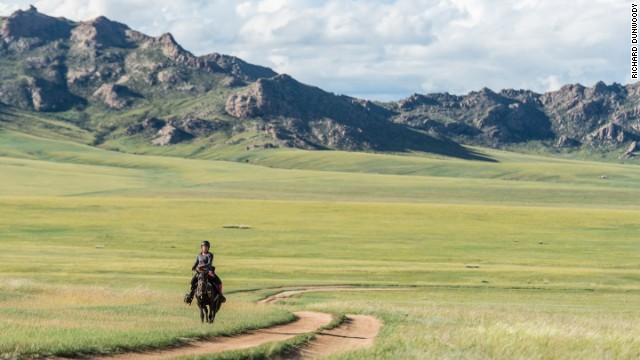
 The Mongol Derby, a 1,000 kilometer scramble through the vast expanse of the Mongolian steppe.
  Each of the competitors must navigate their own way between the 40 horse stations which make up the race’s course.
  The horses stations, or “urtuus” to use their Mongolian name, are a place where riders can eat and rest. Competitors must also swap horses at each station in order to maintain the health of the animals. Each horse has their heart rate checked at each station, if it is too high the rider is issued with a two-hour time penalty.
  Lara Prior-Palmer, a 19-year-old from Hampshire in England, speeds out of one of the urtuus after swapping horses.
  There was heartbreak for American Devan Horn at the finish when she crossed the line first only for her horse to fail its veterinary inspection. Horn (pictured in the background) was given a two-hour penalty, handing victory to Prior-Palmer. In this picture, Prior-Palmer receives a congratulatory phone call while Horn is comforted by a race steward.
  There’s no champagne for Prior-Palmer at the finish, but she is able to enjoy a hard-earned beer.
 HIDE CAPTION
The Mongol Derby
The ‘un route’
Urtuus
Horse power
Late drama
Toasting victory
<<
<</span>

1

2

3

4

5

6
>
>>
STORY HIGHLIGHTS
- Briton Lara Prior-Palmer, 19, is youngest winner of Mongol Derby
- Race recognized by the Guinness Book of Records as the world’s lengthiest
- Race takes inspiration from the Mongol Empire’s pioneering postal service
- “This is no guided tour, or pony trek,” says race website
(CNN) — Wild horses, raging winds and energy-sapping heat in the land of Genghis Khan; welcome to the Mongolian steppe.
This vast expanse of savannah and grassland is the setting for the world’s longest horse race — the Mongol Derby.
Equestrian’s toughest test is perhaps the last place you’d expect to find a teenager from the English county of Hampshire.
But Lara Prior-Palmer isn’t like other teenagers.
The 19-year-old is the youngest winner — and first female victor — in the five-year history of this most arduous of contests.
“It is the most extraordinary and bizarre race, it’s like the Tour de France crossed with Snakes and Ladders,” Palmer told CNN from a victory party in the Mongolian capital of Ulan Bator.

 Are you fit enough to be a jockey?
 Horse racing’s ‘speed gene’ test
“It was really dramatic, it would be first-degree heat and the horses would be sweating, then suddenly the air would cool with wind blowing super hard.
“I wanted to do something that was going to put me out of my comfort zone I guess. Mongolia sounded like a really cool country.”
Read: English high society at play
The race, officially recognized by the Guinness Book of Records in 2011 as the world’s lengthiest, takes its inspiration from the Mongol Empire’s pioneering postal service.
The fearsome Genghis Khan, leader of the Mongols between 1162 and 1227, established and expanded the “Ortoo.”
It was a messenger system which saw riders travel on horseback between outposts, stopping to either rest, swap horses or pass the message onto another rider.
Forty horse stations, “urtuus” to use the Mongolian name, line the race’s 1000-kilometer route.
 Fashion and glamor at Royal Ascot
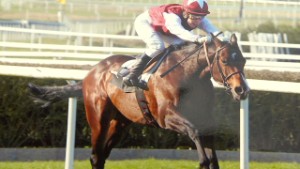 Amateur jockeys line up at Chantilly
Not that there is a course set out for the 30 competitors, who use anything from a compass, GPS or good old-fashioned intuition to traverse the landscape between each resting spot.
As the race’s official website puts it, “this is no guided tour, or pony trek.”
Each urtuus is manned by local nomads and furnished with tents, beds and food for man, woman and horse alike. Riders must change horse at each urtuus.
It is the nomadic tribes who provide the horses for the race and equine welfare is one of the organizers’ highest priorities.
A vet is stationed at each urtuus and if the horse’s heart rate is above a certain level, the rider is given a time penalty.
There is also extensive medical support for the jockeys, half of whom withdrew from the race before the finish line this year.
“There were 30 at the beginning, but not at the end,” explains Prior-Palmer. “My body got really cross with me the day I finished, I slept all day.
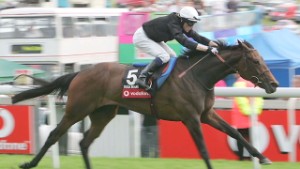 Breeding the next generation of champions
 Jockey and successful trainer
“I’m lucky because I’m young. Any problems I had were really painful but didn’t get that bad. I got really swollen ankles, chafing, a few other things, blisters and other stuff.
“The worst thing is the exhaustion, sitting on a horse may look easy but you’ve got to keep them cantering. Thirteen hours a day I was on a horse. At lunchtime you’d want to sleep but you can’t because there’s another 120 kilometers to go that day.”
Prior-Palmer’s determination paid off, although her joy came at the expense of another rider’s despair.
American Devan Horn was the first rider to finish the race, but her horse failed a post-race medical inspection.
A two-hour penalty ensued and Prior-Palmer was named as the winner.
“It was a strange way to win and I didn’t feel very good about it because the other girl was super upset,” said Prior-Palmer. “It’s slowly sinking in.”
Read: Racing’s battle of the sexes
So what next for the teenager who made history?
The answer, it would seem, is more history.
“I begin university in September, I’m going to study history in Edinburgh or maybe at Trinity College in Dublin, I haven’t decided,” she said.
“It’s a terrible future for me because everything else is really boring. I’ll have to knuckle down with some work.”
‘;
document.write(OB_MarkUP);
if (typeof(OB_Script)!=’undefined’)
OutbrainStart();
else{
var OB_Script=true;
var str=”
See original article:
Teenager wins longest horse race
The post Teenager wins longest horse race appeared first on Arne Ruhnau News.
via Arne Ruhnau News http://arneruhnau.com/teenager-wins-longest-horse-race/

No comments:
Post a Comment